Want to be in the loop?
subscribe to
our notification
Business News
GREEN STANDARDS TOP POLICIES FOR FRESH FOREIGN VENTURES
Vietnam is becoming a destination for environmentally-friendly initiatives that can contribute to the circular economy. However, improvements from various sides will be necessary in order to lure truly sustainable investment.
The approval of Vietnam’s circular economy development plan, announced in June, aims to help reduce greenhouse gas emissions by 15 per cent of GDP by 2030 (as compared to 2014).
The commitment at COP26 by Vietnam to achieve net-zero carbon emissions by 2050 is considered the main call for investment into green technologies and friendly-environmental projects, as well as approval of plans such as the aforementioned circular economy one.
These messages have sent a strong signal regarding the country’s direction towards low-carbon, green development, and a circular economy, and could be a new driving force for Vietnam’s sustainable socioeconomic development, helping to improve its competitiveness and foreign direct investment (FDI) into the country.
As a result, numerous groups have made decisions in terms of investment and other operations in Vietnam towards this goal. And at husbandry companies like C.P. Vietnam, Japfa Comfeed Vietnam, and TH Group, the circular economy and sustainable energy have been applied in their production stages for many years.
For example, in TH farms that are breeding 70,000 cows, almost all manure of livestock and waste products are used as materials for micro-organisms, biological barn lining, fuel energy, and fertiliser for other fields. The roofs of the barn are installed with solar power to serve the internal electricity demand, and by-products are packaging involving sewing grass ties into bags.
The by-product source at its Nasu sugar factory is bagasse, which is processed into biomass electricity; and molasses is processed into a nutritional component in the feed of dairy cows.
“All by-products at our farm are reused and recycled. We have been applying a circular model in our products for years for all production and processing stages,” said Tran Thi Nhu Trang, head of the Agriculture Technology Department of TH Milk Food JSC, which operates a $1.2 billion state-of-the-art dairy cow farm and fresh milk processing plant in the central province of Nghe An.
Good business
Over recent months, particularly in the southern province of Binh Duong next to Ho Chi Minh City, dozens of foreign investors from Europe and Japan arrived to seek opportunities to invest in projects with imprints for green growth.
Early this year, Denmark’s Lego Group decided to build its first-ever carbon-neutral plant in Binh Duong, which is considered a ‘green cornerstone’ for foreign investment flow into Vietnam. Lego is pouring over $1 billion into building the project at a 44-hectare site, which will create up to 4,000 jobs over the next 15 years.
One of the special features of the new plant is that it will be carbon-neutral and be built in compliance with LEED Gold Standard certification. In addition, the group has also been exploring the feasibility of investing in a 40MW solar power plant, which will provide 100 per cent renewable power for operating the new factory.
“Vietnam has become an attractive destination for international partners and investors partly thanks to the government’s strong commitment to reducing carbon emissions and actively responding to climate change,” remarked Danish Ambassador to Vietnam Kim Højlund Christensen.
He added that business- and investment-wise, carbon border taxes are likely to become a feature of global trade, and attracting FDI will also depend increasingly on the availability of low-carbon production systems. Increased renewable energy will also attract more FDI to Vietnam as international companies place more emphasis on green supply chains and products to meet consumers’ demands and to meet their own global commitment to reducing their carbon footprints. “Therefore, going green is indeed good business for Vietnam,” said Christensen.
Previously, numerous foreign-invested enterprises (FIEs) in Vietnam were also interested in the circular economy. Thai-backed SCG, one of the leading conglomerates in Asia, applies a circular economic model in all parts of the company, from cement and chemicals to packaging, with the aim to reach net zero.
Of these, SCG’s SCG Packaging is providing innovations made entirely of recycled paper.
“The circular economy allows us to focus on several factors: reducing the use of natural resources not only from a consumer standpoint but also a manufacturing standpoint; developing products that can be reused; and recycling,” said Roongrote Rangsiyopash, president and CEO of SCG.
“For example, when we draw water from the environment, we recycle it and then reuse it. So the circular economy is a very good tool and a very good action plan for us to achieve low carbon emissions and the net-zero commitment that we are making,” he added.
In other cases, DEEP C Industrial Zones and Dow have completed the first asphalt road enhanced with recycled plastics in the northern port city of Haiphong to address plastic waste and advance a circular economy in Vietnam. “These durable, safe new roads not only benefit DEEP C and our tenants but also serve as a powerful message as Vietnam places plastic waste management as a top environmental priority,” said Bruno Jaspaert, general director of DEEP C Industrial Zones.
The total recycled plastics road length is 1.4km, diverting a total of 6.5 metric tonnes of flexible packaging from becoming litter or entering landfills – the equivalent of more than 1.7 million flexible wrappers. The post-consumer recycled plastic, mostly flexible packaging such as polyethene film, is sourced from local waste collector URENCO Haiphong. The waste is cleaned, dried, and shredded before being mixed with asphalt at a temperature between 150 and 180 degrees Celsius.
High-tech focus
In the view of Le Huy Dong, manager of Savills Vietnam’s Industrial Services, Vietnam is starting to develop well with a lot of promising schemes on the go. “However, our country needs to look at lessons from other countries in the region and worldwide to avoid making mistakes that have been made elsewhere. Vietnam needs to consider the green factor as a necessary condition in industrial development,” emphasised Dong.
He said China is a clear example. Thirty years ago, the country also possessed many outstanding advantages in a region like Vietnam. They utilised all available strengths to call FDI inflows in various industries. However, this caused serious environmental pollution in China in the last decade, with Beijing engulfed in smog created by the manufacturing plants in surrounding areas. Now, China has mitigated energy-intensive and high-emissions industries.
To combat this, the Vietnamese overnment has made resolutions that relate to focusing on high-tech FDI, circular economy development, and net-zero emissions.
Do Nhat Hoang, director general of the Foreign Investment Agency at the Ministry of Planning and Investment, confirmed to VIR that the policies of calling investment into high-tech and environmentally-friendly projects are clear when it comes to prescribing special investment incentives.
“They can enjoy preferential corporate income tax at 5-9 per cent and rent exemption of land for a few decades if they are high-tech projects, contributing to sustainable development and circular economy, and realising the commitment of net zero. I believe that these policies are attractive enough,” said Hoang.
Nguyen Van Toan, vice chairman of the Vietnam Association of Foreign-Invested Enterprises, agreed that there have been some helpful policies and directions of the government, “but localities should select high-tech and green-tech projects towards sustainable development, instead of luring all types of FDI for the sake of it.”
Toan suggested that in order to increase greener FDI, it is necessary to focus on developing more eco-industrial zones. However, it will take some time for more groups to get on board with this.
“It is advisable to attract new FDI into those zones, then Vietnam will have completely new FDI flows in technology, attract high-skilled workers, comply with social responsibilities, and create more added value,” added Toan.
Source: VIR
Related News

CHARITY / EXHIBITION / OTHER EVENTS
INVESTMENT OPPORTUNITIES IN CA MAU PROVINCE: 96 PROJECTS AND 20 STRATEGIC PROJECTS
We are pleased to share with you information on investment projects currently seeking investors in Ca Mau Province. Should your esteemed company or association be interested, we kindly invite you to review the project information and complete the registration form via the links provided. The Ho Chi Minh City Investment and Trade Promotion Centre (ITPC) will consolidate the expressions of interest and facilitate connections with the leadership of Ca Mau Province at a meeting tentatively scheduled for 13 November 2026 in Ho Chi Minh City.
MEMBER CORNER / PROMOTIONS
BẰNG KIỀU LIVESHOW - A SYMPHONY OF LOVE UNDER THE GOLDEN GLOW
A masterclass in live music that takes the audience on a soulful journey through immortal love songs, guided by the peerless artistry and emotive storytelling of renowned singer Bằng Kiều. The highlight of the night is his seamless musical chemistry with special guest Triệu Hồng Ngọc, promising passionate and deeply resonant duets inside the magnificent Grand Ballroom.
INFRASTRUCTURE / CONSTRUCTION / LOGISTIC / PORT
ĐÀ NẴNG GREEN-LIGHTS US$105 MILLION THAI DEVELOPMENT DEAL
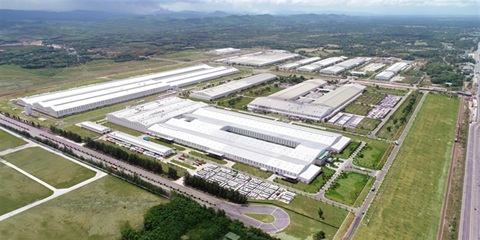
The central city has approved an investment proposal by Thailand’s WHA Group to develop infrastructure for the 400ha WHA Đà Nẵng Industrial Park project on two communes of Thăng Bình and Đồng Dương, with an investment of more than VNĐ2.7 trillion (US$105 million). The city said it approved WHA Industrial Development International's status as an investor in the project, which is expected to take place between 2027 and 2034.
VIETNAM ECONOMY INVESTMENT
MOBILE PHONE EXPORTS RISE 20% TO $51.8 BILLION IN FIRST NINE MONTHS
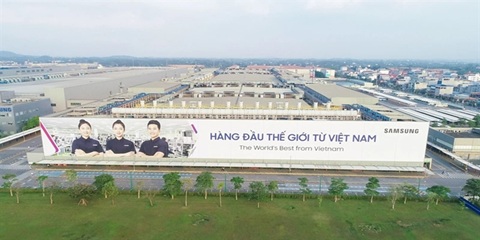
Exports of mobile phones and components rose 20 per cent year-on-year to nearly US$51.8 billion in the first nine months of 2026, with China, the US and Republic of Korea accounting for more than half of the total. Shipments to the three markets reached a combined $26.18 billion, or 50.6 per cent of total exports of the product group during the period, according to data from the Vietnam Department of Customs under the Ministry of Finance.
INFRASTRUCTURE / CONSTRUCTION / LOGISTIC / PORT
VIỆT NAM-CAMBODIA TRADE GATHERS PACE TOWARDS $20 BILLION TARGET
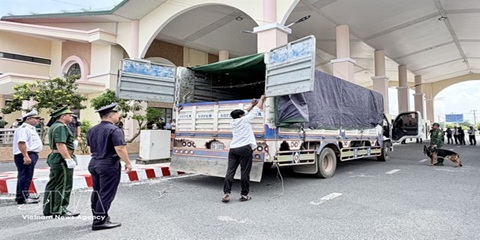
Trade between Việt Nam and Cambodia continues to grow, remaining a bright spot and a key pillar of bilateral cooperation as the two countries aim to raise two-way trade to US$20 billion in the coming years. After setting a record of more than $11.3 billion last year, bilateral trade reached about $8.7 billion in the first eight months of this year, up 8.3 per cent year on year.
VIETNAM ECONOMY INVESTMENT
FRUIT AND VEGETABLE EXPORTS POISED TO HIT $10 BILLION IN 2026
Fruit and vegetable exports are on track to reach nearly US$10 billion in 2026, after rising 19.9 per cent year on year to nearly US$7.4 billion in the first nine months, driven by strong seasonal demand and abundant tropical fruit supplies. The Ministry of Agriculture and Environment said the growth reflected stronger international demand for fresh produce and processed agricultural products.
Events Sponsors






















