Want to be in the loop?
subscribe to
our notification
Business News
GREENING PRODUCTION CHAIN: SUSTAINABLE PATH FOR TEXTILE AND GARMENT INDUSTRY
Attracting green projects into input manufacturing, forming supporting industries and digitizing production processes are key to the sustainable development of the textile and garment industry in the new context.
Textile and garment is one of Vietnam's key exports that plays an important role in economic growth and accounts for 12-16% of the nation’s total export value.
Harder challenges
At the seminar on "Solutions to improving corporate governance in the textile and garment industry in a new context" on August 16, Mr. Truong Van Cam, Vice President and Secretary General of the Vietnam Textile and Apparel Association (Vitas), said that businesses in Vietnam's textile and garment industry is facing fierce competition from major exporters to CPTPP and the EU such as China, Bangladesh, Turkey and India.
Rule of origin from yarn and fabric onwards is a weak part of Vietnam's textile and garment industry as Vietnam has to import up to 80% of fabrics for export.
Meanwhile, importers of Vietnam's textile and garment are mostly swanky and fastidious, with strict requirements on quality, environment, traceability, recycling and labor standards.
Companies in importing countries may likely employ trade remedies to protect domestic production. Besides, the domestic market is seeing fiercer competition because big foreign brands such as Zara, Mango and Topshop are present in Vietnam.
Furthermore, weaving and dyeing projects are rejected for environmental concerns. While sustainable development solutions are often associated with increased initial costs, many businesses, especially small and medium ones, are not determined enough or have enough resources to pursue it.
Besides, Dr. Do Tien Long, Senior Consultant for Organization and Strategy Development, said that escalating tensions between Russia and Ukraine have place pressure on energy prices, crude oil and gas to reach new highs (rising approximately 30% higher in the year to date). While over 60% of global yarn is synthetic artificial fibers, which are derived from petroleum, coal, and gas.
In addition, prices of cotton, fiber and raw materials increased while the value of garment products did not increase enough to offset additional costs (selling prices are only 15-17% higher than a year ago) and trim the profit margin of garment producers.
Changing supply chains, human commitments and automation have also gradually reduced the advantages of cheap labor and sent Vietnamese textile and garment companies into tougher difficulties.
In particular, 80% of textile and garment enterprises are small and medium with limited financial resources, insufficient high-quality human resources and confusing digital transformation. These are also current challenges in the textile and garment industry.
Meanwhile, the textile and garment industry has a loose linkage in the value chain. Mr. Nguyen Anh Tuan, Deputy Director of the Foreign Investment Agency (FIA) under the Ministry of Planning and Investment, pointed out that Vietnam achieved a trade surplus for yarn and garments but took a large deficit for fabrics.
Yarn is not used domestically for weaving but mainly for export. Meanwhile, domestically produced fabrics only meet less than 50% of the demand, causing Vietnam to import over US$10 billion of fabrics each year.
Linking the value chain
To improve the efficiency of corporate governance of the textile and garment industry in the new context, it is necessary to call for investment in the industry, he said, explaining that FTAs are opening up great opportunities for Vietnam's textile and garment industry.
New-generation FTAs, especially CPTPP and EVFTA, set requirements on rules of origin, yarns and fabrics which must be produced in Vietnam, used in Vietnam or in FTA countries to be entitled to preferential tariffs.
“Such requirement on rules of origin will force textile and garment companies to focus on development along the value chain. This is also an opportunity for the industry to develop sustainably and form a domestic value chain,” said Tuan Anh.
Therefore, the textile and garment industry needs to selectively attract foreign investment and give priority to advanced textile dyeing projects that do not cause adverse impacts on the environment. It needs to connect domestic garment producers to form links along the value chain.
The sector necessarily provides solutions on science - technology to green the textile and garment industry toward sustainable development and meets the requirements of major markets in the world.
The government needs to consider strong support in many aspects to form supporting industries for the textile and garment industry, especially capital and policies for material production support.
In the context of international integration, businesses need to embrace green trends, nanomaterials and materials with special features which are increasingly popular in the world. Therefore, yarn, textile and dyeing technologies must catch up with these trends to have production orders.
In addition, it is necessary to use digitized and automated textile equipment, especially in yarn production, weaving, dyeing and basic sewing (smart factories, 3D printing and 3D weaving) for transparent connectivity throughout the supply chain.
On the other hand, it is important to train and improve the capacity of textile and garment companies in production management, value chain and customer management; effectively develop and implement the Human Resource Development Support Program in the textile and garment sector, with a focus on new and necessary skills amid Industry 4.0.
From the perspective of green credit for textile and garment development, Mr. Nguyen Quoc Hung, General Secretary of the Vietnam Banks Association, said, the textile and garment industry needs to develop a green development strategy to protect the environment and fully meet green investment criteria under the Law on Environmental Protection to access effective green credit policies.
Textile and garment enterprises need to raise awareness, change production processes, deploy green production solutions, strictly comply with environmental laws and promote economical and efficient use of energy for green growth,” he emphasized.
Source: VCCI
Related News

INFRASTRUCTURE / CONSTRUCTION / LOGISTIC / PORT
VIỆT NAM-CAMBODIA TRADE GATHERS PACE TOWARDS $20 BILLION TARGET
Trade between Việt Nam and Cambodia continues to grow, remaining a bright spot and a key pillar of bilateral cooperation as the two countries aim to raise two-way trade to US$20 billion in the coming years. After setting a record of more than $11.3 billion last year, bilateral trade reached about $8.7 billion in the first eight months of this year, up 8.3 per cent year on year.
TECHNOLOGY
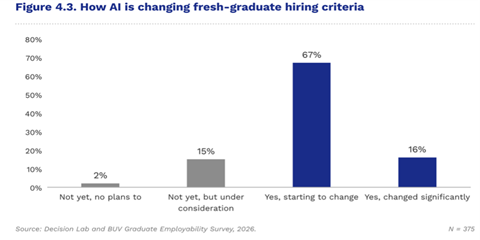
AI BEGINNING TO RESHAPE RECRUITMENT CRITERIA
Digital literacy is the only capability area in which fresh graduates meet employers’ expectations, according to a new report. Yet, it is also the standard rising fastest, as businesses increasingly expect new hires to use AI effectively in the workplace. Some 83 per cent of employers say AI has changed, or is beginning to change, their hiring criteria, while 94 per cent report higher expectations for digital and AI capabilities than they had two to three years ago.

INFRASTRUCTURE / CONSTRUCTION / LOGISTIC / PORT
ĐÀ NẴNG GREEN-LIGHTS US$105 MILLION THAI DEVELOPMENT DEAL
The central city has approved an investment proposal by Thailand’s WHA Group to develop infrastructure for the 400ha WHA Đà Nẵng Industrial Park project on two communes of Thăng Bình and Đồng Dương, with an investment of more than VNĐ2.7 trillion (US$105 million). The city said it approved WHA Industrial Development International's status as an investor in the project, which is expected to take place between 2027 and 2034.

VIETNAM ECONOMY INVESTMENT
MOBILE PHONE EXPORTS RISE 20% TO $51.8 BILLION IN FIRST NINE MONTHS
Exports of mobile phones and components rose 20 per cent year-on-year to nearly US$51.8 billion in the first nine months of 2026, with China, the US and Republic of Korea accounting for more than half of the total. Shipments to the three markets reached a combined $26.18 billion, or 50.6 per cent of total exports of the product group during the period, according to data from the Vietnam Department of Customs under the Ministry of Finance.

VIETNAM ECONOMY INVESTMENT
FRUIT AND VEGETABLE EXPORTS POISED TO HIT $10 BILLION IN 2026
Fruit and vegetable exports are on track to reach nearly US$10 billion in 2026, after rising 19.9 per cent year on year to nearly US$7.4 billion in the first nine months, driven by strong seasonal demand and abundant tropical fruit supplies. The Ministry of Agriculture and Environment said the growth reflected stronger international demand for fresh produce and processed agricultural products.
GARMENT / TEXTILE
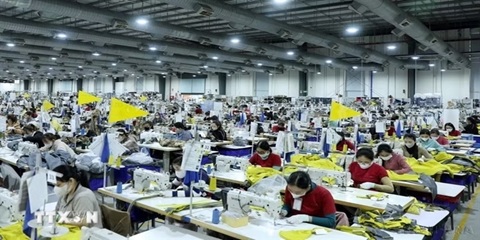
TEXTILE EXPORTS FACE DUAL CHALLENGES OF SUSTAINING ORDERS AND BOOSTING EFFICIENCY AMID GROWING COMPETITION
Data shows that the textile and garment sector maintained its growth momentum in the first nine months of this year. The industry's total export turnover reached an estimated US$35.721 billion in the first nine months of this year, up 3.3 per cent year-on-year. Despite posting encouraging export figures, Vietnamese textile and garment enterprises continue to navigate unpredictable market variables.
Events Sponsors






















