Want to be in the loop?
subscribe to
our notification
Business News
HÀ NỘI ROLLS OUT NEW FRAMEWORK TO ATTRACT STRATEGIC INVESTORS
Hà Nội is rolling out new policies to attract strategic investors and mobilise investment capital for priority sectors, as the city’s foreign direct investment continues to grow, according to the Hà Nội Department of Finance.
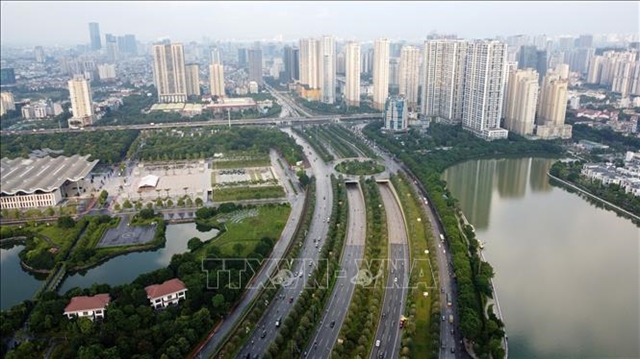
Thăng Long Boulevard links central Hà Nội with the capital’s western districts. — VNA/VNS Photo
HÀ NỘI — Hà Nội has introduced a series of new mechanisms and policies aimed at attracting strategic investors, particularly those with advanced technologies, strong intellectual resources and substantial financial capacity.
The measures are intended to create a more favourable investment environment while channelling capital into sectors aligned with the capital’s long-term development priorities.
According to Lê Trung Hiếu, Deputy Director of the Hà Nội Department of Finance, as of June 21, the city had attracted approximately US$3.163 billion in foreign direct investment, equivalent to 116 per cent of its full-year target. Of the total, 72 per cent was channelled into services, science and technology, indicating that investment inflows are increasingly aligned with the city’s strategic development goals, he said.
Flexible incentives for strategic investors
To implement the Capital Law and Politburo Resolution 10-NQ/TW of June 8, 2026, on the development of the foreign-invested economy, the Hà Nội People’s Council adopted Resolution 46/2026/NQ-HĐND.
Effective from July 1, the Resolution establishes specific mechanisms and policies to improve the investment environment and attract strategic investors to the city’s priority sectors.
Under Article 4 of the Resolution, 17 sectors and business lines are identified as priorities for strategic investment. These include urban railway projects and high-capacity intra- and inter-regional public transport systems requiring minimum investment capital of VNĐ25 trillion; infrastructure projects in free trade zones and free economic zones, including logistics centres, subject to the same minimum investment level; hi-tech park, urban development and service projects requiring at least VNĐ20 trillion; and integrated entertainment and resort complexes worth at least VNĐ30 trillion, which may include five-star or higher-standard tourist accommodation, luxury resorts, shopping centres and integrated entertainment facilities.
The Resolution also provides a range of incentives and support measures for strategic investors, including exemptions from or reductions in land and water-surface rentals; priority in customs and tax procedures for imports and exports; support for human resource development and technical and social infrastructure; and other measures determined by the Hà Nội People’s Council.
Conditions for strategic investors
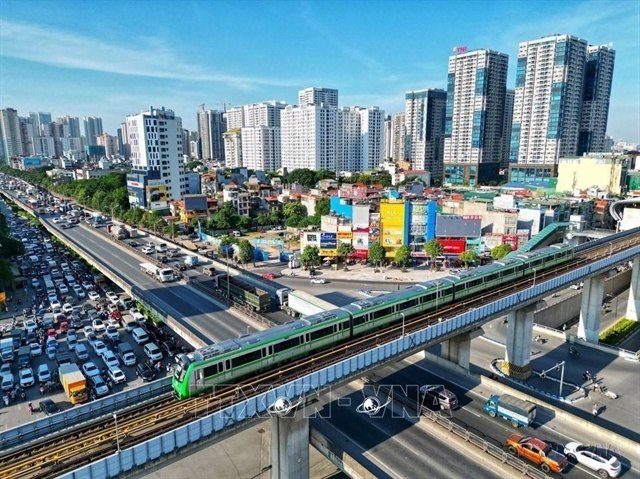
Hà Nội’s Cát Linh-Hà Đông metro has become a popular daily means of transport for residents of the capital. — VNA/VNS Photo
Alongside these incentives, Resolution 46 sets out eligibility criteria and implementation requirements for strategic investors.
Under Article 5.2, strategic investors are required to carry out investment and construction in line with the approved implementation schedule.
For projects with total investment of less than VNĐ6 trillion, investment and construction must be completed within three years from the date of the on-site handover of land or water-surface areas. For projects with total investment of VNĐ6 trillion or more, investors must disburse at least VNĐ6 trillion within three years from the date of the on-site handover and meet applicable disbursement requirements. For projects that do not require the on-site handover of land or water-surface areas, the disbursement period will be calculated from the date on which the relevant investment document is issued.
Such documents may include an investment registration certificate, a decision approving the investment policy and investor, a decision approving the project and investor, or a decision approving project information and the investor.
If the on-site handover of land or water-surface areas is delayed, the period of delay will not be counted towards the prescribed disbursement deadline.
The requirements are intended to ensure that investors benefiting from the strategic investment regime have sufficient financial capacity and are committed to implementing projects on schedule.
From policy to project implementation
To put Resolution 46 into practice, the Hà Nội People’s Committee has issued Plan 287/KH-UBND, setting out measures to ensure its timely, coordinated and effective implementation while creating favourable conditions for strategic investors to carry out their projects.
The plan identifies implementation tasks, timelines, expected outcomes and lead and coordinating agencies, while defining the responsibilities of municipal departments and agencies, commune- and ward-level People’s Committees and other relevant organisations.
A key objective is to accelerate the attraction and selection of strategic investors for priority sectors and business lines, thereby helping the city achieve its socio-economic development objectives and mobilise non-state investment capital for the 2026-30 period and subsequent years.
Under the plan, Resolution 46 and related guidance documents will be widely disseminated among authorities, businesses and domestic and foreign investors.
The full text of the Resolution and relevant guidance will be published on the Hà Nội Portal and the websites of relevant municipal departments and agencies, as well as distributed by email and in hard copy.
Based on the priority sectors and business lines identified in the Resolution and the Capital Master Plan with a 100-year vision, Hà Nội will draw up and publish a list of projects seeking strategic investors for 2026 and subsequent years. Detailed information on these projects will also be prepared to support investment promotion, while potential investors in priority sectors will be identified and approached through targeted promotion activities.
The plan places particular emphasis on proactive investment promotion.
Municipal authorities will step up promotional and outreach activities, invite and meet with major and prospective investors, and encourage them to invest in projects in the city’s priority sectors and business lines.
Authorities will also assist investors in preparing project proposals and dossiers for decisions on or approval of investment policies. Relevant decisions will clearly specify the incentives, support measures and commitments applicable to strategic investors.
For projects in industrial parks and hi-tech parks, competent authorities will process dossiers and issue investment registration certificates under the special investment procedures provided for under the Law on Investment. For projects outside these zones, competent authorities will appraise dossiers, decide on or approve investment policies, and select investors in accordance with applicable regulations.
The plan also requires exemptions from and reductions in land and water-surface rentals, together with other incentives and support measures under Article 6 of Resolution 46, to be implemented in a transparent and effective manner while preventing policy abuse, losses and waste.
Taken together, Resolution 46 and Plan 287 provide Hà Nội with a more flexible framework for not only offering incentives but also identifying priority projects, approaching potential investors and supporting them throughout investment procedures.
With investment capital increasingly flowing into services, science and technology, the new framework is expected to help Hà Nội attract larger, higher-quality projects that are better aligned with its long-term development priorities. — VNS
Source: VNS
Related News
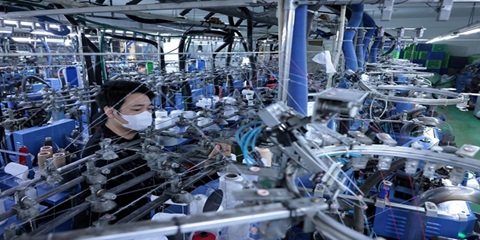
GARMENT / TEXTILE
TEXTILE, GARMENT FIRMS REFORM TO MEET CPTPP ORIGIN RULES
Vietnamese textile and garment manufacturers are aggressively restructuring their supply chains and diversifying material sources to unlock untapped tariff benefits. To capitalise on the Comprehensive and Progressive Agreement for Trans-Pacific Partnership (CPTPP), companies are racing to align with the pact's strict "yarn-forward" rules — a task made difficult by a shortage of raw materials within the trade bloc.
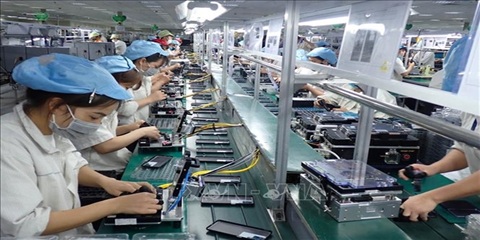
TECHNOLOGY
VIỆT NAM'S DIGITAL TECHNOLOGY INDUSTRY REVENUE SURGES 53% TO $254.6B
Việt Nam's digital technology industry generated an estimated US$254.6 billion in revenue in the first 10 months of 2026, up 53 per cent from a year earlier, while exports rose 46.2 per cent to $212 billion, the Ministry of Science and Technology said in its latest report. According to the report, hardware and electronics exports reached an estimated $30.681 billion in October, up 108 per cent from the same month last year.
TECHNOLOGY
ĐÀ NẴNG SEEKS TO BUILD HIGH-TECH AGRICULTURE, INTEGRATED VALUE CHAINS
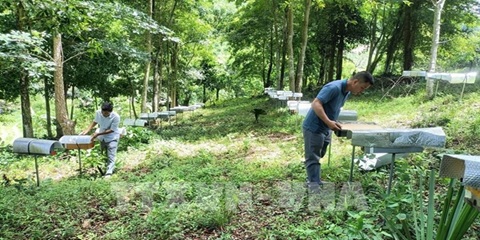
Đà Nẵng is seeking to transform its agricultural sector from a supplier of raw materials into a technology-driven, market-oriented economy, with investment opportunities spanning concentrated production areas, deep processing, logistics and agricultural product distribution. The city aims to shift from traditional agricultural production towards agricultural economic development, organising value chains and increasing the technological content and added value of products through closer links between production and processing.
CHARITY / EXHIBITION / OTHER EVENTS
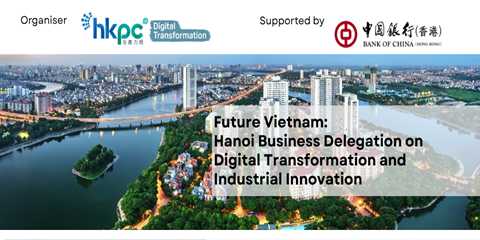
BOCHK ‧ HKPC FUTURE VIETNAM: HANOI BUSINESS DELEGATION ON DIGITAL TRANSFORMATION AND INDUSTRIAL INNOVATION
Interested in exploring Vietnam’s latest developments in digital transformation, technology adoption and industrial innovation? Organised by the Hong Kong Productivity Council (HKPC) and fully supported by Bank of China (Hong Kong) Limited, the "Future Vietnam: Hanoi Business Delegation on Digital Transformation and Industrial Innovation” will feature visits to leading high-tech enterprises across Vietnam and engage with local chambers of commerce, industry organisations and associations. Join us to expand your high-value business network and seize emerging opportunities in the ASEAN market!

INFRASTRUCTURE / CONSTRUCTION / LOGISTIC / PORT
HCM CITY ACCELERATES POWER INFRASTRUCTURE INVESTMENT TO ATTRACT HIGH-TECH CAPITAL
High-tech projects, particularly data centres, are not confined to SHTP but are also expanding into export processing zones and industrial parks across HCM City, driving up electricity demand. Proactively developing power infrastructure, diversifying energy supplies and expanding access to green energy are becoming essential for HCM City to maintain its competitive edge in attracting high-tech foreign direct investment (FDI).

MEMBER CORNER / PROMOTIONS
COSMOPARK ECO INDUSTRIAL ZONE – LONG-TERM ADVANTAGES FOR INDUSTRIAL INVESTORS IN VIETNAM
Spanning 322.3 hectares, with a project operational term extending to 2095 and plans for large-scale power infrastructure, COSMOPARK Eco Industrial Zone offers a strong foundation for manufacturing, high-tech industries, and international supply chain development. As global supply chains continue to evolve, Vietnam is strengthening its position as a strategic destination for international businesses seeking to diversify their manufacturing operations.
Events Sponsors






















