Want to be in the loop?
subscribe to
our notification
Business News
HANOI HOUSING MARKET FACES DESPERATE SHORTAGE OF AFFORDABLE SUPPLY
The Hanoi residential real estate market is encountering significant challenges in terms of undersupply, particularly in the realm of affordable housing. Both low-rise buildings and flats are currently experiencing the most substantial shortage in new supply witnessed over the past decade.
Anchored prices amidst shrinking housing supply
Savills Vietnam's latest market report revealed a shift in the apartment segment. Despite a 52% quarter-on-quarter increase in new supply during the fourth quarter of 2023, the year-on-year figures witnessed a slight decline of 1% to 2,876 units. Notably, primary supply experienced a decrease of 40% quarter on quarter and 41% year on year, totaling 11,911 units. Within this, Grade B flats constituted 84% of the new supply totaling 10,403 units. The low-rise segment, characterized by its discerning market, observed a reduction in new supply by 82% year on year, totaling 272 units in 2023. Primary supply, comprising 710 units from 16 projects, decreased by 2% quarter on quarter and 23% year on year. The report highlighted townhouses as the primary product, commanding a 44% market share.
Ms. Do Thu Hang, Senior Director of Research & Consulting at Savills Hanoi, emphasized the sustained growth in housing prices driven by escalating land and construction costs, coupled with improved infrastructure and quality standards. The perpetually constrained supply further propels the upward trajectory of the average primary selling price in the market.
Within the apartment segment, units priced between VND51-70 million per square meter accounted for 63% of new supply, marking a 24% year-on-year increase. Notably, these units constituted 49% of sales, reflecting a 21% year-on-year surge. Apartments exceeding VND4 billion each captured 42% of sales in 2023, an ascent from 3% in 2019. The VND2-4 billion price range maintained its dominance, claiming 55% of the market share, while units priced below VND2 billion constituted a mere 3%.
In the low-rise real estate market, investors maintained high selling prices. Primary villa prices rose 5% quarter-on-quarter to VND160 million per square meter. Terraced houses appreciated by 3%, now at VND194 million per square meter. Shophouse prices also increased by 3% to VND328 million per square meter.
Stagnation
The low-rise real estate sector marked the lowest transaction volume in several years. In the fourth quarter of 2023 alone, transactions plummeted by 37% quarter on quarter and 67% year on year. The absorption rate dwindled to a mere 9% during the quarter, showcasing a decline of 5 percentage points quarter on quarter and 12 percentage points year on year. The entirety of 2023 witnessed a meager 359 units sold, the lowest figure since 2014. The low-rise housing market faced a staggering 76% year-on-year decline in transactions, with the absorption rate plummeting to 36%, down 31 percentage points year on year.
The apartment segment demonstrated resilience, with a surge in sales reaching 3,045 units during the fourth quarter. This represents an impressive 45% quarter-on-quarter increase and a commendable 5% year-on-year growth. The absorption rate for new supply in the quarter stood at an encouraging 46%.
Discussing the subdued absorption rate, Ms. Do Thu Hang underscored the prevailing sentiment-driven concerns among buyers. Notably, the apartments sold in the fourth quarter of 2023 predominantly hailed from projects developed by reputable investors who provided robust legal guarantees and fulfilled financial obligations. Despite the support of soft bank loans, end buyers remained cautious, placing a premium on legal considerations. Banks also exhibited apprehension, concerned about investors meeting legal obligations for their projects during the loan approval process. This interplay of factors led to the subdued absorption rate, even in the face of decreased lending interest rates.
Unlocking opportunities to address real housing needs
In the midst of constrained supply and elevated primary prices, individuals with genuine housing needs may find promising opportunities in the secondary market, according to Ms. Do Thu Hang. The secondary market presents advantages for discerning buyers, encompassing both affordability and legal clarity. Notably, secondary villa land prices are 7% below the average primary price, secondary townhouse prices are a compelling 24% lower than primary counterparts, and secondary commercial townhouses offer 40% cost savings compared to primary products.
Moreover, homebuyers can anticipate a surge in new supply driven by infrastructure development. Projects such as Ring Roads 3, 5 and 4 are poised to expand Hanoi's housing market, targeting outer areas rather than the bustling downtown and business districts. This infrastructure boon is expected to stimulate housing demand in neighboring provinces, where more reasonable prices and ample land resources prevail.
Savills' report also illuminated a positive trajectory for supply, highlighting the increasing role of housing products in non-business areas and neighboring provinces in meeting Hanoi's housing demand. In 2024, the market anticipates the introduction of 12,100 new apartments, with 87% of this supply concentrated in Hoang Mai, Nam Tu Liem and Ha Dong districts. Further, Hung Yen and Bac Ninh are projected to contribute around 203,000 apartments from 2024 to 2026. Looking ahead to 2026, the low-rise segment is expected to witness the emergence of 14,000 new apartments from 37 projects, with major endeavors like Vinhomes Co Loa and Vinhomes Wonder Park contributing fresh low-rise supply to the market.
Notably, recent legislative advancements, including the ratification of the Housing Law, the Law on Real Estate Business, and the Land Law, are poised to cast a positive impetus to the market. Ms. Hang emphasized that the stipulation requiring investors to fulfill financial obligations before product formation enhances buyer confidence. Consequently, in the forthcoming years, specifically 2024-2025 and beyond, the market is expected to witness a strengthening of confidence, with products being delivered by reputable investors boasting genuine financial capacity. This promises to render the market more balanced and diversified in terms of products.
Source: VCCI
Related News

CHARITY / EXHIBITION / OTHER EVENTS
INVESTMENT OPPORTUNITIES IN CA MAU PROVINCE: 96 PROJECTS AND 20 STRATEGIC PROJECTS
We are pleased to share with you information on investment projects currently seeking investors in Ca Mau Province. Should your esteemed company or association be interested, we kindly invite you to review the project information and complete the registration form via the links provided. The Ho Chi Minh City Investment and Trade Promotion Centre (ITPC) will consolidate the expressions of interest and facilitate connections with the leadership of Ca Mau Province at a meeting tentatively scheduled for 13 November 2026 in Ho Chi Minh City.

MEMBER CORNER / PROMOTIONS
BẰNG KIỀU LIVESHOW - A SYMPHONY OF LOVE UNDER THE GOLDEN GLOW
A masterclass in live music that takes the audience on a soulful journey through immortal love songs, guided by the peerless artistry and emotive storytelling of renowned singer Bằng Kiều. The highlight of the night is his seamless musical chemistry with special guest Triệu Hồng Ngọc, promising passionate and deeply resonant duets inside the magnificent Grand Ballroom.
INFRASTRUCTURE / CONSTRUCTION / LOGISTIC / PORT
ĐÀ NẴNG GREEN-LIGHTS US$105 MILLION THAI DEVELOPMENT DEAL
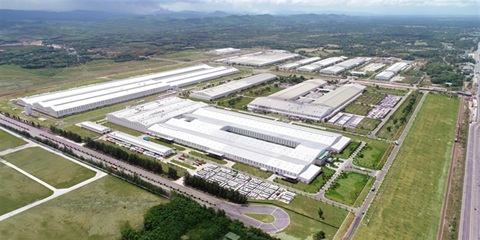
The central city has approved an investment proposal by Thailand’s WHA Group to develop infrastructure for the 400ha WHA Đà Nẵng Industrial Park project on two communes of Thăng Bình and Đồng Dương, with an investment of more than VNĐ2.7 trillion (US$105 million). The city said it approved WHA Industrial Development International's status as an investor in the project, which is expected to take place between 2027 and 2034.
VIETNAM ECONOMY INVESTMENT
MOBILE PHONE EXPORTS RISE 20% TO $51.8 BILLION IN FIRST NINE MONTHS
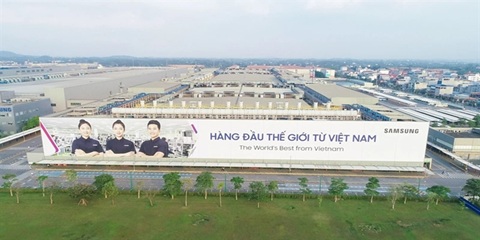
Exports of mobile phones and components rose 20 per cent year-on-year to nearly US$51.8 billion in the first nine months of 2026, with China, the US and Republic of Korea accounting for more than half of the total. Shipments to the three markets reached a combined $26.18 billion, or 50.6 per cent of total exports of the product group during the period, according to data from the Vietnam Department of Customs under the Ministry of Finance.

INFRASTRUCTURE / CONSTRUCTION / LOGISTIC / PORT
VIỆT NAM-CAMBODIA TRADE GATHERS PACE TOWARDS $20 BILLION TARGET
Trade between Việt Nam and Cambodia continues to grow, remaining a bright spot and a key pillar of bilateral cooperation as the two countries aim to raise two-way trade to US$20 billion in the coming years. After setting a record of more than $11.3 billion last year, bilateral trade reached about $8.7 billion in the first eight months of this year, up 8.3 per cent year on year.
VIETNAM ECONOMY INVESTMENT
FRUIT AND VEGETABLE EXPORTS POISED TO HIT $10 BILLION IN 2026
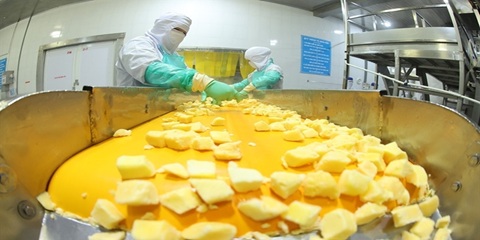
Fruit and vegetable exports are on track to reach nearly US$10 billion in 2026, after rising 19.9 per cent year on year to nearly US$7.4 billion in the first nine months, driven by strong seasonal demand and abundant tropical fruit supplies. The Ministry of Agriculture and Environment said the growth reflected stronger international demand for fresh produce and processed agricultural products.
Events Sponsors






















