Want to be in the loop?
subscribe to
our notification
Business News
HANOI’S LUCRATIVE PROPERTY MARKET ATTRACTS FOREIGNERS
Hanoi expects to attract more foreign buyers on its real estate market as a rising number of foreign experts and entrepreneurs are working in the capital city.
Statistics show that more than 82,000 foreigners live and work in Vietnam, and a large number of them are in Hanoi from South Korea, China, Singapore, Russia and the US, reported the Vietnam News Agency.
According to a report by HSBC Vietnam, 29 per cent of foreign experts working in the country said they were ready to spend their savings on home purchases, including high-end apartments and luxury property.
The revised law on housing, which took effect in 2015, has created more favourable conditions for foreigners to buy houses in Vietnam. More open policies to attract foreign investment have also enhanced the attractiveness of Hanoi’s real estate.
Experts said granting permission for foreigners to purchase housing is expected to encourage more types of real estate like investment, tourism and service property, which will benefit the economy.
The western and northern areas of Hanoi are attracting foreign buyers, according to experts. Notably, more and more customers from the Republic of Korea, Japan, Malaysia and Singapore are seeking to buy or rent high-end apartments in the west of the city.
Nguyen Phuc Thanh, an experienced investor, explained that the western side accommodates the headquarters of many ministries, sectors and major domestic and foreign businesses. It is also home to key facilities such as the Vietnam National Convention Centre and the National Sports Complex.
Additionally, transport infrastructure in the area is relatively modern and convenient for accessing inner areas and main roads to other provinces and cities, he said.
The insiders also said the western area, including the My Dinh area, will remain a top destination for foreigners. More importantly, these clients have high requirements for property products, especially accompanying services, which means the foreign influx is a boon for investors in high-end projects.
Nguyen Bich Trang, former director of CBRE Hanoi, said the north of Hanoi, even on the other end of the Nhat Tan Bridge, is developing strongly. In the next five to seven years, new residential areas will be built here and change the city’s real estate market, particularly the mid-range and high-end segments.
The higher development potential of high-end property in the north, compared to other areas, is thanks to certain geographical advantages, she said.
Echoing that view, Le Manh Cuong, a division head at the municipal Department of Planning and Architecture, said location is key for property value. Most big cities in the world also expand towards rivers or airports, and very few have developed away from them.
This is why residential projects in the south of Hanoi like Hoa Lac or Xuan Mai were not as successful as expected. Meanwhile, although many projects in the north, particularly on the other side of the Red River, are just in the planning stage, they have attracted attention from foreign investors and clients, he said.
Chairman of Ciputra Group Budiarsa Sastrawinata said Hanoi is a potential market for big projects, especially complexes with a diverse range of property products.
Deputy Minister of Construction Nguyen Van Sinh said Hanoi needs to identify the core issues to solve difficulties on the property market. The city should adjust the structure of property products according to real demand and also continue to have preferential conditions for enterprises, including domestic and foreign firms. Those would encourage the sustainable development of the real estate market.
A recent major investment is a smart city project in Hai Boi and Vinh Ngoc communes of Dong Anh District, Hanoi. Implemented by a Japanese firm and a Vietnamese partner, it has total investment of more than US$4.1 billion and is set to begin construction this October. It is one of the biggest foreign-invested projects in Hanoi in the first half of 2018.
According to the Ministry of Planning and Investment, foreign investors poured $5.9 billion into Vietnamese real estate between January and August, accounting for 24.2 per cent of total registered foreign capital. That gave property second place among the 17 sectors receiving foreign investment during the period.
Source: VIR
Related News
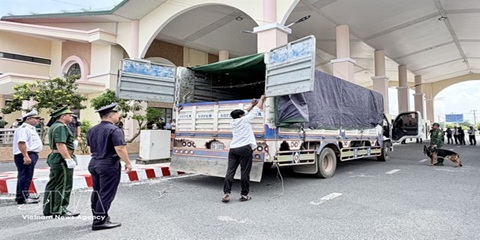
INFRASTRUCTURE / CONSTRUCTION / LOGISTIC / PORT
VIỆT NAM-CAMBODIA TRADE GATHERS PACE TOWARDS $20 BILLION TARGET
Trade between Việt Nam and Cambodia continues to grow, remaining a bright spot and a key pillar of bilateral cooperation as the two countries aim to raise two-way trade to US$20 billion in the coming years. After setting a record of more than $11.3 billion last year, bilateral trade reached about $8.7 billion in the first eight months of this year, up 8.3 per cent year on year.
TECHNOLOGY
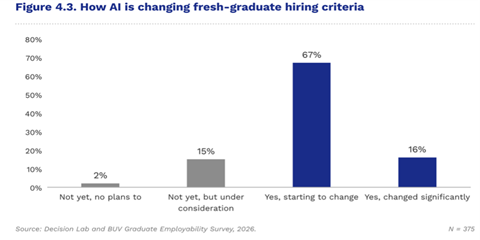
AI BEGINNING TO RESHAPE RECRUITMENT CRITERIA
Digital literacy is the only capability area in which fresh graduates meet employers’ expectations, according to a new report. Yet, it is also the standard rising fastest, as businesses increasingly expect new hires to use AI effectively in the workplace. Some 83 per cent of employers say AI has changed, or is beginning to change, their hiring criteria, while 94 per cent report higher expectations for digital and AI capabilities than they had two to three years ago.
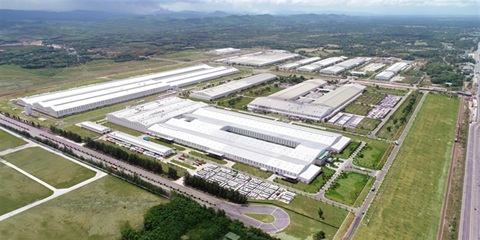
INFRASTRUCTURE / CONSTRUCTION / LOGISTIC / PORT
ĐÀ NẴNG GREEN-LIGHTS US$105 MILLION THAI DEVELOPMENT DEAL
The central city has approved an investment proposal by Thailand’s WHA Group to develop infrastructure for the 400ha WHA Đà Nẵng Industrial Park project on two communes of Thăng Bình and Đồng Dương, with an investment of more than VNĐ2.7 trillion (US$105 million). The city said it approved WHA Industrial Development International's status as an investor in the project, which is expected to take place between 2027 and 2034.
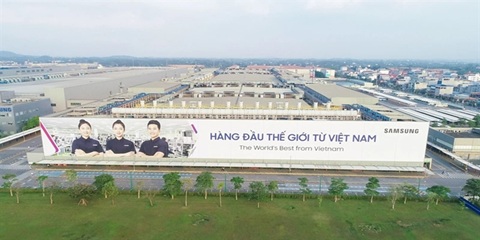
VIETNAM ECONOMY INVESTMENT
MOBILE PHONE EXPORTS RISE 20% TO $51.8 BILLION IN FIRST NINE MONTHS
Exports of mobile phones and components rose 20 per cent year-on-year to nearly US$51.8 billion in the first nine months of 2026, with China, the US and Republic of Korea accounting for more than half of the total. Shipments to the three markets reached a combined $26.18 billion, or 50.6 per cent of total exports of the product group during the period, according to data from the Vietnam Department of Customs under the Ministry of Finance.
VIETNAM ECONOMY INVESTMENT
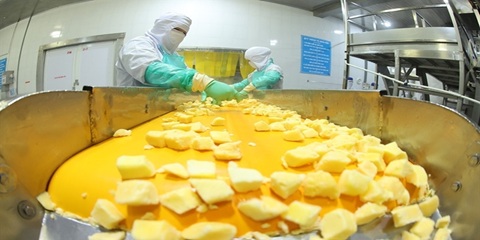
FRUIT AND VEGETABLE EXPORTS POISED TO HIT $10 BILLION IN 2026
Fruit and vegetable exports are on track to reach nearly US$10 billion in 2026, after rising 19.9 per cent year on year to nearly US$7.4 billion in the first nine months, driven by strong seasonal demand and abundant tropical fruit supplies. The Ministry of Agriculture and Environment said the growth reflected stronger international demand for fresh produce and processed agricultural products.
GARMENT / TEXTILE
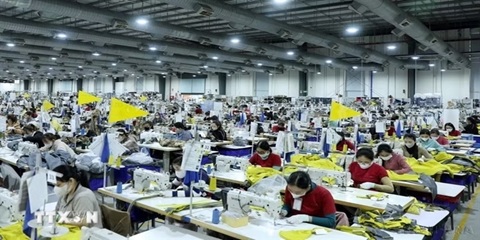
TEXTILE EXPORTS FACE DUAL CHALLENGES OF SUSTAINING ORDERS AND BOOSTING EFFICIENCY AMID GROWING COMPETITION
Data shows that the textile and garment sector maintained its growth momentum in the first nine months of this year. The industry's total export turnover reached an estimated US$35.721 billion in the first nine months of this year, up 3.3 per cent year-on-year. Despite posting encouraging export figures, Vietnamese textile and garment enterprises continue to navigate unpredictable market variables.
Events Sponsors






















