Want to be in the loop?
subscribe to
our notification
Business News
HANOI’S REAL ESTATE SPHERE SKYROCKETS
With Hanoi retaining its spot as the top foreign direct investment destination in the country, premium real estate for non-nationals is becoming hotter, especially with the latest project in west Hanoi known as The Matrix One. Nguyen Huong reports.
Vietnam has usurped China as Japan’s second-largest software outsourcing partner, right behind India, through its housing of substantial research and development bases from the likes of IBM, Intel, Oracle, Samsung, and Grab.
According to the General Statistics Office, from January to December 20, total foreign investment into Vietnam, including newly-registered, additional, and stake-acquisition capital, reached nearly $31.8 billion, up 3.1 per cent on-year. In the 2019 e-Conomy SEA report by Google, Temasek, and Bain & Company, Vietnam was designated as the third-most funded country in Southeast Asia, after Singapore and Indonesia.
According to a report by Hanoi People’s Committee, the capital’s foreign direct investment (FDI) for the year into the city is projected to hit over $8 billion thanks to strong investment promotion policies and an improved business environment. Hanoi remained the top FDI destination in Vietnam by October with $6.85 billion in commitments, accounting for 23.5 per cent of total committed FDI nationwide in the year-to-date. This outpaced the country’s financial hub of Ho Chi Minh City, which held 17 per cent.
Newly-registered FDI was dominated by the manufacturing sector with a 37.2 per cent share, while the real estate industry came in second with a 31.2 per cent share. Japan was the largest contributor to Hanoi’s FDI inflows, followed by South Korea and Singapore.
Hot destination
Hanoi has been focusing on developing its infrastructure with new highways, subway systems, and construction projects either in progress or planned. Tightening credit for high-end real estate developments, coupled with the scarcity of land plots in the centre of Hanoi, could lead to a shortage of supply in the luxury segment in the coming years, according to experts. This will significantly affect the market as demand for quality apartments and high-class services increases, at the same time as quality of life improves and Hanoi’s foreign population continues to grow.
When the Vietnamese real estate arena opened up to foreign ownership in 2015, more and more overseas investors began to pay more attention to the property market in Hanoi in particular.
The phenomenon was bolstered by factors such as improved infrastructure and transportation, increased number of industrial zones, and competitive selling prices with projected high returns and high-quality products, among others.
The city has been expanding towards the west, in Cau Giay and Tu Liem districts. Referred to as a new central business district, the area has attracted international investors towards real estate products, especially in My Dinh. It is expected to become the new administrative area of Hanoi, with it hosting the relocation of key state ministries and agencies.
These relocations, the concentration of Grade A offices, and the upcoming hosting of the Formula 1 Grand Prix have made the area more desirable and valuable. With significant improvements to the district’s transport systems, My Dinh is easily accessible from all parts of Hanoi, as well as industrial zones via key roads.
Additionally, My Dinh has become the most concentrated area for utility infrastructure in Hanoi with many healthcare, education, social culture, high-quality entertainment, and recreation facilities.
Therefore, My Dinh is now home to an emerging expatriate community, increasing real estate value in the area with an annual rental yield ranging from 7-8 per cent and up to 25 per cent capital gain within a five-year horizon.
A prime urban resort
The Matrix One is one such real estate highlight. Well-located on Le Quang Dao street in South Tu Liem district’s My Dinh ward, The Matrix One is one of the few properties with four frontages on major arterial roads.
At the centre of My Dinh, The Matrix One is adjacent to the upcoming Formula 1 circuit and the Ministry of Foreign Affairs. It is only a few minutes away from the upcoming Metro Line 3 (which will be operational in 2021), Grade A offices, the National Convention Centre, My Dinh Stadium, Cau Giay Park, international schools, hospitals and clinics, as well as major shopping destinations. Ring Road 3 and Thang Long Avenue bring access to Noi Bai International Airport in 30 minutes and provide easy access to numerous industrial zones.
Conceived as a matrix of services and facilities built around one unique property, The Matrix One comprises an iconic landmark tower, a 14-hectare lake and park with smart underground parking, and an international school.
Positioned with a work-play-live concept, The Matrix One also features over 40 cutting-edge amenities including a coworking space, central square, zen gardens, fountain, all-season swimming pool, infinity pool, yoga, fitness and dance centre, tennis court, football pitch, playgrounds, and a lot more besides.
Designed by acclaimed Austrian architecture firm, Baumschlager Eberle Architekten, The Matrix One consists of 740 intelligently-configured apartments, beautifully appointed on 44 floors between two blocks of buildings.
All units are ensured one car parking slot and are equipped with floor-to-ceiling windows in the bedrooms, a fresh air system, drinkable tap water, a smart home system, and three-layered security.
A mix of modern elegance and inspirational architectural design with the highest international standards, The Matrix One offers a choice of three spacious unit types, ranging from two- to three-bedroom and dual-key apartments.
Hanoi’s shortage of supply in the luxury segment in the coming years makes The Matrix One one of the capital’s most valuable and desirable projects, especially for foreign investors. The Matrix One’s projected rental yield is around 7-8 per cent per annum with longer leasing terms for the most demanding tenants.
Source: VIR
Related News

INFRASTRUCTURE / CONSTRUCTION / LOGISTIC / PORT
VIỆT NAM-CAMBODIA TRADE GATHERS PACE TOWARDS $20 BILLION TARGET
Trade between Việt Nam and Cambodia continues to grow, remaining a bright spot and a key pillar of bilateral cooperation as the two countries aim to raise two-way trade to US$20 billion in the coming years. After setting a record of more than $11.3 billion last year, bilateral trade reached about $8.7 billion in the first eight months of this year, up 8.3 per cent year on year.
TECHNOLOGY
AI BEGINNING TO RESHAPE RECRUITMENT CRITERIA
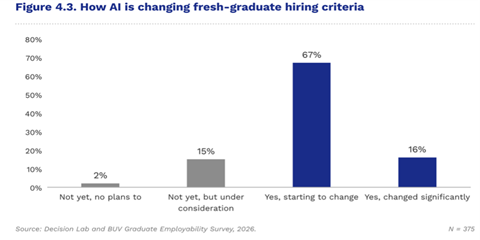
Digital literacy is the only capability area in which fresh graduates meet employers’ expectations, according to a new report. Yet, it is also the standard rising fastest, as businesses increasingly expect new hires to use AI effectively in the workplace. Some 83 per cent of employers say AI has changed, or is beginning to change, their hiring criteria, while 94 per cent report higher expectations for digital and AI capabilities than they had two to three years ago.

INFRASTRUCTURE / CONSTRUCTION / LOGISTIC / PORT
ĐÀ NẴNG GREEN-LIGHTS US$105 MILLION THAI DEVELOPMENT DEAL
The central city has approved an investment proposal by Thailand’s WHA Group to develop infrastructure for the 400ha WHA Đà Nẵng Industrial Park project on two communes of Thăng Bình and Đồng Dương, with an investment of more than VNĐ2.7 trillion (US$105 million). The city said it approved WHA Industrial Development International's status as an investor in the project, which is expected to take place between 2027 and 2034.

VIETNAM ECONOMY INVESTMENT
MOBILE PHONE EXPORTS RISE 20% TO $51.8 BILLION IN FIRST NINE MONTHS
Exports of mobile phones and components rose 20 per cent year-on-year to nearly US$51.8 billion in the first nine months of 2026, with China, the US and Republic of Korea accounting for more than half of the total. Shipments to the three markets reached a combined $26.18 billion, or 50.6 per cent of total exports of the product group during the period, according to data from the Vietnam Department of Customs under the Ministry of Finance.

VIETNAM ECONOMY INVESTMENT
FRUIT AND VEGETABLE EXPORTS POISED TO HIT $10 BILLION IN 2026
Fruit and vegetable exports are on track to reach nearly US$10 billion in 2026, after rising 19.9 per cent year on year to nearly US$7.4 billion in the first nine months, driven by strong seasonal demand and abundant tropical fruit supplies. The Ministry of Agriculture and Environment said the growth reflected stronger international demand for fresh produce and processed agricultural products.
GARMENT / TEXTILE
TEXTILE EXPORTS FACE DUAL CHALLENGES OF SUSTAINING ORDERS AND BOOSTING EFFICIENCY AMID GROWING COMPETITION
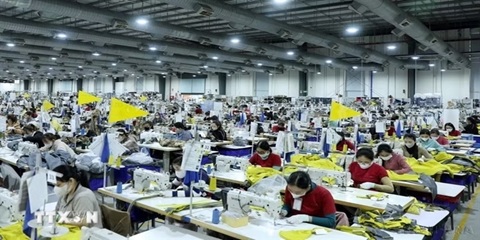
Data shows that the textile and garment sector maintained its growth momentum in the first nine months of this year. The industry's total export turnover reached an estimated US$35.721 billion in the first nine months of this year, up 3.3 per cent year-on-year. Despite posting encouraging export figures, Vietnamese textile and garment enterprises continue to navigate unpredictable market variables.
Events Sponsors






















