Want to be in the loop?
subscribe to
our notification
Business News
HCM CITY SEEKS US$19 BILLION IN FOREIGN INVESTMENT IN 2026
HCM City is prioritising high-quality foreign investment linked to technology, finance and sustainable development as it seeks to strengthen its position as a regional economic hub.
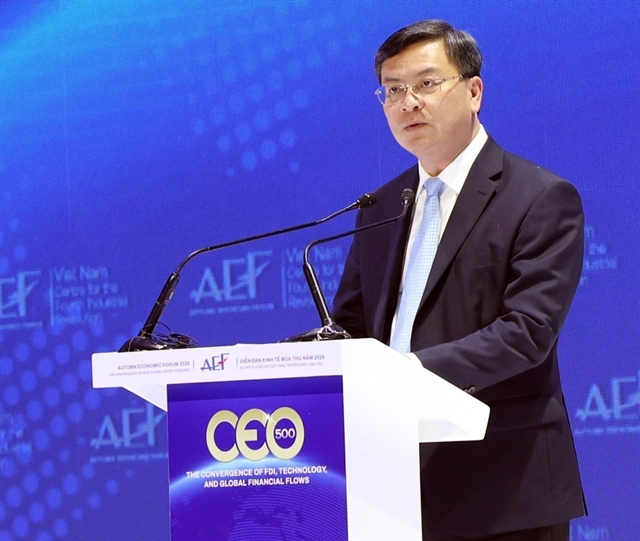
Nguyễn Công Vinh, vice chairman of the HCM City People’s Committee, delivers the opening remarks at the CEO 500 conference on October 26. — VNS Photo Văn Châu
HCM CITY — HCM City is prioritising high-quality foreign investment linked to technology, finance and sustainable development as it seeks to strengthen its position as a regional economic hub.
More than 500 domestic and international business leaders gathered at the CEO 500 conference on October 26 to discuss investment opportunities and new growth drivers for HCM City amid changing global capital flows and technological advances.
Held as part of the Autumn Economic Forum 2026 (AEF 2026), the conference focused on the convergence of foreign direct investment (FDI), technology and global financial flows, providing a platform for dialogue between city authorities, international organisations and the business community.
The city aims to attract US$19 billion in foreign investment in 2026, with a focus on high-quality projects in finance, technology, digital transformation, the green economy, sustainable development and innovation.
Addressing the conference, Nguyễn Công Vinh, vice chairman of the city People's Committee, said the city's priority was not simply to attract more investment, but to work with investors to identify emerging opportunities, address development challenges and create new sources of economic growth.
Following its administrative merger, the city has expanded its economic and urban development space, creating greater potential for large-scale projects and stronger regional connectivity.
Improved institutional arrangements, including greater decentralisation in planning and resource mobilisation, are also expected to support investment.
Vinh said high-quality FDI must go hand in hand with technology, while technology can only deliver its full value when supported by adequate infrastructure, reliable energy supplies and accessible financial resources.
Investors increasingly assess destinations as part of an integrated ecosystem rather than as isolated markets.
Factors include the availability of skilled workers, supply chain connectivity, access to capital and technology, and the potential to expand operations from a local base into regional markets.
Against this backdrop, HCM City wants to hear directly from international business leaders about how changes in global investment, technology and financial flows are influencing corporate decisions and what investors expect from potential destinations.
Their feedback will help the city identify its competitive advantages, areas requiring further investment and barriers that need to be addressed.
"From listening, we want to move towards connectivity, and from connectivity, we will take action together," Vinh said.
The city is seeking to translate dialogue into practical cooperation, with a commitment to clearly defined tasks, responsible agencies and implementation timelines.
Four drivers of future growth
Vinh outlined four priority areas that will shape the city's next stage of development: infrastructure and new development spaces, international finance, clean energy, and the digital economy and technology.
Infrastructure development will focus on projects with the potential to improve regional connectivity and unlock new economic opportunities, including transit-oriented development (TOD), seaports, logistics facilities and free trade zones.
In finance, the Vietnam International Financial Centre in the city (VIFC-HCMC) is expected to strengthen connections between the city and regional capital markets, attracting international financial institutions and investment flows.
The city has called on international financial institutions to engage early in discussions on the conditions, procedures and roadmap for participating in the centre.
Clean energy is another priority as the expansion of urban areas, industrial activities and logistics increases demand for reliable and sustainable power.
HCM City aims to work with investors to identify suitable investment models, priority areas and implementation plans.
Meanwhile, digital infrastructure, artificial intelligence (AI), high-tech parks and regulatory sandboxes are expected to support the development and commercial application of new technologies.
The city hopes to work with technology groups to identify priority areas for pilot projects and scale successful applications from HCM City to wider markets.
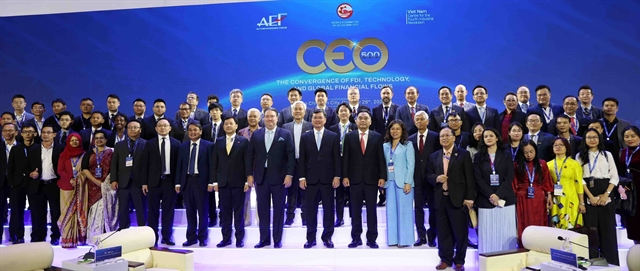
HCM City leaders pose for a group photo with delegates at the CEO 500 conference. — VNS Photo Văn Châu
Moving up the global value chain
Speaking at the conference, Fazurin Jamaludin, International Monetary Fund (IMF) Resident Representative for Việt Nam and Laos, said the technology cycle driven by AI was becoming a major force behind global exports and investment in technology.
While acknowledging Việt Nam's positive economic growth momentum, he recommended that the country prioritise price stability and preserve fiscal space in the short term, alongside stronger international cooperation on trade rules, energy security and supply chain diversification.
Over the medium and long term, structural reforms will be essential to sustain growth, particularly improvements in labour productivity, public investment management and capital market development.
Meanwhile, Nguyễn Hữu Huân, vice chairman of the Executive Agency of VIFC-HCMC, said Việt Nam needed to shift from attracting investment primarily on the basis of capital size and manufacturing capacity towards projects that generate higher domestic value, strengthen technological capabilities and promote innovation.
Although the country has made significant progress in attracting FDI and participating in global supply chains, much of its manufacturing activity remains concentrated in assembly and processing, while domestic research and development capabilities and the supply of highly skilled workers remain limited.
He identified AI and digital infrastructure, semiconductors, robotics and automation, biotechnology, clean energy, advanced materials and digital finance as priority areas for attracting next-generation investment.
Quantum technology, he added, required a longer-term development strategy.
Huân stressed that selecting priority industries must be accompanied by a clear assessment of where Việt Nam can build competitive advantages, including chip design, AI solutions, component manufacturing and technology ownership.
Investment decisions should also take into account market demand, workforce capabilities and the potential for projects to generate spillover benefits for domestic businesses.
In this context, VIFC-HCMC should serve not only as a channel for mobilising capital but also as a strategic coordinator directing financial resources towards key industries and technology-driven innovation.
The objective is to improve the quality of investment rather than focus solely on the volume of capital attracted.
Through the CEO 500 conference, HCM City aims to strengthen engagement with international investors and turn discussions on global investment trends into concrete projects.
By combining high-quality FDI with technological advancement, sustainable energy and deeper financial integration, the city hopes to reinforce its role as a gateway connecting Việt Nam with international capital, technology, markets and regional growth opportunities. — VNS
Source: VNS
Related News
GARMENT / TEXTILE
TEXTILE, GARMENT FIRMS REFORM TO MEET CPTPP ORIGIN RULES
Vietnamese textile and garment manufacturers are aggressively restructuring their supply chains and diversifying material sources to unlock untapped tariff benefits. To capitalise on the Comprehensive and Progressive Agreement for Trans-Pacific Partnership (CPTPP), companies are racing to align with the pact's strict "yarn-forward" rules — a task made difficult by a shortage of raw materials within the trade bloc.
MEMBER CORNER / PROMOTIONS
COSMOPARK ECO INDUSTRIAL ZONE – LONG-TERM ADVANTAGES FOR INDUSTRIAL INVESTORS IN VIETNAM
Spanning 322.3 hectares, with a project operational term extending to 2095 and plans for large-scale power infrastructure, COSMOPARK Eco Industrial Zone offers a strong foundation for manufacturing, high-tech industries, and international supply chain development. As global supply chains continue to evolve, Vietnam is strengthening its position as a strategic destination for international businesses seeking to diversify their manufacturing operations.
INFRASTRUCTURE / CONSTRUCTION / LOGISTIC / PORT
HCM CITY ACCELERATES POWER INFRASTRUCTURE INVESTMENT TO ATTRACT HIGH-TECH CAPITAL
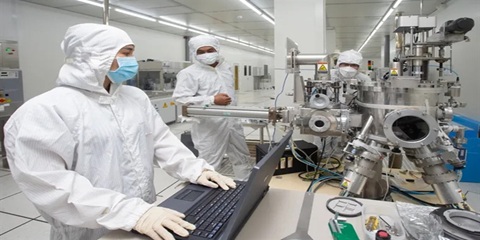
High-tech projects, particularly data centres, are not confined to SHTP but are also expanding into export processing zones and industrial parks across HCM City, driving up electricity demand. Proactively developing power infrastructure, diversifying energy supplies and expanding access to green energy are becoming essential for HCM City to maintain its competitive edge in attracting high-tech foreign direct investment (FDI).
VIETNAM ECONOMY INVESTMENT
VIETNAMESE COMPANIES OPTIMISTIC ON INTERNATIONAL GROWTH
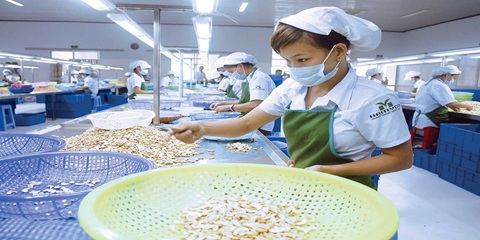
Vietnamese businesses are among the most confident about the outlook for international trade, according to HSBC’s Global Trade Pulse Survey 2026, released on November 16. The survey captures the views of 10,000 senior business leaders across 26 markets on trade, tariffs, supply chains, and technology. Findings show that 94 per cent of Vietnamese businesses expect their international trade to grow over the next two years. Vietnam ranks joint top in the survey with the Philippines, compared with 86 per cent globally.
TECHNOLOGY
ĐÀ NẴNG SEEKS TO BUILD HIGH-TECH AGRICULTURE, INTEGRATED VALUE CHAINS
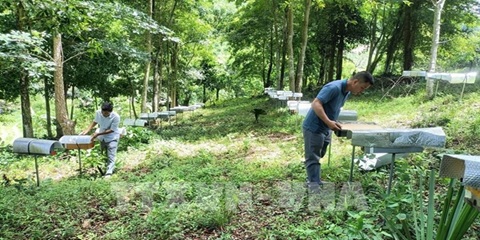
Đà Nẵng is seeking to transform its agricultural sector from a supplier of raw materials into a technology-driven, market-oriented economy, with investment opportunities spanning concentrated production areas, deep processing, logistics and agricultural product distribution. The city aims to shift from traditional agricultural production towards agricultural economic development, organising value chains and increasing the technological content and added value of products through closer links between production and processing.
TECHNOLOGY
VIỆT NAM'S DIGITAL TECHNOLOGY INDUSTRY REVENUE SURGES 53% TO $254.6B
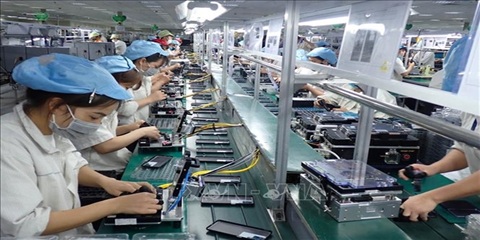
Việt Nam's digital technology industry generated an estimated US$254.6 billion in revenue in the first 10 months of 2026, up 53 per cent from a year earlier, while exports rose 46.2 per cent to $212 billion, the Ministry of Science and Technology said in its latest report. According to the report, hardware and electronics exports reached an estimated $30.681 billion in October, up 108 per cent from the same month last year.
Events Sponsors






















