Want to be in the loop?
subscribe to
our notification
Business News
HCMC EYES CAN GIO AS A NEW TOURISM GROWTH HUB
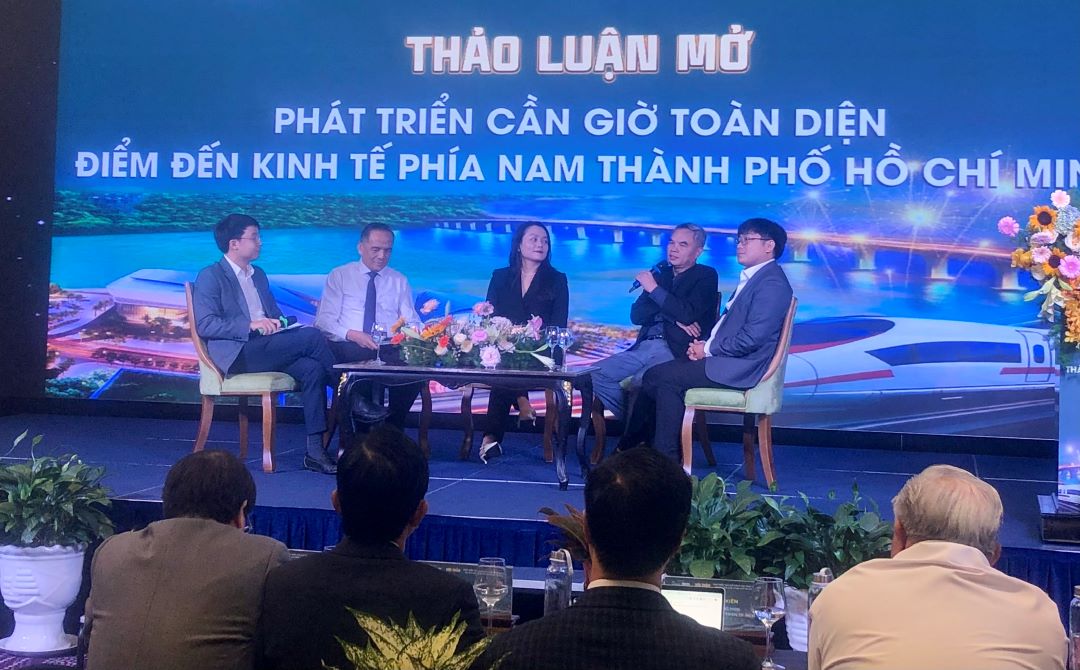
Representatives of businesses and experts discuss issues at the event - PHOTO: N. SUONG
HCMC – HCMC is positioning Can Gio as a new tourism growth hub as it seeks to expand its service-based economy and ease pressure on the congested city center, where development space is increasingly limited.
The orientation was highlighted at a workshop titled “Developing Can Gio into a new tourism growth hub for HCMC,” held on January 29. The event brought together government agencies, research institutions, and tourism and infrastructure businesses.
According to Pham Huy Binh, director of the HCMC Department of Tourism, Can Gio holds a strategic role in the city’s new urban–ecological–tourism development cycle. It is home to a UNESCO-recognized mangrove biosphere reserve, a coastline stretching more than 23 kilometers, relatively ample land reserves, and a distinct fishing village culture, making it suitable for eco-tourism and high-quality resort development.
Despite these advantages, Can Gio has remained largely outside HCMC’s main tourism flow for many years. Limited infrastructure and accessibility have been key constraints, with travel relying mainly on ferry services that are time-consuming and lack regional connectivity. This has reduced Can Gio’s appeal as a regular destination, particularly for international visitors.
The outlook is changing as several major infrastructure projects move forward. Construction of the Ben Thanh–Can Gio high-speed urban railway began in late 2025. The Can Gio Bridge is under development and is expected to be completed by 2029. Authorities are also studying a proposed sea-crossing route linking Can Gio and Vung Tau.
City tourism officials said multimodal transport infrastructure would allow Can Gio to shift from an ecological island into a destination capable of attracting large visitor flows and helping relieve pressure on the city center.
However, participants at the workshop stressed that infrastructure alone is not enough. Tourism businesses said Can Gio should not follow traditional, fragmented tourism models focused on short-term exploitation. Instead, it needs an integrated experience ecosystem covering access, accommodation, recreation, entertainment and shopping.
From a research perspective, Huynh Ho Dai Nghia from the University of Social Sciences and Humanities in HCMC said the main challenge lies not in resources but in development organization. He noted that without experience-based planning, product zoning and effective destination governance, Can Gio would struggle to create sustainable value.
Vo Anh Tai, deputy general director of Saigontourist Group, pointed to Can Gio’s rare combination of coastline and mangrove forests, which could support signature eco-tourism products integrating leisure, wellness and nature-based experiences.
Local authorities emphasized controlled development. Nguyen Ngoc Vu, secretary of the Can Gio Commune Party Committee, said tourism growth must go hand in hand with ecosystem protection, as more than 60% of the area consists of mangroves and waterways.
Overall, the plan to turn Can Gio into a new tourism growth hub underscores a broader policy challenge for HCMC. With infrastructure advancing, the key question is how the city will govern, plan and allocate resources to ensure Can Gio becomes a long-term growth driver rather than a short-lived destination.
Source: The Saigon Times
Related News

INFRASTRUCTURE / CONSTRUCTION / LOGISTIC / PORT
VIỆT NAM-CAMBODIA TRADE GATHERS PACE TOWARDS $20 BILLION TARGET
Trade between Việt Nam and Cambodia continues to grow, remaining a bright spot and a key pillar of bilateral cooperation as the two countries aim to raise two-way trade to US$20 billion in the coming years. After setting a record of more than $11.3 billion last year, bilateral trade reached about $8.7 billion in the first eight months of this year, up 8.3 per cent year on year.
TECHNOLOGY
AI BEGINNING TO RESHAPE RECRUITMENT CRITERIA
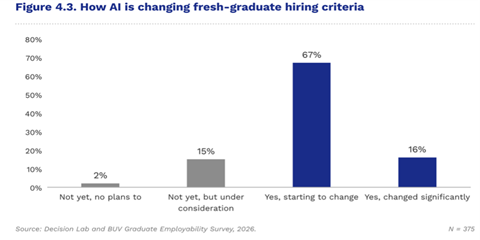
Digital literacy is the only capability area in which fresh graduates meet employers’ expectations, according to a new report. Yet, it is also the standard rising fastest, as businesses increasingly expect new hires to use AI effectively in the workplace. Some 83 per cent of employers say AI has changed, or is beginning to change, their hiring criteria, while 94 per cent report higher expectations for digital and AI capabilities than they had two to three years ago.

INFRASTRUCTURE / CONSTRUCTION / LOGISTIC / PORT
ĐÀ NẴNG GREEN-LIGHTS US$105 MILLION THAI DEVELOPMENT DEAL
The central city has approved an investment proposal by Thailand’s WHA Group to develop infrastructure for the 400ha WHA Đà Nẵng Industrial Park project on two communes of Thăng Bình and Đồng Dương, with an investment of more than VNĐ2.7 trillion (US$105 million). The city said it approved WHA Industrial Development International's status as an investor in the project, which is expected to take place between 2027 and 2034.

VIETNAM ECONOMY INVESTMENT
MOBILE PHONE EXPORTS RISE 20% TO $51.8 BILLION IN FIRST NINE MONTHS
Exports of mobile phones and components rose 20 per cent year-on-year to nearly US$51.8 billion in the first nine months of 2026, with China, the US and Republic of Korea accounting for more than half of the total. Shipments to the three markets reached a combined $26.18 billion, or 50.6 per cent of total exports of the product group during the period, according to data from the Vietnam Department of Customs under the Ministry of Finance.

VIETNAM ECONOMY INVESTMENT
FRUIT AND VEGETABLE EXPORTS POISED TO HIT $10 BILLION IN 2026
Fruit and vegetable exports are on track to reach nearly US$10 billion in 2026, after rising 19.9 per cent year on year to nearly US$7.4 billion in the first nine months, driven by strong seasonal demand and abundant tropical fruit supplies. The Ministry of Agriculture and Environment said the growth reflected stronger international demand for fresh produce and processed agricultural products.
GARMENT / TEXTILE
TEXTILE EXPORTS FACE DUAL CHALLENGES OF SUSTAINING ORDERS AND BOOSTING EFFICIENCY AMID GROWING COMPETITION
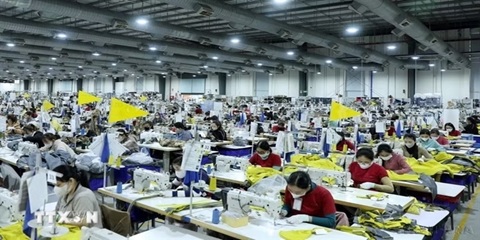
Data shows that the textile and garment sector maintained its growth momentum in the first nine months of this year. The industry's total export turnover reached an estimated US$35.721 billion in the first nine months of this year, up 3.3 per cent year-on-year. Despite posting encouraging export figures, Vietnamese textile and garment enterprises continue to navigate unpredictable market variables.
Events Sponsors






















