Want to be in the loop?
subscribe to
our notification
Business News
HCMC PROPOSES 58 URGENT INFRASTRUCTURE PROJECTS FOR 2026-2030
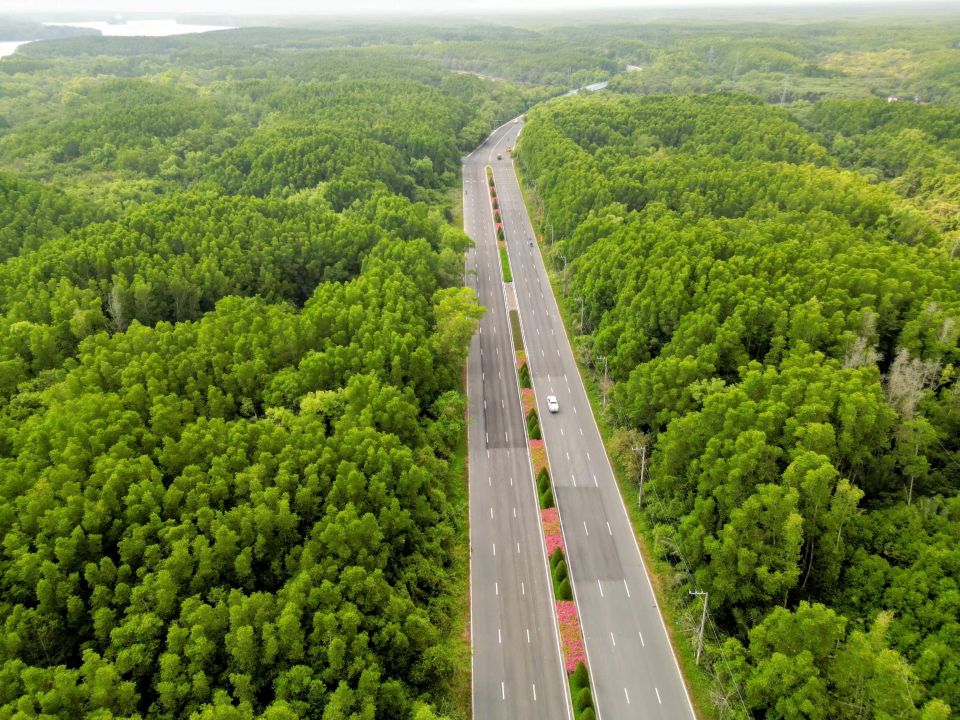
The Rung Sac Road area in Can Gio – the "green lungs" of Ho Chi Minh City - PHOTO: HONG PHONG
HCMC – The HCMC Department of Construction has proposed a list of 58 priority infrastructure projects for implementation in the 2026-2030 period to address four major urban challenges, including traffic congestion, flooding, canal-side housing upgrades, and the city’s growing demand for social housing.
The largest share of the proposed projects, with 27 in total, is focused on easing traffic congestion and enhancing regional links.
Major projects include the construction of Thu Thiem 4 Bridge, the upgrading of the Truong Chinh–Cong Hoa corridor from An Suong Intersection to Tan Son Nhat International Airport, the Binh Tien bridge-road project connecting Pham Van Chi Street and Nguyen Van Linh Street, and the extension of Vo Van Kiet Street from National Highway 1 to the former Long An provincial border, now part of Tay Ninh Province.
The city also plans to upgrade and expand National Highway 13, National Highway 1 from Kinh Duong Vuong Street to the former Long An border, and National Highway 22 from An Suong Intersection to Beltway 3.
In addition, HCMC is expected to invest more than VND590 billion in an interchange linking National Highway 50 with the Ben Luc–Long Thanh Expressway, and nearly VND2.97 trillion in another interchange connecting the Ben Luc–Long Thanh Expressway with Rung Sac Road.
Other proposed projects include the completion of the Go Cong traffic interchange and a connecting branch from Hanoi Highway to the interchange on Beltway 3, as well as a road linking Cat Lai Port, Phu Huu Port, the HCMC–Long Thanh–Dau Giay Expressway interchange, and Beltway 3.
The city is also considering several large-scale regional transport projects, including a sea bridge connecting Can Gio with Vung Tau, the Ho Tram–Long Thanh International Airport urban expressway, and Beltway 4.
For technical infrastructure and green space development, the city proposed 23 projects, including 14 urban renewal projects involving houses along rivers and canals in the 2026-2030 period, seven flood control projects, one wastewater treatment project, and one public park project.
Notable projects include the renovation of Thu Duc Canal, the Linh Tay stream drainage system, environmental improvements along Hy Vong Canal, urban redevelopment along the southern bank of Kenh Doi Canal, drainage infrastructure downstream of Ong Bo Bridge, a wastewater treatment plant and collection system for the western part of the city, and the Ben Nha Rong–Khanh Hoi Cultural Park and riverside green space project along the Saigon River.
The Department of Construction also proposed the urgent implementation of eight social housing and resettlement projects in Chanh Hung, Phu Dinh, Long Binh, and Binh Trung wards.
Source: The Saigon Times
Related News

MEMBER CORNER / PROMOTIONS
HCMC | CERTIFIED SUSTAINABILITY PROFESSIONAL (CSP) TRAINING | REGISTRATION OPEN
As sustainability becomes deeply embedded in corporate strategy and supply-chain operations across Vietnam, Hong Kong Business Association Vietnam is pleased to endorse the upcoming Certified Sustainability Professional (CSP) training program by the Asia Institute for Sustainability (AIS) - a premier internationally recognized ESG credential in Vietnam.
VIETNAM ECONOMY INVESTMENT
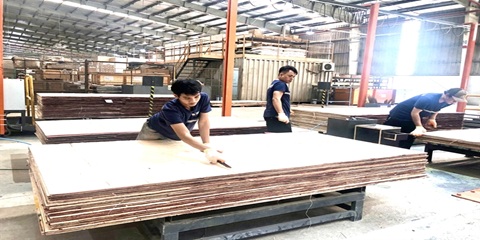
HCM CITY SAYS HOW IT PLANS TO ACHIEVE 10-11% ANNUAL EXPORT GROWTH FOR REST OF DECADE
The southern economic hub aims to strengthen its role as the country’s largest import-export centre while developing into a regional transhipment centre in Southeast Asia, supported by green and digital transformation and a circular economy. HCM City has outlined measures to expand production capacity, cut logistics costs, diversify export markets, and help businesses meet increasingly stringent international standards as it targets average annual export growth of 10-11 per cent through 2030.
VIETNAM ECONOMY INVESTMENT
HCM CITY LEADS ECONOMIC RESTRUCTURING IN SOUTHEAST REGION
According to Associate Professor, Dr Vũ Tuấn Hưng, director of the Institute of Social Sciences of the Southern Region, the Southeast is a strategically important socio-economic space in Việt Nam’s development given its advantages in location, industry, trade, services, logistics, science and technology, urbanisation and human resources.
TECHNOLOGY
DIGITAL TRANSFORMATION TURNED INTO PRACTICAL TOOLS FOR PEOPLE, BUSINESSES
Việt Nam is moving its digital transformation agenda beyond policy frameworks and individual technology platforms towards practical applications that address everyday needs, as authorities seek measurable outcomes from science, technology and innovation. Under Politburo Resolution No. 57-NQ/TW issued on December 22, 2024, the implementation is increasingly shifting from simply completing assigned tasks towards developing concrete products and services for citizens and businesses.
TECHNOLOGY
APPLYING TECHNOLOGY FOR ECONOMIC TRANSFORMATION
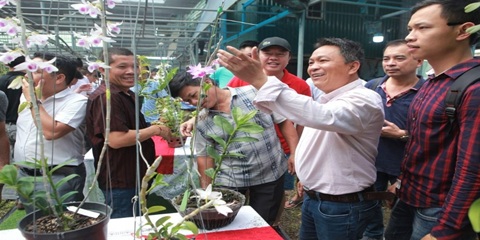
Having completed its new rural development program, Hanoi is shifting its focus toward improving development quality and building smart, sustainable rural areas. The transformation of Dong La orchid-growing village in An Khanh, a western commune of Hanoi, shows how digital technology is becoming a driver of production, market expansion, and higher incomes for local residents.
MEMBER CORNER / PROMOTIONS
VIGLACERA HONORED AS THE "LEADING GREEN INDUSTRIAL REAL ESTATE DEVELOPER 2026"
Organized by the Vietnam Investment Review, this prestigious awards program recognizes industry pioneers advancing eco-industrial parks, clean energy transition, and rigorous ESG standards. Outperforming competitors through a rigorous evaluation, Viglacera Corporation – JSC proudly ranked among the Top 5 highest-positioned enterprises in the Leading Green Industrial Real Estate Developers 2026 category, reinforcing its premier position in Vietnam’s industrial real estate sector.
Events Sponsors






















