Want to be in the loop?
subscribe to
our notification
Business News
HCMC PUBLIC INVESTMENT DISBURSEMENT REACHES 60% OF FULL-YEAR TARGET
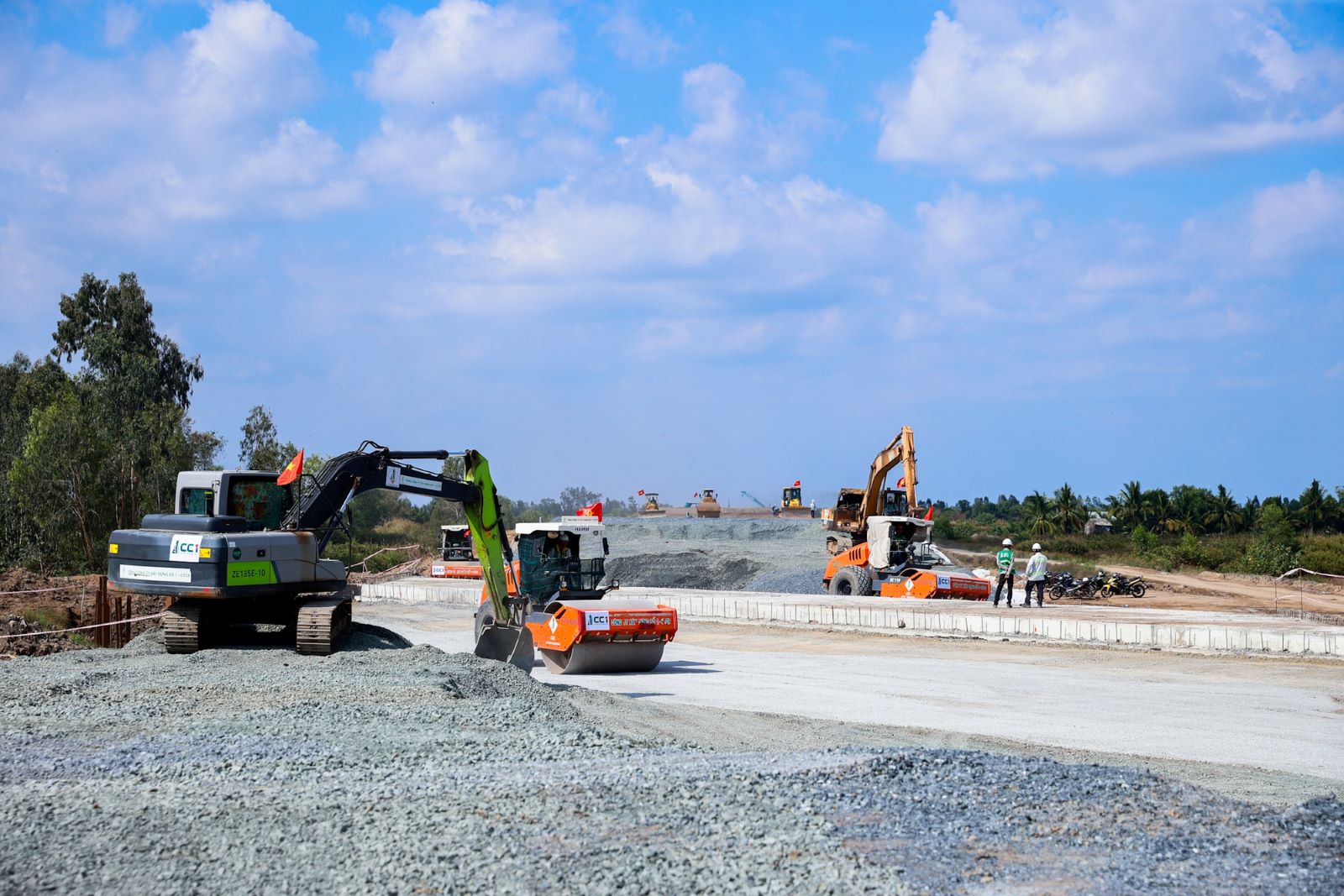
Workers and machinery operate on a section of a public infrastructure project in Vietnam - PHOTO: VGP
HCMC – HCMC has disbursed about 60% of its public investment plan assigned by the prime minister as of late November, reported the Vietnam News Agency.
The city was tasked with disbursing more than VND120.3 trillion this year, including VND16.7 trillion from the central budget and nearly VND103.7 trillion from the local budget. It has allocated a total of VND153.6 trillion, 28% higher than the amount assigned.
Data from the Vietnam State Treasury’s Region 2 showed that VND71.7 trillion had been disbursed by November 28, equivalent to 59.6% of the plan.
The city government said 2025 is the first year the city is operating under the new Public Investment Law No. 58/2024/QH15. But the Government had not issue Decree 85/2025/ND-CP, which provides detailed implementation guidelines, until April.
Another law, No. 90/2025/QH15, which amends several statutes, including the Public Investment Law, took effect on June 25. Its guiding decree, however, was only released on October 18.
The city said the late issuance of these documents slowed project appraisal, investment approvals and adjustments, and affected the management of public investment projects.
Administrative restructuring and the shift to a two-tier local government model caused additional delays. Project management units were reorganized, while legal procedures for investors and capital allocation required more time. Disbursement in July and August reached less than 1% of the assigned capital.
Several commune-level authorities, newly designated as project investors, also lacked dedicated project management units and clear guidance on responsibilities. Some projects were paused for review to reassess investment needs, adjust scope, or revise standards. Others are being considered for capital cuts due to no remaining demand.
Land clearance, relocation of technical infrastructure, unstable construction material supply, and weak oversight at some project owners further slowed progress.
At a city council session on December 10, HCMC Chairman Nguyen Van Duoc acknowledged the delays and said the city would not avoid responsibility. He said the current disbursement rate remains below targets of 75% by the third quarter of 2025 and 100% by year-end.
Some agencies returned capital because they could not spend it, while others with complete documents were not allocated funds, he said.
Based on reports from departments, agencies and investors, the city expects to disburse VND123 trillion by the end of the fiscal year on January 31, 2025, or 102.2% of the prime minister’s plan and 80.1% of the city’s plan.
HCMC will focus on major projects, especially those involving large compensation packages that must continue disbursement through January 2026.
Duoc told departments and relevant authorities to complete investment preparation documents for major projects before year-end to allow early capital allocation and construction in 2026. He said the city expects a busy construction schedule next year as multiple large projects move forward.
Source: The Saigon Times
Related News

INFRASTRUCTURE / CONSTRUCTION / LOGISTIC / PORT
VIỆT NAM-CAMBODIA TRADE GATHERS PACE TOWARDS $20 BILLION TARGET
Trade between Việt Nam and Cambodia continues to grow, remaining a bright spot and a key pillar of bilateral cooperation as the two countries aim to raise two-way trade to US$20 billion in the coming years. After setting a record of more than $11.3 billion last year, bilateral trade reached about $8.7 billion in the first eight months of this year, up 8.3 per cent year on year.
TECHNOLOGY
AI BEGINNING TO RESHAPE RECRUITMENT CRITERIA
Digital literacy is the only capability area in which fresh graduates meet employers’ expectations, according to a new report. Yet, it is also the standard rising fastest, as businesses increasingly expect new hires to use AI effectively in the workplace. Some 83 per cent of employers say AI has changed, or is beginning to change, their hiring criteria, while 94 per cent report higher expectations for digital and AI capabilities than they had two to three years ago.

INFRASTRUCTURE / CONSTRUCTION / LOGISTIC / PORT
ĐÀ NẴNG GREEN-LIGHTS US$105 MILLION THAI DEVELOPMENT DEAL
The central city has approved an investment proposal by Thailand’s WHA Group to develop infrastructure for the 400ha WHA Đà Nẵng Industrial Park project on two communes of Thăng Bình and Đồng Dương, with an investment of more than VNĐ2.7 trillion (US$105 million). The city said it approved WHA Industrial Development International's status as an investor in the project, which is expected to take place between 2027 and 2034.

VIETNAM ECONOMY INVESTMENT
MOBILE PHONE EXPORTS RISE 20% TO $51.8 BILLION IN FIRST NINE MONTHS
Exports of mobile phones and components rose 20 per cent year-on-year to nearly US$51.8 billion in the first nine months of 2026, with China, the US and Republic of Korea accounting for more than half of the total. Shipments to the three markets reached a combined $26.18 billion, or 50.6 per cent of total exports of the product group during the period, according to data from the Vietnam Department of Customs under the Ministry of Finance.

VIETNAM ECONOMY INVESTMENT
FRUIT AND VEGETABLE EXPORTS POISED TO HIT $10 BILLION IN 2026
Fruit and vegetable exports are on track to reach nearly US$10 billion in 2026, after rising 19.9 per cent year on year to nearly US$7.4 billion in the first nine months, driven by strong seasonal demand and abundant tropical fruit supplies. The Ministry of Agriculture and Environment said the growth reflected stronger international demand for fresh produce and processed agricultural products.
GARMENT / TEXTILE
TEXTILE EXPORTS FACE DUAL CHALLENGES OF SUSTAINING ORDERS AND BOOSTING EFFICIENCY AMID GROWING COMPETITION
Data shows that the textile and garment sector maintained its growth momentum in the first nine months of this year. The industry's total export turnover reached an estimated US$35.721 billion in the first nine months of this year, up 3.3 per cent year-on-year. Despite posting encouraging export figures, Vietnamese textile and garment enterprises continue to navigate unpredictable market variables.
Events Sponsors






















