Want to be in the loop?
subscribe to
our notification
Business News
HCMC'S SLUGGISH OFFICE MARKET PROMPTS LANDLORDS TO TURN FLEXIBLE OVER PAYMENTS
The office market in HCMC continued to go through a stagnation period in terms of performance due to Covid-19, which strongly affected many enterprises, CBRE Vietnam said in its third quarter report.
The market witnessed a negative net absorption in the first nine months of 2020. Some 31% of major transactions collected and closed by CBRE were for contraction purposes, which is expected to continue becoming a trend until the end of this year.
There was no new supply in the HCMC office market in Q3 of 2020. The supply remained at roughly 1.37 million sq. meters.
In Q3 of 2020, Grade A vacancy was recorded at 11.5%, up 3.3 percentage points y-o-y and slightly down by 0.3 percentage points q-o-q. The contracted space of Grade A by the end of Q2 of 2020 was gradually absorbed in Q3 of 2020 by existing tenants at the given buildings through the expansion and renewal of contracts.
The Grade B vacancy remained unchanged compared to the last quarter but increased slightly by 1.3 percentage points compared to the same period last year.
In the reviewed quarter, Grade A rent stayed relatively the same q-o-q but decreased by 5% y-o-y.
Although remaining unchanged q-o-q, landlords were still very flexible in terms of payments and closing rents. Some landlords even offered a closing rent of US$3-4 psm pm, lower than the asking rent for new tenants.
Insurance, technology and retail/trade/e-commerce were the top three most active sectors in terms of office leasing despite the Covid-19 outbreak. These three industries accounted for 69% of the total transactions closed and collected by CBRE in Q3 of 2020.
The construction of new office buildings in HCMC was still moving forward and some 80,000 sqm is expected to be completed by the end of this year. Most of the new additions will concentrate in Binh Thanh and seven other districts.
The landlords of these upcoming buildings have proactively decreased their asking rents by US$1 to US$3 psm per month compared to Q4 of 2019 to attract tenants.
The office rental rate in HCMC is expected to drop by 8-10% y-o-y and the vacancy rate will increase by 7-9 percentage points y-o-y by the end of 2020 due to new supply and the negative impact of Covid-19.
If a vaccine for Covid-19 is successfully released by December 2020, the rental rate in 2021 is forecast to be relatively stable. However, if a vaccine is only released by June 2021, the rental rate will continue to shrink further by 5% compared to that of 2020.
Pham Ngoc Thien Thanh, associate director of CBRE Vietnam, said Covid-19 has reshaped the market dynamics, with the negotiation power shifting toward occupiers. The market will have more new projects coming online in decentralized areas with competitive rents.
“In response, landlords will be more flexible in terms of rental rates and leasing terms. To stay ahead of the competition, landlords should consider applying workplace strategy tools to evaluate the current strengths and deficiencies of their buildings, in order to come up with an optimal solution to increase the value of their assets,” Thanh said.
Source: The Saigon Times
Related News

INFRASTRUCTURE / CONSTRUCTION / LOGISTIC / PORT
VIỆT NAM-CAMBODIA TRADE GATHERS PACE TOWARDS $20 BILLION TARGET
Trade between Việt Nam and Cambodia continues to grow, remaining a bright spot and a key pillar of bilateral cooperation as the two countries aim to raise two-way trade to US$20 billion in the coming years. After setting a record of more than $11.3 billion last year, bilateral trade reached about $8.7 billion in the first eight months of this year, up 8.3 per cent year on year.
TECHNOLOGY
AI BEGINNING TO RESHAPE RECRUITMENT CRITERIA
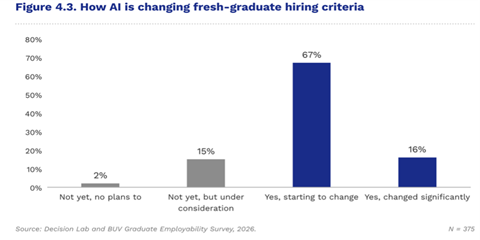
Digital literacy is the only capability area in which fresh graduates meet employers’ expectations, according to a new report. Yet, it is also the standard rising fastest, as businesses increasingly expect new hires to use AI effectively in the workplace. Some 83 per cent of employers say AI has changed, or is beginning to change, their hiring criteria, while 94 per cent report higher expectations for digital and AI capabilities than they had two to three years ago.

INFRASTRUCTURE / CONSTRUCTION / LOGISTIC / PORT
ĐÀ NẴNG GREEN-LIGHTS US$105 MILLION THAI DEVELOPMENT DEAL
The central city has approved an investment proposal by Thailand’s WHA Group to develop infrastructure for the 400ha WHA Đà Nẵng Industrial Park project on two communes of Thăng Bình and Đồng Dương, with an investment of more than VNĐ2.7 trillion (US$105 million). The city said it approved WHA Industrial Development International's status as an investor in the project, which is expected to take place between 2027 and 2034.

VIETNAM ECONOMY INVESTMENT
MOBILE PHONE EXPORTS RISE 20% TO $51.8 BILLION IN FIRST NINE MONTHS
Exports of mobile phones and components rose 20 per cent year-on-year to nearly US$51.8 billion in the first nine months of 2026, with China, the US and Republic of Korea accounting for more than half of the total. Shipments to the three markets reached a combined $26.18 billion, or 50.6 per cent of total exports of the product group during the period, according to data from the Vietnam Department of Customs under the Ministry of Finance.

VIETNAM ECONOMY INVESTMENT
FRUIT AND VEGETABLE EXPORTS POISED TO HIT $10 BILLION IN 2026
Fruit and vegetable exports are on track to reach nearly US$10 billion in 2026, after rising 19.9 per cent year on year to nearly US$7.4 billion in the first nine months, driven by strong seasonal demand and abundant tropical fruit supplies. The Ministry of Agriculture and Environment said the growth reflected stronger international demand for fresh produce and processed agricultural products.
GARMENT / TEXTILE
TEXTILE EXPORTS FACE DUAL CHALLENGES OF SUSTAINING ORDERS AND BOOSTING EFFICIENCY AMID GROWING COMPETITION
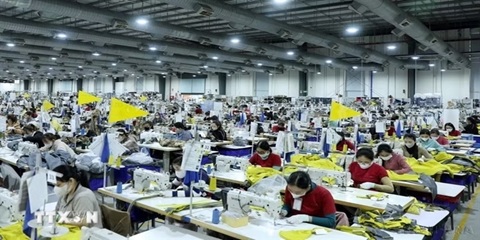
Data shows that the textile and garment sector maintained its growth momentum in the first nine months of this year. The industry's total export turnover reached an estimated US$35.721 billion in the first nine months of this year, up 3.3 per cent year-on-year. Despite posting encouraging export figures, Vietnamese textile and garment enterprises continue to navigate unpredictable market variables.
Events Sponsors






















