Want to be in the loop?
subscribe to
our notification
Business News
HIGH CREDIT GROWTH POSES RISKS
If credit growth reaches 21 - 22 per cent as expected, this will be the first year of such high growth since the 2009 - 2010 bubble period. Overheating credit growth is posing latent risks as money is being poured into real estate and underperforming industries.
Data from the National Financial Supervisory Commission (NFSC) showed that credit grew 11.5 per cent in the first eight months of 2017, or more than VND600 trillion being pumped into the system. Thus, banks will channel VND150 trillion each month on average into the economy in the remaining four months of the year, doubling the monthly value in the first eight months.
Credit to support growth
According to a report released by the HSBC Vietnam in September, the government is calling for a credit growth from 18 per cent to 21 per cent this year in a bid to achieve the GDP growth target of 6.7 per cent.
With outstanding loans of about VND5,500 trillion at the end of 2016, given the targeted growth of 21 - 22 per cent achievable, the economy will receive extra VND1,210 trillion this year.
The first eight months of the year saw a credit growth of 11.5 per cent. The growth target of 21 - 22 per cent is easily achievable but, according to many experts, rapid credit growth may place the banking sector to new risks, especially when new money is allocated to underperforming industries.
Recent researches conducted by the International Monetary Fund (IMF) and the World Bank (WB) noted that State-owned enterprises (SOEs) are absorbing an excessively asymmetric credit in comparison with small and medium enterprises (SMEs) while the former enjoys lower interest rates than the private sector.
HSBC insisted that credit misallocations and private investment reduction will affect GDP growth and increase non-performing loans in the future if control measures are ineffective.
Real estate will also be the destination for cash flows prone to bubble risk ballooning.
Mr Pham Hong Hai, Chief Executive Officer for Vietnam at HSBC Holdings Plc, said that the first risk is capital liquidity. In the event of current credit growth, liquidity needs to be well prepared. Meanwhile, in practice, capital mobilisation at many banks still grows slower than credit growth. Therefore, if credit growth is accelerated without good preparation, liquidity risk is unpredictable.
Second, it is necessary to avoid the trajectory of failures in the past when rapid credit growth led to ballooning bad debt. For that reason, if credit quality is not tightly controlled, rapid credit growth will repeat bad debt growth.
Hard to block money flowing into real estate
The credit growth of 21 - 22 per cent this year will help lenders to expand lending market shares, especially in the last months of the year. It seems to be certain that it is unlikely to prevent credit flows from flowing into real estate.
In reality, real estate is still focused by banks for now and in the future.
Banks may argue that they only increase loans for home buyers and restrict funds for property projects. But, real estate is a favourite lending channel of banks and most security assets for loans are property. If credit quality is not carefully taken into account, home credit risks are substantial.
Another reason to the strong credit flow into real estate is companies have weak capital absorption. Dr Tran Dinh Thien, Director of Vietnam Institute of Economics and member of the Economic Advisory Group of the Prime Minister, said, “In the past, when the economy slowed down, the Government pushed up credit growth to spur economic growth, resulting in excessively high inflation. In 2011, it squeezed credit, causing many capital-short companies to go to the wall. Its aftermath still exists until now.” If credit growth is pushed up to the revised rate, it is going to be very dangerous in the coming months because money will be surely poured into real estate and the risk of bad debt will be unpredictable, he warned.
As the absorptive capacity of the manufacturing sector is weak, cash flows will be channelled into real estate and stock markets. This caused bubbles of these two markets in the past.
As such, it is a necessary step to push up credit growth to spur economic growth, according to HSBC. However, credit quality and distribution in addition to dealing with existing bad debts plays a very important role in ensuring that increased credit growth will be translated into higher and more sustainable economic growth in the future.
Source: VCCI
Related News
VIETNAM ECONOMY INVESTMENT
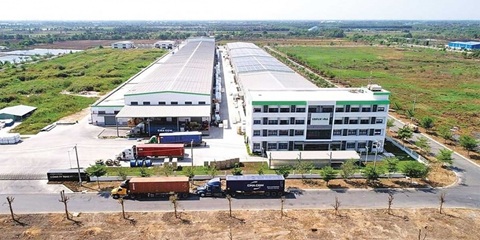
FOREIGN INVESTORS SEEKING A SYNCHRONISED MANUFACTURING ECOSYSTEM
Instead of focusing only on land costs and incentives as usual, foreign investors are seeking a synchronised manufacturing ecosystem, from stable power supply and logistics to shared infrastructure and the convenience of completing residence procedures for experts to serve their long-term investment in the country.
INFRASTRUCTURE / CONSTRUCTION / LOGISTIC / PORT
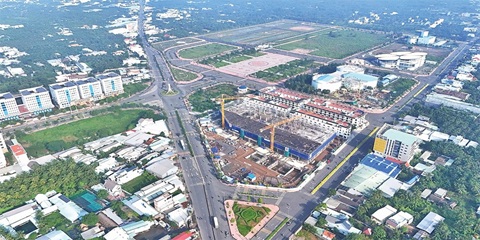
DONG THAP PROVINCE STEPS UP INDUSTRIAL EXPANSION AND INFRASTRUCTURE CONNECTIVITY
Accelerating public investment, strengthening inter-regional connectivity, and expanding industrial land are helping Dong Thap efficiently bolster competitiveness and drive economic growth. Following the 2025 merger of the former Dong Thap and Tien Giang provinces, the expanded Dong Thap province in the Mekong Delta faces mounting pressure to accelerate infrastructure development and strengthen connectivity among local economic zones, urban areas, industrial parks (IPs), and production centres.
PROPERTY / INDUSTRIAL ZONE
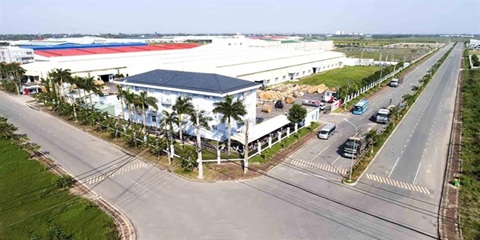
HCM CITY ATTRACTS US$5.7 BILLION INTO EXPORT PROCESSING AND INDUSTRIAL ZONES
HCM City attracted US$5.7 billion in domestic and foreign investment into its export processing and industrial zones during the first nine months of 2026. The figure exceeded the city's full-year target by 31 per cent, highlighting strong momentum in high-quality industrial investment under Resolution No.10-NQ/TW. Total investment reached 131 per cent of the 2026 target of $4.25 billion and represented a 29 per cent increase compared with the same period in 2025, according to the city's Export Processing and Industrial Zones Authority (HEPZA).

BANKING / FINANCE / INSURANCE / TAX
REMITTANCES TO HCM CITY RISE NEARLY 40% IN Q3
Remittances to HCM City reached more than US$2.83 billion in the third quarter of this year, up 39.5 per cent from the previous quarter and 3.6 per cent year-on-year. This was the first quarter showing positive annual growth this year, helping narrow the decline in remittance inflows over the first nine months. According to the State Bank of Vietnam (SBV)’s Regional Branch 2, remittances transferred to HCM City through credit institutions and economic organisations totalled $2.835 billion in Q3, an increase of more than $802 million from the previous quarter.

VIETNAM ECONOMY INVESTMENT
LOCALITIES REPORT BREAKTHROUGH RESULTS IN FDI IN FIRST NINE MONTHS
In Ho Chi Minh City, total registered capital reached $17.2 billion in the first nine months, up 4.2 times from the same period last year. The figure included more than $9.35 billion in newly registered capital and over $4.9 billion in additional capital for existing projects. Foreign investors also registered more than $2.9 billion through capital contributions and share purchases.

TECHNOLOGY
TECH SECTOR GROWTH OPENS UP OPPORTUNITIES FOR VIỆT NAM TO GO GLOBAL
The growth of the electronics, semiconductor and high-tech sectors worldwide is opening up a variety of opportunities for Vietnamese enterprises to integrate more deeply into the global supply chain. However, to become suppliers for these corporations, domestic enterprises must meet rigorous standards regarding quality, technology, productivity and order fulfilment capabilities.
Events Sponsors






















