Want to be in the loop?
subscribe to
our notification
Business News
HO CHI MINH CITY AND HANOI FACING LARGE-SCALE DISRUPTION IN OFFICE FOR LEASE
Ho Chi Minh City is predicted to experience a period of difficulty during the COVID-19, while Hanoi will face accelerated pressure on rents but will remain stable.
According to Alex Crane, managing director of Cushman & Wakefield (C&W) Vietnam, like many other segments of the real estate market, office for lease has been impacted by the coronavirus.
Vietnam enters this period with a strong tailwind and growth in the wider economy – and this is reflected in the performance of the office markets in the country.
“Ho Chi Minh City enters into this with historically low vacancy and high rental rates, along with continued demand and limited future supply. Whereas pre-pandemic these factors would accelerate rent increases faster, we are of the belief that this will slow rental increases in the city, but the pandemic will not result in falling rents across the Ho Chi Minh City market," said Crane.
He had further advised caution but does not expect pain in the Hanoi market.
At the end of 2019, C&W reviewed the supply forecast for Hanoi and as a result, felt that headline or asking rents would fall marginally through 2020 by approximately 10-15 per cent across the market.
Of course, this is broadly speaking across the three submarkets in Hanoi, and the underlying performance of each will be very difficult with Hoan Kiem district being the least affected, and the midtown area receiving more rent pressure as a result of new supply.
It is obvious that the COVID-19 outbreak will accelerate this trend as building construction will ultimately continue and as demand slightly reduces.
The net impact of this is that there will be a prolonged period of higher vacancy through 2020 and 2021, likely hovering at around 18 per cent, meaning that some landlords will need to be more competitive with their terms, thus having the effect of pulling down the average rent across the market.
Crane also mentions that Hanoi’s market may provide opportunities following the COVID-19 pandemic.
“With respect to occupiers and multinational companies post-pandemic, we anticipate that Vietnam’s tremendous performance in response to this crisis will encourage greater investment into the country, and we will also see an acceleration of manufacturing and service industries within the country, much of which will be driven by multinational foreign companies. Hanoi, in particular, will be an attractive destination for these businesses, given that it has a central regional location and fast-improving infrastructure to support manufacturing, urbanisation, and exports, which are all potential drivers for higher office demand and equally faster growth,” he added.
He forecast further transactions would be completed within the second quarter of 2020, thus supporting momentum through the COVID-19 period.
“Transactions that are earlier in the process are typically being deferred, and we expect these to speed up again once the position, with regard to COVID-19, is easier to assess. Vietnam remains a market that multinational companies forecast as having a positive future and growth despite COVID-19’s potential impact on GDP,” he added.
Source: VIR
Related News

INFRASTRUCTURE / CONSTRUCTION / LOGISTIC / PORT
VIỆT NAM-CAMBODIA TRADE GATHERS PACE TOWARDS $20 BILLION TARGET
Trade between Việt Nam and Cambodia continues to grow, remaining a bright spot and a key pillar of bilateral cooperation as the two countries aim to raise two-way trade to US$20 billion in the coming years. After setting a record of more than $11.3 billion last year, bilateral trade reached about $8.7 billion in the first eight months of this year, up 8.3 per cent year on year.
TECHNOLOGY
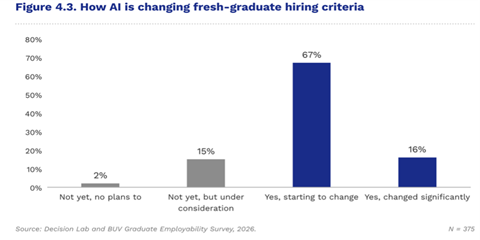
AI BEGINNING TO RESHAPE RECRUITMENT CRITERIA
Digital literacy is the only capability area in which fresh graduates meet employers’ expectations, according to a new report. Yet, it is also the standard rising fastest, as businesses increasingly expect new hires to use AI effectively in the workplace. Some 83 per cent of employers say AI has changed, or is beginning to change, their hiring criteria, while 94 per cent report higher expectations for digital and AI capabilities than they had two to three years ago.

INFRASTRUCTURE / CONSTRUCTION / LOGISTIC / PORT
ĐÀ NẴNG GREEN-LIGHTS US$105 MILLION THAI DEVELOPMENT DEAL
The central city has approved an investment proposal by Thailand’s WHA Group to develop infrastructure for the 400ha WHA Đà Nẵng Industrial Park project on two communes of Thăng Bình and Đồng Dương, with an investment of more than VNĐ2.7 trillion (US$105 million). The city said it approved WHA Industrial Development International's status as an investor in the project, which is expected to take place between 2027 and 2034.

VIETNAM ECONOMY INVESTMENT
MOBILE PHONE EXPORTS RISE 20% TO $51.8 BILLION IN FIRST NINE MONTHS
Exports of mobile phones and components rose 20 per cent year-on-year to nearly US$51.8 billion in the first nine months of 2026, with China, the US and Republic of Korea accounting for more than half of the total. Shipments to the three markets reached a combined $26.18 billion, or 50.6 per cent of total exports of the product group during the period, according to data from the Vietnam Department of Customs under the Ministry of Finance.

VIETNAM ECONOMY INVESTMENT
FRUIT AND VEGETABLE EXPORTS POISED TO HIT $10 BILLION IN 2026
Fruit and vegetable exports are on track to reach nearly US$10 billion in 2026, after rising 19.9 per cent year on year to nearly US$7.4 billion in the first nine months, driven by strong seasonal demand and abundant tropical fruit supplies. The Ministry of Agriculture and Environment said the growth reflected stronger international demand for fresh produce and processed agricultural products.
GARMENT / TEXTILE
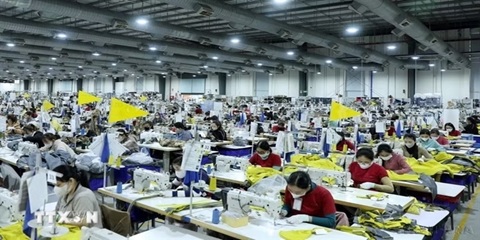
TEXTILE EXPORTS FACE DUAL CHALLENGES OF SUSTAINING ORDERS AND BOOSTING EFFICIENCY AMID GROWING COMPETITION
Data shows that the textile and garment sector maintained its growth momentum in the first nine months of this year. The industry's total export turnover reached an estimated US$35.721 billion in the first nine months of this year, up 3.3 per cent year-on-year. Despite posting encouraging export figures, Vietnamese textile and garment enterprises continue to navigate unpredictable market variables.
Events Sponsors






















