Want to be in the loop?
subscribe to
our notification
Business News
HO CHI MINH CITY NEEDS ADDITIONAL $3.5BN IN FDI IN H2 TO MEET 2026 TARGET
To meet its 2026 target of attracting approximately US$11 billion in foreign direct investment (FDI), Ho Chi Minh City needs to secure at least an additional $3.5 billion in the second half of the year while prioritizing high-quality investors and high-value projects with strong spillover potential.
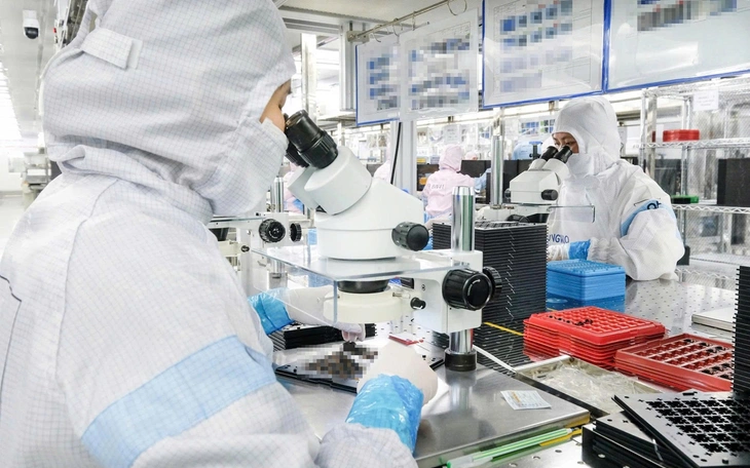
Workers at a South Korean-invested company manufacture products for a major technology corporation. Photo: Nguyen Hien / Tuoi Tre
Registered FDI in the city reached nearly $7.5 billion in the first six months, equivalent to 68 percent of the annual target, Truong Tan Vu, deputy director of the Ho Chi Minh City Department of Finance, said at a conference on Friday reviewing the finance sector's performance and tasks for the second half.
With this result, Ho Chi Minh City ranked second nationwide in FDI attraction, behind Thai Nguyen Province in northern Vietnam.
As of June 30, the city had more than $146.8 billion in valid FDI capital across 21,351 active projects.
FDI has mainly flowed into five sectors: real estate; wholesale and retail trade and motor vehicle and motorcycle repair; information and communications; manufacturing and processing industries; and professional, scientific, and technical activities.
During the second half of 2026, the city aims to increase registered capital, improve FDI disbursement, shorten the time needed to bring projects into operation, and strengthen linkages between foreign-invested enterprises and domestic businesses.
Vu said Ho Chi Minh City will implement six groups of measures to improve the quality of FDI attraction.
The city will shift its focus from attracting investment based on quantity to selecting high-quality investors, giving priority to projects with high added value and strong spillover effects.
Instead of competing through individual incentive policies, Ho Chi Minh City plans to compete by offering a transparent investment environment, modern infrastructure, a highly skilled workforce, and strong business support services.
The city will translate government resolutions into action programs linked to its goals of achieving double-digit economic growth, developing the digital and green economy, building an international financial center, and promoting strategic industries.
It will also strengthen oversight of foreign-invested enterprises through post-investment inspections, focusing on project implementation progress, technology adoption, environmental protection, labor management, land use, and compliance with financial obligations.
Meanwhile, Ho Chi Minh City will continue reforming administrative procedures and accelerating digital transformation.
Bottlenecks related to investment, land, planning, and specialized administrative procedures will be addressed, while planning information, investment project lists, and available land resources will be made publicly accessible to facilitate investment.
In investment promotion, the city will prioritize attracting multinational corporations, investment funds, and technology companies to high-tech industries, semiconductors, artificial intelligence, research and development, international finance, logistics, biotechnology, and smart urban development.
The city will also mobilize public investment and private capital to develop transport infrastructure, logistics, seaports, digital infrastructure, data infrastructure, and energy projects.
At the same time, it will prepare cleared land and develop a high-quality workforce to accommodate new FDI inflows.
Source: Tuổi Trẻ News
Related News

INFRASTRUCTURE / CONSTRUCTION / LOGISTIC / PORT
VIỆT NAM-CAMBODIA TRADE GATHERS PACE TOWARDS $20 BILLION TARGET
Trade between Việt Nam and Cambodia continues to grow, remaining a bright spot and a key pillar of bilateral cooperation as the two countries aim to raise two-way trade to US$20 billion in the coming years. After setting a record of more than $11.3 billion last year, bilateral trade reached about $8.7 billion in the first eight months of this year, up 8.3 per cent year on year.
TECHNOLOGY
AI BEGINNING TO RESHAPE RECRUITMENT CRITERIA
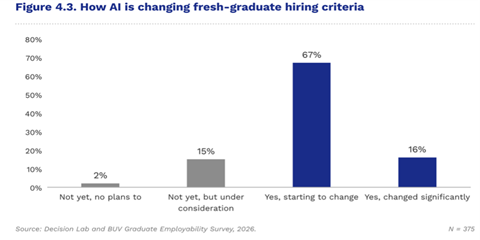
Digital literacy is the only capability area in which fresh graduates meet employers’ expectations, according to a new report. Yet, it is also the standard rising fastest, as businesses increasingly expect new hires to use AI effectively in the workplace. Some 83 per cent of employers say AI has changed, or is beginning to change, their hiring criteria, while 94 per cent report higher expectations for digital and AI capabilities than they had two to three years ago.

INFRASTRUCTURE / CONSTRUCTION / LOGISTIC / PORT
ĐÀ NẴNG GREEN-LIGHTS US$105 MILLION THAI DEVELOPMENT DEAL
The central city has approved an investment proposal by Thailand’s WHA Group to develop infrastructure for the 400ha WHA Đà Nẵng Industrial Park project on two communes of Thăng Bình and Đồng Dương, with an investment of more than VNĐ2.7 trillion (US$105 million). The city said it approved WHA Industrial Development International's status as an investor in the project, which is expected to take place between 2027 and 2034.

VIETNAM ECONOMY INVESTMENT
MOBILE PHONE EXPORTS RISE 20% TO $51.8 BILLION IN FIRST NINE MONTHS
Exports of mobile phones and components rose 20 per cent year-on-year to nearly US$51.8 billion in the first nine months of 2026, with China, the US and Republic of Korea accounting for more than half of the total. Shipments to the three markets reached a combined $26.18 billion, or 50.6 per cent of total exports of the product group during the period, according to data from the Vietnam Department of Customs under the Ministry of Finance.

VIETNAM ECONOMY INVESTMENT
FRUIT AND VEGETABLE EXPORTS POISED TO HIT $10 BILLION IN 2026
Fruit and vegetable exports are on track to reach nearly US$10 billion in 2026, after rising 19.9 per cent year on year to nearly US$7.4 billion in the first nine months, driven by strong seasonal demand and abundant tropical fruit supplies. The Ministry of Agriculture and Environment said the growth reflected stronger international demand for fresh produce and processed agricultural products.
GARMENT / TEXTILE
TEXTILE EXPORTS FACE DUAL CHALLENGES OF SUSTAINING ORDERS AND BOOSTING EFFICIENCY AMID GROWING COMPETITION
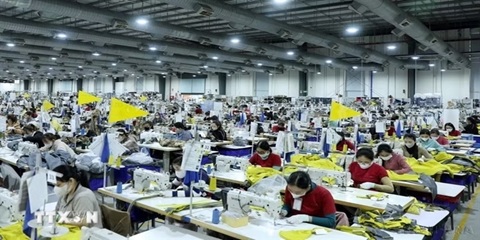
Data shows that the textile and garment sector maintained its growth momentum in the first nine months of this year. The industry's total export turnover reached an estimated US$35.721 billion in the first nine months of this year, up 3.3 per cent year-on-year. Despite posting encouraging export figures, Vietnamese textile and garment enterprises continue to navigate unpredictable market variables.
Events Sponsors






















