Want to be in the loop?
subscribe to
our notification
Business News
HO CHI MINH CITY SUBURBAN REAL ESTATE MARKET SET FOR REVIVAL
After a lengthy period of inactivity, the real estate market in and around Ho Chi Minh City is resuming deals, mostly in new full-scale developments. Property prices in the central district of Ho Chi Minh City have risen to such an extent that many young people are choosing to purchase homes in the suburbs, where costs are more affordable.
In the southern area, the provinces bordering Ho Chi Minh City, such as Dong Nai, Long An, and Binh Duong, more and more items catering to the requirements of locals and Ho Chi Minh City workers are surfacing at affordable costs, and the link to the centre is strengthened.
According to existing evidence, several significant metropolitan districts in Long An are catching the attention of individuals with genuine housing requirements and investors.
In Nam Long Group's Waterpoint Urban Area, for instance, in addition to townhouses, villas, and riverfront villas, there are also economical EHome Southgate apartments, starting at around $42,400 per unit. The project's current phase involves the development of a new subdivision, while prior stages include heavily inhabited areas.
Izumi City, Nam Long Dai Phuoc, and Aqua City are the most notable real estate developments in Dong Nai, becoming the preferred housing option for individuals who want a decent lifestyle without being too distant from Ho Chi Minh City.
According to industry analysts, Ho Chi Minh Ci's expanding demand and population growth tendency have driven the city's satellite urban real estate to develop and attract attention in the setting of a limited supply.
Su Ngoc Khuong, senior director of Investment Department at Savills Vietnam said, "In the environment of market instability, the desire to seek housing in the neighbourhood is growing. This is also one of the trends that will continue to be noticeable beyond 2023."
Additionally, the general director of Viet An Hoa Real Estate Investment, Tran Khanh Quang, said that purchasers now cared more about the distance than the neighbourhood. Thus, working in Ho Chi Minh City but residing in Dong Nai, Binh Duong, or even Long An was not uncommon.
This is a result of the ever-improving transportation infrastructure and the continued affordability of neighbouring real estate. Some urban developments on the outskirts of Ho Chi Minh City are almost self-sufficient in terms of utilities, therefore, many individuals prefer to construct a second home or reside there.
According to David Jackson, general director of Colliers Vietnam, the tendency towards living in urban regions around Ho Chi Minh City has increased since the outbreak. Infrastructure connections and improved service quality in the periphery have been significant drivers of this development. The same level of medical, educational, and recreational amenities in the suburbs compels individuals to seek "centrifugation" to feel more confident in their decision.
The tendency of "centrifugation" in Ho Chi Minh City region will continue as it becomes more accessible and quick to link Dong Nai, Binh Duong, and Long An to the city. Moreover, the disparity in quality of life across regions is diminishing, while the cost of living and services on the periphery is lower.
The essential fact is that real estate prices in major cities are rising steadily. With the same amount of money, the buyer will acquire a bigger piece of real land, complete with a suburban garden. In addition, metropolitan regions on the periphery are expanding and producing more local employment prospects, especially in businesses that need a high level of expertise and skills.
Those who reside in the suburbs where the company's headquarters are situated will also benefit from the trend of remote work, which is gaining popularity. In addition, spiritual qualities, such as a laid-back lifestyle in conjunction with a more pristine environment, are increasingly valued.
Source: VIR
Related News

INFRASTRUCTURE / CONSTRUCTION / LOGISTIC / PORT
VIỆT NAM-CAMBODIA TRADE GATHERS PACE TOWARDS $20 BILLION TARGET
Trade between Việt Nam and Cambodia continues to grow, remaining a bright spot and a key pillar of bilateral cooperation as the two countries aim to raise two-way trade to US$20 billion in the coming years. After setting a record of more than $11.3 billion last year, bilateral trade reached about $8.7 billion in the first eight months of this year, up 8.3 per cent year on year.
TECHNOLOGY
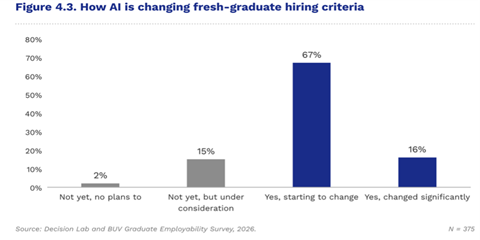
AI BEGINNING TO RESHAPE RECRUITMENT CRITERIA
Digital literacy is the only capability area in which fresh graduates meet employers’ expectations, according to a new report. Yet, it is also the standard rising fastest, as businesses increasingly expect new hires to use AI effectively in the workplace. Some 83 per cent of employers say AI has changed, or is beginning to change, their hiring criteria, while 94 per cent report higher expectations for digital and AI capabilities than they had two to three years ago.

INFRASTRUCTURE / CONSTRUCTION / LOGISTIC / PORT
ĐÀ NẴNG GREEN-LIGHTS US$105 MILLION THAI DEVELOPMENT DEAL
The central city has approved an investment proposal by Thailand’s WHA Group to develop infrastructure for the 400ha WHA Đà Nẵng Industrial Park project on two communes of Thăng Bình and Đồng Dương, with an investment of more than VNĐ2.7 trillion (US$105 million). The city said it approved WHA Industrial Development International's status as an investor in the project, which is expected to take place between 2027 and 2034.

VIETNAM ECONOMY INVESTMENT
MOBILE PHONE EXPORTS RISE 20% TO $51.8 BILLION IN FIRST NINE MONTHS
Exports of mobile phones and components rose 20 per cent year-on-year to nearly US$51.8 billion in the first nine months of 2026, with China, the US and Republic of Korea accounting for more than half of the total. Shipments to the three markets reached a combined $26.18 billion, or 50.6 per cent of total exports of the product group during the period, according to data from the Vietnam Department of Customs under the Ministry of Finance.

VIETNAM ECONOMY INVESTMENT
FRUIT AND VEGETABLE EXPORTS POISED TO HIT $10 BILLION IN 2026
Fruit and vegetable exports are on track to reach nearly US$10 billion in 2026, after rising 19.9 per cent year on year to nearly US$7.4 billion in the first nine months, driven by strong seasonal demand and abundant tropical fruit supplies. The Ministry of Agriculture and Environment said the growth reflected stronger international demand for fresh produce and processed agricultural products.
GARMENT / TEXTILE
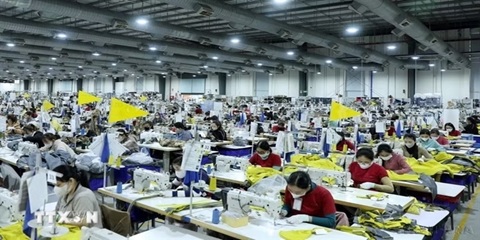
TEXTILE EXPORTS FACE DUAL CHALLENGES OF SUSTAINING ORDERS AND BOOSTING EFFICIENCY AMID GROWING COMPETITION
Data shows that the textile and garment sector maintained its growth momentum in the first nine months of this year. The industry's total export turnover reached an estimated US$35.721 billion in the first nine months of this year, up 3.3 per cent year-on-year. Despite posting encouraging export figures, Vietnamese textile and garment enterprises continue to navigate unpredictable market variables.
Events Sponsors






















