Want to be in the loop?
subscribe to
our notification
Business News
HOUSING LAW AMBIGUITIES RANKLE FOREIGN INVESTORS
Experts claim that despite the 2014 policy permitting non-Vietnamese citizens to purchase houses in Vietnam, variations in the interpretations of the policy leave investors sceptical and unsure about how to calculate risk.
Kenneth Atkinson, executive chairman of Grant Thornton Vietnam, told VIR that the government’s housing and real estate laws, which came into effect in July 2015, created a lot of excitement and interest among foreign investors, but the buzz is waning.
“This should have been a real driver for sales, especially in resort and coastal areas. It should have been a driver for further growth in the tourism sector, boosting the return visitor market that Vietnam lacks compared to neighbouring countries like Thailand, Indonesia, and Malaysia,” Atkinson said.
He highlighted that there are still a number of grey areas which need clarification if the market buzz is to return to the levels first observed after the introduction of the policy.
One of those grey areas is ownership surrounding military land, as it now seems the government is saying foreign ownership of housing that rests on military land will not be permitted.
“Whilst the government should be free to determine which projects are eligible to sell leases to non-Vietnamese citizens, the rules should be clear,” Atkinson said.
“If some developments are not going to be eligible to sell long term leases on 30 per cent of units to non-Vietnamese citizens, then this should be made public before the developers begin selling,” he said.
Atkinson also expressed concerns over foreign ownership in developments that are on land which may be reclassified as a military land in the future.
“This really is an issue which should have been addressed when the laws were passed for projects under development and at the time of licensing for projects licensed subsequent to the passing of the new laws,” he added.
Another issue now surfacing is the fact that a local owner cannot sell to non-Vietnamese citizens, only a non-Vietnamese citizen can sell to another non-Vietnamese citizen.
There appears to be no logical reasoning for this with respect to developments where sales to non-Vietnamese citizens have not reached the 30 per cent limit for apartments, or 10 per cent limit for land plots.
Atkinson also stated that there are no clear guidelines on how the remittance of sales proceeds are to be monitored, as funds used for purchasing a property are not required to be invested through a direct investment account.
“As a non-Vietnamese citizen, and I think I speak for the majority, we look for complete clarity in the regulations in terms of ownership rights, how to remit and return purchase monies and sales proceeds, and how taxes on gains are calculated,” Atkinson said..
“We also look for an environment where there cannot be retroactive changes in laws or regulations, and clarity about the procedures for renewing 50 year leases upon expiry,” he said.
Kai Marcus Schröter, general director of HTM Management Consultancy Co. Ltd., highlighted that non-Vietnamese citizens are faced with many difficulties when buying houses.
“I think that it is quite ok for a country to regulate and restrict foreign ownership of land, but this process must be clear and transparent,” he said.
“Vietnam has a right to protect its security and to restrict access to land. But I have never understood why any non-Vietnamese citizens who have just entered the country on a valid visa and stayed for the first time in the country are treated the same way and have the same rights as non-Vietnamese citizens who have lived here for a long time, have invested here, and even have Vietnamese families here,” he added.
Schröter added that the latter has certainly proven their love and commitment to the country, and they are certainly no ‘security threat’.
“The first should be restricted from buying property, the second should be rewarded with easy access, simple procedures, and quick documentation of land purchase (pink books),” he said.
As decreed by the government, local departments of construction are responsible for publishing which properties are restricted from foreign ownership over concerns of ‘security’ and ‘national defence’.
“When the decree was passed, the Ministry of National Defense and the Ministry of Public Security failed to follow through and to submit this information to the local departments of construction, creating loopholes and problems for non-Vietnamese citizens,” Schröter said.
“Non-Vietnamese citizens signed purchase contracts and paid big money, but could not obtain pink books. Without a pink book, the purchase is in fact worthless,” he said.
Schröter suggested the government of Vietnam work harder to enforce the decrees they have passed, and protect the rights of non-Vietnamese residents and citizens alike, to ensure equal and fair treatment.
“The definition of ‘restricted’ or ‘security areas’ should be very narrow (for example military bases), and applied indiscriminately to both Vietnamese citizens and permanent residents,” he concluded.
Source: VIR
Related News

INFRASTRUCTURE / CONSTRUCTION / LOGISTIC / PORT
VIỆT NAM-CAMBODIA TRADE GATHERS PACE TOWARDS $20 BILLION TARGET
Trade between Việt Nam and Cambodia continues to grow, remaining a bright spot and a key pillar of bilateral cooperation as the two countries aim to raise two-way trade to US$20 billion in the coming years. After setting a record of more than $11.3 billion last year, bilateral trade reached about $8.7 billion in the first eight months of this year, up 8.3 per cent year on year.
TECHNOLOGY
AI BEGINNING TO RESHAPE RECRUITMENT CRITERIA
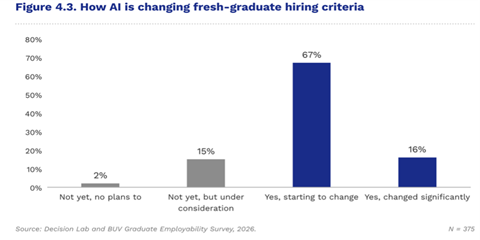
Digital literacy is the only capability area in which fresh graduates meet employers’ expectations, according to a new report. Yet, it is also the standard rising fastest, as businesses increasingly expect new hires to use AI effectively in the workplace. Some 83 per cent of employers say AI has changed, or is beginning to change, their hiring criteria, while 94 per cent report higher expectations for digital and AI capabilities than they had two to three years ago.

INFRASTRUCTURE / CONSTRUCTION / LOGISTIC / PORT
ĐÀ NẴNG GREEN-LIGHTS US$105 MILLION THAI DEVELOPMENT DEAL
The central city has approved an investment proposal by Thailand’s WHA Group to develop infrastructure for the 400ha WHA Đà Nẵng Industrial Park project on two communes of Thăng Bình and Đồng Dương, with an investment of more than VNĐ2.7 trillion (US$105 million). The city said it approved WHA Industrial Development International's status as an investor in the project, which is expected to take place between 2027 and 2034.

VIETNAM ECONOMY INVESTMENT
MOBILE PHONE EXPORTS RISE 20% TO $51.8 BILLION IN FIRST NINE MONTHS
Exports of mobile phones and components rose 20 per cent year-on-year to nearly US$51.8 billion in the first nine months of 2026, with China, the US and Republic of Korea accounting for more than half of the total. Shipments to the three markets reached a combined $26.18 billion, or 50.6 per cent of total exports of the product group during the period, according to data from the Vietnam Department of Customs under the Ministry of Finance.

VIETNAM ECONOMY INVESTMENT
FRUIT AND VEGETABLE EXPORTS POISED TO HIT $10 BILLION IN 2026
Fruit and vegetable exports are on track to reach nearly US$10 billion in 2026, after rising 19.9 per cent year on year to nearly US$7.4 billion in the first nine months, driven by strong seasonal demand and abundant tropical fruit supplies. The Ministry of Agriculture and Environment said the growth reflected stronger international demand for fresh produce and processed agricultural products.
GARMENT / TEXTILE
TEXTILE EXPORTS FACE DUAL CHALLENGES OF SUSTAINING ORDERS AND BOOSTING EFFICIENCY AMID GROWING COMPETITION
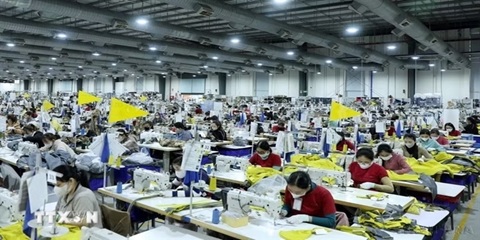
Data shows that the textile and garment sector maintained its growth momentum in the first nine months of this year. The industry's total export turnover reached an estimated US$35.721 billion in the first nine months of this year, up 3.3 per cent year-on-year. Despite posting encouraging export figures, Vietnamese textile and garment enterprises continue to navigate unpredictable market variables.
Events Sponsors






















