Want to be in the loop?
subscribe to
our notification
Business News
HUNG YEN BUILDS DIGITAL FOUNDATIONS TO DRIVE LONG-TERM GROWTH
From strengthening data infrastructure to developing AI platforms, Hung Yen province is enhancing governance capacity while laying the groundwork for the growth of its digital economy.
Hung Yen, about 50-60km southeast of Hanoi, has maintained steady momentum in implementing its digital transformation agenda, creating a stronger foundation for the province to advance science, technology, and innovation.
At a conference on July 15 reviewing progress in 2026, Hung Yen Steering Committee for Science and Technology Development, Innovation, and Digital Transformation reported that 169 of the 272 assigned tasks had been completed, with no overdue assignments. Nearly half of the objectives under the province's annual digital transformation plan have also been achieved.
The progress is reflected in improving digital government indicators. During the first six months of the year, Hung Yen processed more than 659,000 administrative applications, of which over 94 per cent were submitted online and 98.3 per cent were resolved on schedule.
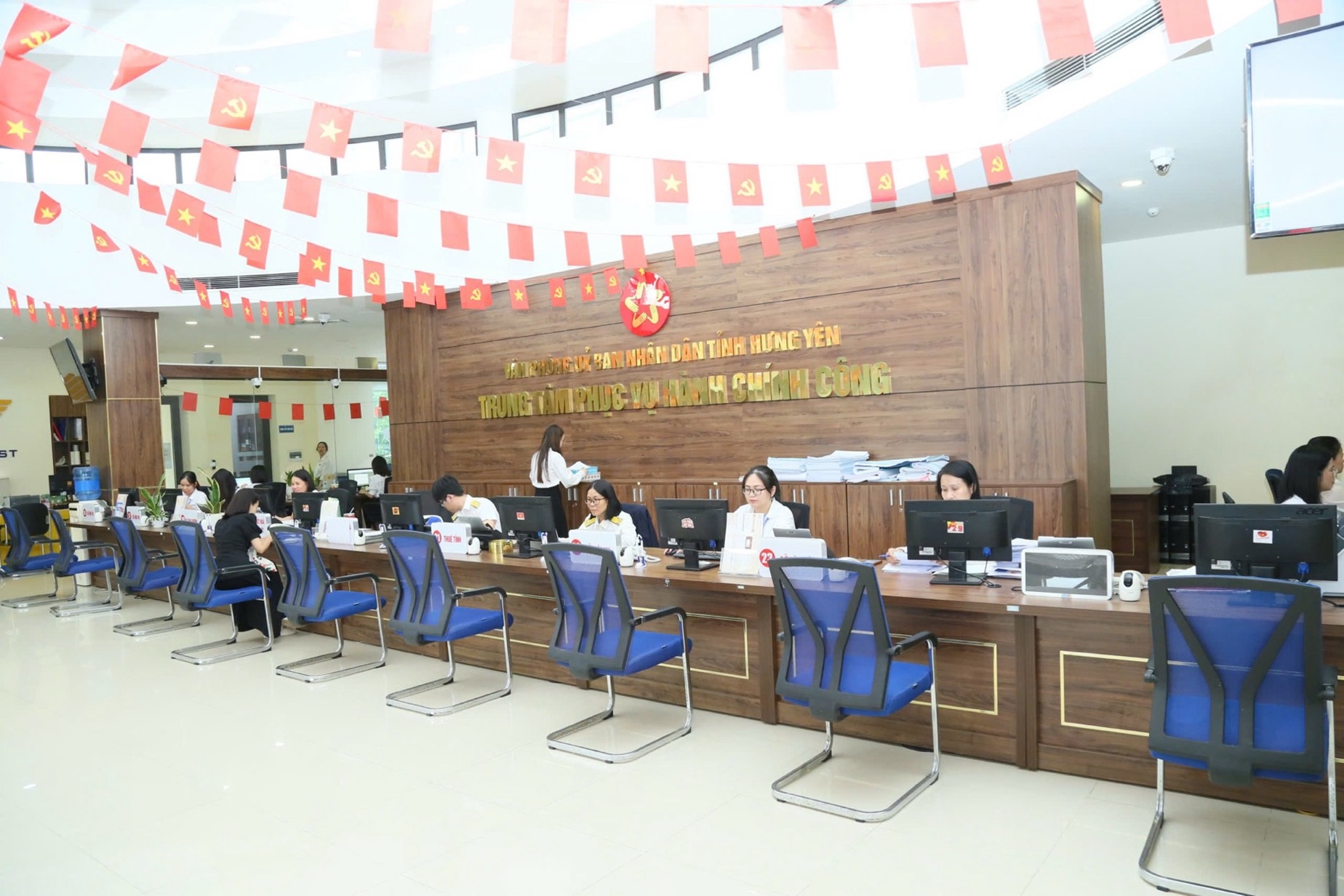
Hung Yen Public Administration Service Centre
Administrative records continue to be digitalised, while all public administrative procedures are now available regardless of geographical boundaries, making public services more accessible to citizens and businesses.
Official documents exchanged among government agencies are now handled almost entirely through electronic systems with full digital signatures.
The province has supported these improvements through sustained investment in digital infrastructure. Fibre-optic broadband and 4G-5G mobile coverage now extend to every commune and ward, while the Digital Literacy for All initiative continues to improve digital skills and encourage wider technology adoption across government agencies, businesses and local communities.
Despite this progress, provincial leaders acknowledge that digital transformation is moving into a more challenging phase. With the basic infrastructure largely in place, the focus is shifting towards deeper institutional reform and more effective use of digital resources.
Fragmented databases, limited interoperability, and shortages of specialised digital personnel remain key constraints, while the digital economy has yet to fully realise its potential.
Addressing the conference, Pham Quang Ngoc, Secretary of Hung Yen Party Committee and head of the Steering Committee, stressed that digital transformation should be viewed as more than a technology programme.
“Instead, it should reshape the way government operates, delivering tangible benefits for citizens and businesses while improving governance and creating new momentum for sustainable economic development,” he said.
That strategic shift is reflected in Hung Yen's digital transformation plan for 2026-2030. Rather than focusing primarily on digitising administrative procedures, the new roadmap positions data infrastructure, shared digital platforms and AI as the foundation of the province's next stage of development.
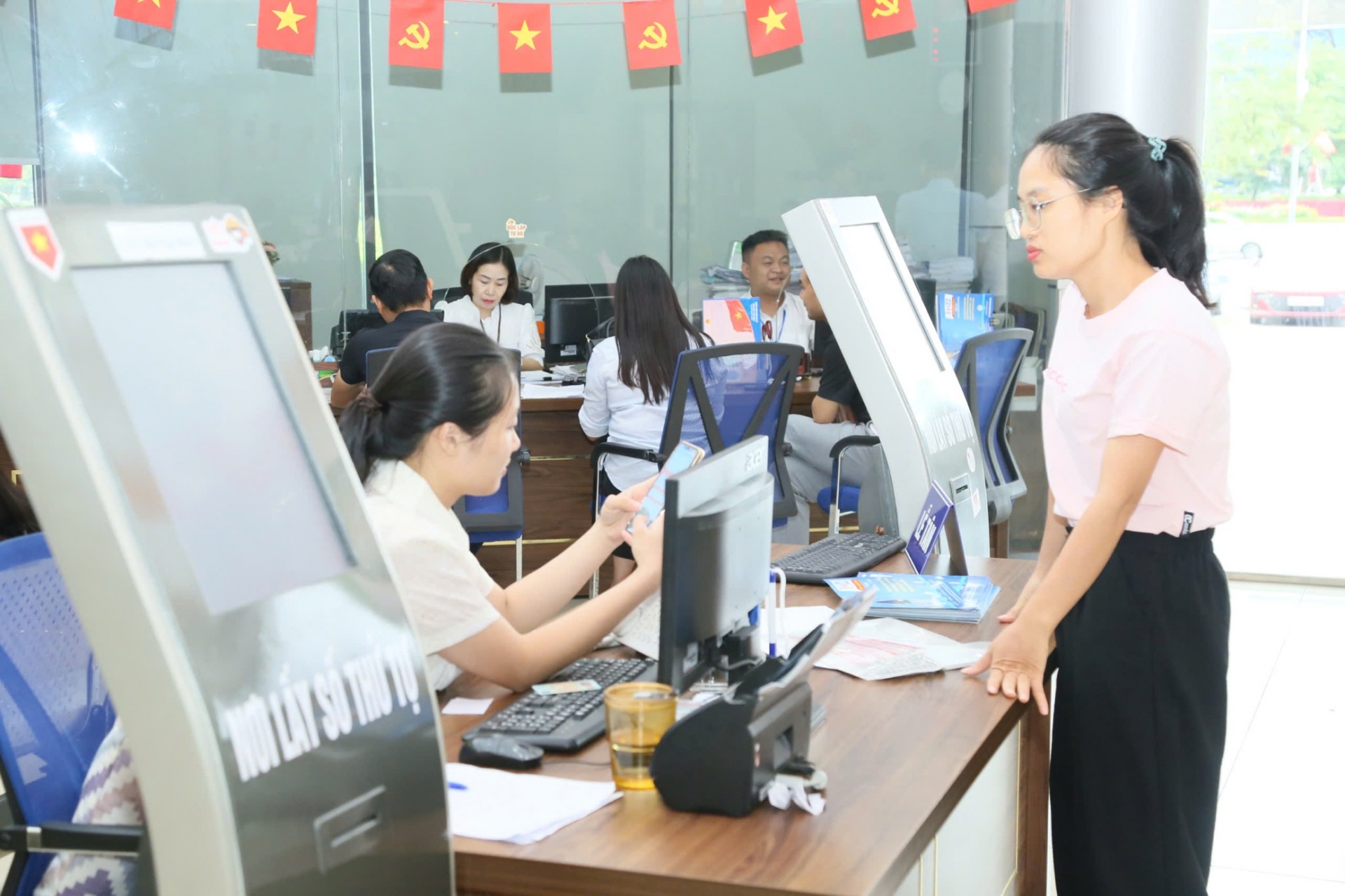
Hung Yen is leveraging data and digital technologies as the foundation for building a digital government
Driving digital growth
Data will form the backbone of Hung Yen's digital transformation strategy over the coming years. The province plans to continue developing sectoral databases under the principles of being accurate, complete, clean, continuously updated, interconnected, and shared.
At the same time, it will establish shared big data analytics and AI platforms to support policy formulation, public administration and government decision-making.
A key component of the strategy is the upgrade of Hung Yen's Integrated Data Centre to Tier III international standards. The project is expected to significantly strengthen the province's capacity to store, process and share data while providing the resilient digital infrastructure needed for AI deployment and future digital services.
With redundant power, cooling, and technical systems, the upgraded facility will allow maintenance without disrupting operations, an increasingly important requirement as public services become more digital.
For Hung Yen, AI is viewed as a practical tool for improving government performance. Under the roadmap, every essential online public service will incorporate AI in at least one stage of service delivery, ranging from document processing and citizen support to automated decision-making.
Between 2028 and 2030, half of these services are expected to become increasingly personalised, enabling AI to recommend or remind citizens and businesses of administrative procedures relevant to their individual needs.
AI adoption will also become standard practice across the public sector. The province aims for all public officials and civil servants to use AI assistants or other intelligent digital tools in their daily work, while every government agency is expected to deploy at least one AI-based solution to enhance administration, management and decision-making.
Complementing these initiatives, Hung Yen plans to establish an intelligent operations centre integrating AI, the Internet of Things, 5G connectivity, and real-time data analytics. The centre is expected to strengthen forecasting capabilities and provide early warnings on socioeconomic developments, enabling authorities to make faster and better-informed policy decisions.
The province's ambitions extend well beyond public administration. Hung Yen expects digital transformation to become a new engine of economic growth by accelerating digital adoption across manufacturing, logistics, e-commerce, smart agriculture, healthcare, education, tourism, and urban management.
By 2030, the province targets the digital economy to contribute at least 30 per cent of regional GDP, while digital activities are expected to account for no less than 20 per cent of output in every major sector. Labour productivity is projected to increase by an average of 10 per cent annually, supported by broader adoption of digital platforms among small and medium-sized enterprises and wider use of electronic contracts.
Alongside economic development, Hung Yen is also pursuing an inclusive digital society. By the end of the decade, the province aims to achieve near-universal smartphone ownership, electronic health records, basic digital literacy, and household internet connectivity, complemented by province-wide 5G coverage and wider adoption of cashless payments through the continued expansion of its Digital Literacy for All programme.
Recognising that digital transformation must be underpinned by robust cybersecurity, the province is strengthening the security of government information systems through security classification, a four-layer protection model, regular risk assessments and upgrades to its Security Operations Centre.
In the longer term, Hung Yen plans to establish a provincial cybersecurity centre connected to the National Cybersecurity Centre.
Source: VIR
Related News

INFRASTRUCTURE / CONSTRUCTION / LOGISTIC / PORT
VIỆT NAM-CAMBODIA TRADE GATHERS PACE TOWARDS $20 BILLION TARGET
Trade between Việt Nam and Cambodia continues to grow, remaining a bright spot and a key pillar of bilateral cooperation as the two countries aim to raise two-way trade to US$20 billion in the coming years. After setting a record of more than $11.3 billion last year, bilateral trade reached about $8.7 billion in the first eight months of this year, up 8.3 per cent year on year.
TECHNOLOGY
AI BEGINNING TO RESHAPE RECRUITMENT CRITERIA
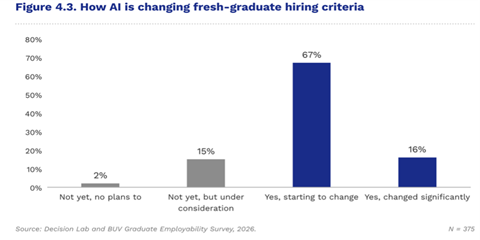
Digital literacy is the only capability area in which fresh graduates meet employers’ expectations, according to a new report. Yet, it is also the standard rising fastest, as businesses increasingly expect new hires to use AI effectively in the workplace. Some 83 per cent of employers say AI has changed, or is beginning to change, their hiring criteria, while 94 per cent report higher expectations for digital and AI capabilities than they had two to three years ago.

INFRASTRUCTURE / CONSTRUCTION / LOGISTIC / PORT
ĐÀ NẴNG GREEN-LIGHTS US$105 MILLION THAI DEVELOPMENT DEAL
The central city has approved an investment proposal by Thailand’s WHA Group to develop infrastructure for the 400ha WHA Đà Nẵng Industrial Park project on two communes of Thăng Bình and Đồng Dương, with an investment of more than VNĐ2.7 trillion (US$105 million). The city said it approved WHA Industrial Development International's status as an investor in the project, which is expected to take place between 2027 and 2034.

VIETNAM ECONOMY INVESTMENT
MOBILE PHONE EXPORTS RISE 20% TO $51.8 BILLION IN FIRST NINE MONTHS
Exports of mobile phones and components rose 20 per cent year-on-year to nearly US$51.8 billion in the first nine months of 2026, with China, the US and Republic of Korea accounting for more than half of the total. Shipments to the three markets reached a combined $26.18 billion, or 50.6 per cent of total exports of the product group during the period, according to data from the Vietnam Department of Customs under the Ministry of Finance.

VIETNAM ECONOMY INVESTMENT
FRUIT AND VEGETABLE EXPORTS POISED TO HIT $10 BILLION IN 2026
Fruit and vegetable exports are on track to reach nearly US$10 billion in 2026, after rising 19.9 per cent year on year to nearly US$7.4 billion in the first nine months, driven by strong seasonal demand and abundant tropical fruit supplies. The Ministry of Agriculture and Environment said the growth reflected stronger international demand for fresh produce and processed agricultural products.
GARMENT / TEXTILE
TEXTILE EXPORTS FACE DUAL CHALLENGES OF SUSTAINING ORDERS AND BOOSTING EFFICIENCY AMID GROWING COMPETITION
Data shows that the textile and garment sector maintained its growth momentum in the first nine months of this year. The industry's total export turnover reached an estimated US$35.721 billion in the first nine months of this year, up 3.3 per cent year-on-year. Despite posting encouraging export figures, Vietnamese textile and garment enterprises continue to navigate unpredictable market variables.
Events Sponsors






















