Want to be in the loop?
subscribe to
our notification
Business News
INCREASED PRESSURE ON DOMESTIC BANKS COMES FROM FOREIGN RIVALS
Meanwhile, domestic banks that are still undergoing restructuring, lack financial resources and are weak in technology and administration,are under pressure.
The State Bank of Vietnam (SBV) has issued a written notice of approval in principle, allowing Woori Bank (South Korea) to establish a 100% foreign owned bank in Vietnam. If it is licensed, this will be the seventh bankwith 100% foreign capital in Vietnam.
In March 2016, the central bank licensed the establishment of 100% foreign-owned bank for Public Perhad Bank (Malaysia) in Vietnam to take effect from April 1 with the name MTV Public Vietnam Limited Bank,1 with charter capital of VND3,000 billion and a duration of 99 years.
The central bank has also permitted SinoPac Bank, HCM City Branch to increase capital by $40 million, from $25.951 million to $65.951 million. In March, this bank was also allowed to increase its duration in Vietnam to 99 years.
At the same time, the central bank approved the proposal to change the capital allocated to BPCE International et Outre-Mer Bank, HCM City Branch by $15 million, from $61.708 million to $76.708 million.
The SBV also approved in principle the establishment of the Hanoi branch by Nonghyup Bank (South Korea).
In early 2016, Citibank said that if it receives SBV’s approval, it will establish a 100% foreign owned bank in Vietnam.
NH E.SUN (Taiwan) said it would develop into a 100% foreign-owned bank in Vietnam after opening its first branch in Dong Nai province.
This suggests that foreign banks are very interested in the Vietnamese market.
According to the Institute for Financial Policy and Strategy, since Vietnam joined the WTO, the number of branches of foreign banks has increased by 51.4%.
Previously, foreign banks focused on foreign-invested businesses in Vietnam but now they have shifted their attention to local firms, particularly private firms with good development.
Although the market share of foreign banks in Vietnam is still small, along with their expansion and their longer time in Vietnam, in the long term they will encroach on the market share of Vietnam's banks.
Previously, foreign banks mainly looked for profit from foreign exchange services and charges, and they are now trying to increase credit growth.
In 2015, the central bank approved adjusting the maximum credit growth target of 18 banks, including four foreign bank branches and one wholly-owned foreign bank.
Competition
According to the SBV’s International Cooperation Department, when Vietnam joins the TPP, the financial - banking sector must also open.
The commitment of Vietnam in TPP is basically equal to the WTO commitments: Vietnam must not discriminate between domestic investors and investors from the TPP countries, not use measures to restrict the market, and other measures. But there are also many new features.
Most notably, if Vietnam allows local credit institutions to provide new financial services without having to build new or amended laws, the banks of the TPP member countries are also allowed to offer similar services.
Currently the services of domestic credit institutions are not varied so if th regulations are applied, they will face enormous competitive pressure.
So far, though foreign banks have massively invested in Vietnam, domestic banks have not yet invested much overseas and Vietnam has no bank at the regional level.
In terms of scale, the largest commercial banks in the country have average capital of $30-$35 billion while in neighboring countries such as Thailand and Indonesia, the capital of some large banks is double that figure. Moreover, the quality of governance is much better.
Dr. Le Xuan Nghia, a member of the National Advisory Committee on Financial and Monetary Policy, said the work was using the NH 3.0. standard. Accordingly, the transaction bureaus of European banks have up to 7 employees or even only one staff because all activities are electronic. The power of technology has helped foreign banks optimize profit and cut costs effectively.
To advance to sustainable and safe development, foreign banks are also working toward Basel III standards, while domestic banks have just begun piloting administration and risk management under Basel II standards.
During this pilot phase, domestic commercial banks need to raise capital, and the biggest expectations of the capital increase and risk management are still placed on support from foreign investors.
For example, Vietcombank and VietinBank have proposed to increase the rate of foreign ownership to 35-40% in order to raise capital to meet Basel II standards.
Meanwhile, the banks that are under restructuring desire a higher proportion of foreign ownership, from 49% to over 50% so that foreign shareholders will have the right to make decisions, since they will enhance support for risk management and technology, which will help them survive in the time of international integration.
Overall, Vietnamese banks have only one advantage: their understanding of the local market.
Therefore, experts believe that the central bank should accelerate the process of restructuring of the banking system and consider loosening ownership ratio of foreign investors at a reasonable level so that local banks can attract foreign resources and support, which would speed up their restructuring and raise their financial capability.
Source: VNEP
Related News
VIETNAM ECONOMY INVESTMENT
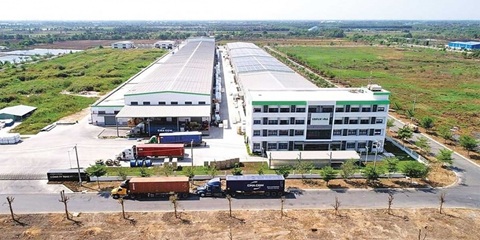
FOREIGN INVESTORS SEEKING A SYNCHRONISED MANUFACTURING ECOSYSTEM
Instead of focusing only on land costs and incentives as usual, foreign investors are seeking a synchronised manufacturing ecosystem, from stable power supply and logistics to shared infrastructure and the convenience of completing residence procedures for experts to serve their long-term investment in the country.
INFRASTRUCTURE / CONSTRUCTION / LOGISTIC / PORT
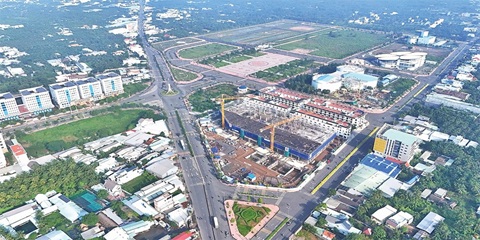
DONG THAP PROVINCE STEPS UP INDUSTRIAL EXPANSION AND INFRASTRUCTURE CONNECTIVITY
Accelerating public investment, strengthening inter-regional connectivity, and expanding industrial land are helping Dong Thap efficiently bolster competitiveness and drive economic growth. Following the 2025 merger of the former Dong Thap and Tien Giang provinces, the expanded Dong Thap province in the Mekong Delta faces mounting pressure to accelerate infrastructure development and strengthen connectivity among local economic zones, urban areas, industrial parks (IPs), and production centres.
PROPERTY / INDUSTRIAL ZONE
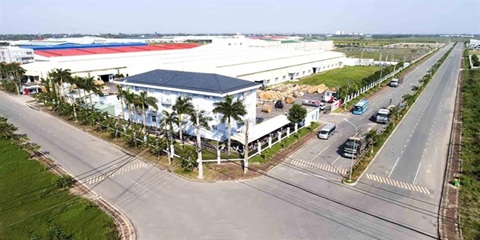
HCM CITY ATTRACTS US$5.7 BILLION INTO EXPORT PROCESSING AND INDUSTRIAL ZONES
HCM City attracted US$5.7 billion in domestic and foreign investment into its export processing and industrial zones during the first nine months of 2026. The figure exceeded the city's full-year target by 31 per cent, highlighting strong momentum in high-quality industrial investment under Resolution No.10-NQ/TW. Total investment reached 131 per cent of the 2026 target of $4.25 billion and represented a 29 per cent increase compared with the same period in 2025, according to the city's Export Processing and Industrial Zones Authority (HEPZA).

BANKING / FINANCE / INSURANCE / TAX
REMITTANCES TO HCM CITY RISE NEARLY 40% IN Q3
Remittances to HCM City reached more than US$2.83 billion in the third quarter of this year, up 39.5 per cent from the previous quarter and 3.6 per cent year-on-year. This was the first quarter showing positive annual growth this year, helping narrow the decline in remittance inflows over the first nine months. According to the State Bank of Vietnam (SBV)’s Regional Branch 2, remittances transferred to HCM City through credit institutions and economic organisations totalled $2.835 billion in Q3, an increase of more than $802 million from the previous quarter.
VIETNAM ECONOMY INVESTMENT
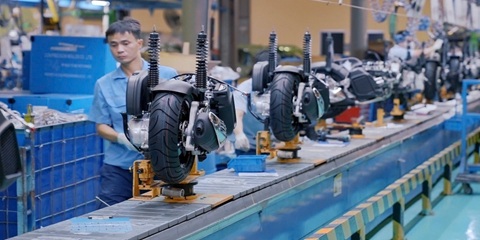
LOCALITIES REPORT BREAKTHROUGH RESULTS IN FDI IN FIRST NINE MONTHS
In Ho Chi Minh City, total registered capital reached $17.2 billion in the first nine months, up 4.2 times from the same period last year. The figure included more than $9.35 billion in newly registered capital and over $4.9 billion in additional capital for existing projects. Foreign investors also registered more than $2.9 billion through capital contributions and share purchases.

TECHNOLOGY
TECH SECTOR GROWTH OPENS UP OPPORTUNITIES FOR VIỆT NAM TO GO GLOBAL
The growth of the electronics, semiconductor and high-tech sectors worldwide is opening up a variety of opportunities for Vietnamese enterprises to integrate more deeply into the global supply chain. However, to become suppliers for these corporations, domestic enterprises must meet rigorous standards regarding quality, technology, productivity and order fulfilment capabilities.
Events Sponsors






















