Want to be in the loop?
subscribe to
our notification
Business News
INDUSTRIAL PRODUCTION POSTS RECORD GROWTH IN MANY YEARS
For the January-July period, the IIP expanded to 11.4 per cent, marking the highest level recorded for the same period between 2019 and 2026, exceeding the 8.4 per cent growth in the first seven months of 2025, 8.5 per cent in 2024 and 9.4 per cent in 2019.
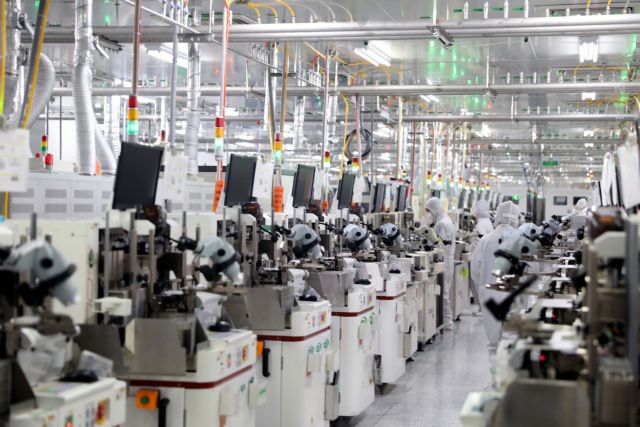
Production at Seoul Semiconductor Vina in Ninh Bình Province. Industrial production increased in all 34 provinces and cities in the first seven months of 2026, reflecting broad-based expansion nationwide. — VNA/VNS Photo Đại Nghĩa
HÀ NỘI — The industrial production index (IIP) rose by 11.4 per cent from January to July, the strongest seven-month performance in nearly a decade, with growth recorded across all 34 provinces and cities driven by robust processing and manufacturing, the National Statistics Office (NSO) said in an August 3 report.
The IIP in July was estimated to increase by 1.2 per cent from the previous month and 14.5 per cent year-on-year, showing continued momentum in production, the NSO said.
For the January-July period, the IIP expanded to 11.4 per cent, marking the highest level recorded for the same period between 2019 and 2026.
The expansion was driven mainly by the processing and manufacturing sector, which continued to serve as the key growth engine amid the launch of new production capacity and stronger industrial activity.
Manufacturing and processing expanded by 12 per cent during the period, accelerating from 10.1 per cent in the same period last year and contributing 9.3 percentage points to overall industrial growth.
Mining output recovered with a 6.6 per cent increase, compared with a 2.4 per cent decline a year earlier, contributing one percentage point.
Electricity generation and distribution rose by 9.9 per cent, contributing 0.9 percentage points, while water supply, waste management and treatment increased by 10 per cent, adding 0.2 percentage points.
Among secondary industrial sectors, metal production led growth in the first seven months with a 23.5 per cent increase, followed by motor vehicle manufacturing at 16 per cent and beverage production at 15.7 per cent. Production of non-metallic mineral products and other transport equipment both rose by 13.5 per cent.
Of note, industrial production increased in all 34 provinces and cities in the first seven months of 2026, reflecting broad-based expansion nationwide.
The central province of Hà Tĩnh posted the strongest growth, with its IIP rising by 36.8 per cent, followed by Ninh Bình with 27 per cent, Phú Thọ with 23.8 per cent, Nghệ An with 21.5 per cent and Thái Nguyên with 21 per cent.
Some localities still saw low growth, however. Lai Châu recorded the lowest growth at 3.4 per cent, followed by Sơn La at 3.8 per cent, Lào Cai at 5.7 per cent, Lạng Sơn at 6.9 per cent and Gia Lai at 8 per cent.
The gap reflected differences in industrial structures and the performance of major production facilities in each locality, the NSO said.
Several key industrial products recorded strong growth in the period: motorcycles are up 31.1 per cent, laptops up 30.7 per cent, rolled steel up 24.7 per cent, automobiles up 24.3 per cent, processed seafood up 21.2 per cent, refined sugar up 18.5 per cent, steel bars and angle bars up 16.8 per cent, beer up 13.9 per cent and crude oil up 12.7 per cent.
Products that saw declines include NPK fertiliser, down 10.9 per cent, monosodium glutamate, down 7.8 per cent, leather footwear, down 4.9 per cent and clean coal, down 3.1 per cent.
Alongside the increase in production, employment in industrial enterprises also improved.
The number of workers employed by industrial firms as of July 1 increased by 1 per cent from the previous month and 3.1 per cent over the same period last year. — VNS
Source: VNS
Related News
MEMBER CORNER / PROMOTIONS
KNIC ENGAGES WITH GOVERNMENT AND HIGH-TECH BUSINESS COMMUNITIES IN CHINA
From Beijing to Shandong, KN Holdings and KN Industrial City are continuing to expand their engagement with government authorities, trade promotion organizations, and high-tech business communities in China. In Beijing, the delegation met with the Center for International Economic and Technological Cooperation under the Ministry of Industry and Information Technology (MIIT), exchanging perspectives on industrial and technology cooperation between the two markets.

VIETNAM ECONOMY INVESTMENT
VIETNAM’S TRADE TOPS $825 BILLION BY MID-SEPTEMBER
Figures released on September 21 showed goods trade reached nearly $55 billion in the first 15 days of September alone, bringing cumulative turnover since the beginning of the year to more than $825 billion. The strong growth reflects robust trade flows, with demand for consumer goods and production inputs remaining high.

TECHNOLOGY
VIỆT NAM'S BUSINESSES MOVE TOWARDS AI AGENTS
Việt Nam’s AI landscape is entering a new phase as businesses move beyond generative AI (GenAI) tools designed to assist human users towards autonomous AI, agentic AI and AI agents that can take action with limited supervision, experts have said. The shift comes as Việt Nam seeks to accelerate science and technology, innovation and digital transformation under Politburo Resolution 57-NQ/TW, issued on December 22, 2024.
GARMENT / TEXTILE
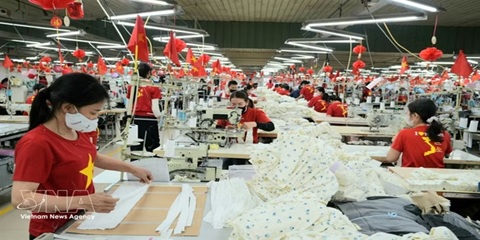
VIỆT NAM TARGETS $48 BILLION IN TEXTILE-GARMENT EXPORTS
Việt Nam’s textile and garment industry is facing both opportunities and challenges amid complex and unpredictable developments in the global market, prompting businesses to improve growth quality, optimise production costs and enhance adaptability in pursuit of an export turnover of about $48 billion this year. The target is considered an important milestone that requires concerted efforts from management agencies and the business community.
INFRASTRUCTURE / CONSTRUCTION / LOGISTIC / PORT
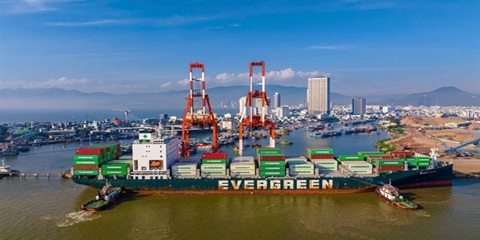
CUTTING LOGISTICS COSTS KEY TO BOOSTING EXPORTS
Reducing costs has become an increasingly urgent priority for import-export activities, particularly logistics costs, a conference in Hà Nội was told on Tuesday. According to Deputy General Director of the Ministry of Industry and Trade's Agency for Foreign Trade, Trần Thanh Hải, import-export activities has remained a bright spot for the economy in recent years, playing an important role and helping drive macroeconomic growth.
LEGAL UPDATE / POLICY
FLEXIBLE FISCAL POLICY HELPS DRIVE ECONOMIC GROWTH
Việt Nam’s fiscal policy has been implemented in a targeted expansionary manner since early 2026, helping maintain macroeconomic stability and supporting the country’s goal of achieving double-digit economic growth. According to the Ministry of Finance, State budget revenue in the first eight months of 2026 was estimated at VNĐ2.02 quadrillion (US$77.7 billion), equivalent to 80 per cent of the annual estimate and up 16 per cent year-on-year.
Events Sponsors






















