Want to be in the loop?
subscribe to
our notification
Business News
INDUSTRIAL ZONE LEASING TAKES A HIT AS 2021’S PANDEMIC COMPLEXITIES HINDER ACTIVITIES
Manufacturers are buckling under the stress of attempting to operate with reduced staff numbers, or even house them at all as social distancing and domestic travel restrictions continue to make it difficult for industrial zones as well as developers in the leasing game.
More than two months have passed since the latest wave of the broke out, severely impacting industrial manufacturers and zones in the southern provinces.
Many localities such as Ho Chi Minh City, Binh Duong, Long An, Dong Nai, and Ba Ria-Vung Tau are forced to apply regulations that allow enterprises to only operate when they ensure the implementation of strict stay-at-work guidelines, which enables their workers to sleep, have meals, and work at the site.
Many companies and factories, however, had to suspend operations. Pham Quang Anh, general director of Dony Garment Co., Ltd. said that his factory had closed because he could not meet all requirements.
“Enabling hundreds of workers to stay and have meals in the factory exceeded our ability, so we had to halt operations,” Anh said.
According to a Ho Chi Minh City Export Processing and Industrial Zones Authority (HEPZA) report, only 70 out of 85 enterprises in Saigon Hi-tech Park registered to continue operating under the new regulations. In Linh Trung Export Processing Zone and Industrial Park 1, 13 of 32 enterprises had stopped running.
Challenging production activities of enterprises also affect the operation of industrial zones (IZs). Meanwhile, the social distancing and travel restrictions continue to make it difficult for developers to find customers to rent land, factories, and warehouses.
Apart from foreign investors who cannot enter Vietnam, potential industrial real estate financiers and tenants can also not directly visit and survey projects in other provinces, which partly affects the rental prices in IZs.
Lam Dieu Tam Hieu, deputy general director of Kizuna JV Corporation, an enterprise specialising in ready-built factories in Long An province, said that only about 50 per cent of enterprises are currently still operating with the company’s factory solutions. These are businesses maintaining production for orders that are in progress or have raw materials available at the warehouses.
“It is extremely difficult for manufacturing enterprises to maintain their production in this period due to many factors such as rising labour costs, shortage of labour, increased shipping costs, and regulations amid the pandemic,” Hieu said.
As a support for many enterprises, Kizuna decided to reduce its rental fees by 15 per cent for the third quarter of 2021. Its fees will also not be adjusted according to the economic growth forecast from the last quarter of 2021 to the end of 2022.
According to Nguyen Van Be, chairman of the HEPZA, the industrial real estate market has slowed down, with few potential tenants asking for expanding or leasing factories.
Although affecting the leasing results of IZs, businesses still expect industrial real estate to continue to grow thanks to the government’s efforts in both fighting against the pandemic and maintaining production.
The implementation of community vaccinations and the promise of a vaccine passport programme are what brings confidence to both property owners and investors.
Hieu said that Kizuna is now trying to attract existing enterprises that want to expand their businesses in Vietnam and look for a new factory. The company is particularly focusing on manufacturing enterprises with existing factories who are looking for relocations and upgrades to cut costs.
“The readiness and support services of Kizuna are helping enterprises to locate to Vietnam. Our marketing and consultant services are also adjusted to be more suitable amid the pandemic. Meetings and discussions are happening on online platforms like Meet, Zoom, and other social networking channels such as KakaoTalk, Line, and Skype,” Hieu said.
Dang Thanh Tam, chairman of Kinh Bac City Development Holding Corporation, believes that with vaccinations in cities and provinces, the pandemic will soon be controlled. “With the current policies, I hope that Vietnam can push back the pandemic within the next few months, and that the country remains a favourite destination for foreign investors,” Tam said.
As one of the country’s leading IZ developers, Kinh Bac is determined to expand and build new IZs to meet the demand of new tenants.
“Just a few days ago, Kinh Bac received bookings from existing investors to expand their production lines and, at the same time, from new investors. For example, LG has expressed its willingness to acquire more space in the third phase of our IZs,” Tam said.
Source: VIR
Related News

INFRASTRUCTURE / CONSTRUCTION / LOGISTIC / PORT
VIỆT NAM-CAMBODIA TRADE GATHERS PACE TOWARDS $20 BILLION TARGET
Trade between Việt Nam and Cambodia continues to grow, remaining a bright spot and a key pillar of bilateral cooperation as the two countries aim to raise two-way trade to US$20 billion in the coming years. After setting a record of more than $11.3 billion last year, bilateral trade reached about $8.7 billion in the first eight months of this year, up 8.3 per cent year on year.
TECHNOLOGY
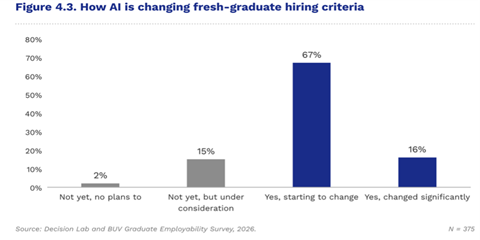
AI BEGINNING TO RESHAPE RECRUITMENT CRITERIA
Digital literacy is the only capability area in which fresh graduates meet employers’ expectations, according to a new report. Yet, it is also the standard rising fastest, as businesses increasingly expect new hires to use AI effectively in the workplace. Some 83 per cent of employers say AI has changed, or is beginning to change, their hiring criteria, while 94 per cent report higher expectations for digital and AI capabilities than they had two to three years ago.

INFRASTRUCTURE / CONSTRUCTION / LOGISTIC / PORT
ĐÀ NẴNG GREEN-LIGHTS US$105 MILLION THAI DEVELOPMENT DEAL
The central city has approved an investment proposal by Thailand’s WHA Group to develop infrastructure for the 400ha WHA Đà Nẵng Industrial Park project on two communes of Thăng Bình and Đồng Dương, with an investment of more than VNĐ2.7 trillion (US$105 million). The city said it approved WHA Industrial Development International's status as an investor in the project, which is expected to take place between 2027 and 2034.

VIETNAM ECONOMY INVESTMENT
MOBILE PHONE EXPORTS RISE 20% TO $51.8 BILLION IN FIRST NINE MONTHS
Exports of mobile phones and components rose 20 per cent year-on-year to nearly US$51.8 billion in the first nine months of 2026, with China, the US and Republic of Korea accounting for more than half of the total. Shipments to the three markets reached a combined $26.18 billion, or 50.6 per cent of total exports of the product group during the period, according to data from the Vietnam Department of Customs under the Ministry of Finance.

VIETNAM ECONOMY INVESTMENT
FRUIT AND VEGETABLE EXPORTS POISED TO HIT $10 BILLION IN 2026
Fruit and vegetable exports are on track to reach nearly US$10 billion in 2026, after rising 19.9 per cent year on year to nearly US$7.4 billion in the first nine months, driven by strong seasonal demand and abundant tropical fruit supplies. The Ministry of Agriculture and Environment said the growth reflected stronger international demand for fresh produce and processed agricultural products.
GARMENT / TEXTILE
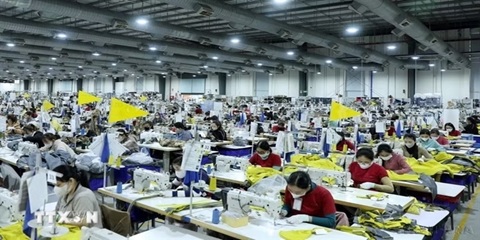
TEXTILE EXPORTS FACE DUAL CHALLENGES OF SUSTAINING ORDERS AND BOOSTING EFFICIENCY AMID GROWING COMPETITION
Data shows that the textile and garment sector maintained its growth momentum in the first nine months of this year. The industry's total export turnover reached an estimated US$35.721 billion in the first nine months of this year, up 3.3 per cent year-on-year. Despite posting encouraging export figures, Vietnamese textile and garment enterprises continue to navigate unpredictable market variables.
Events Sponsors






















