Want to be in the loop?
subscribe to
our notification
Business News
INT’L STANDARD MANUFACTURING INFRASTRUCTURE: KEY TO VIETNAMESE ENTERPRISES TO ENTER GLOBAL SEMICONDUCTOR ECOSYSTEM
Vietnam's semiconductor industry is expected to generate around US$21 billion in revenue in 2025, up 18% from 2024. The country’s electronics and semiconductor sectors are entering a phase of strong growth, fueled by rising global demand, government support policies, and competitive advantages in workforce and geographic location.
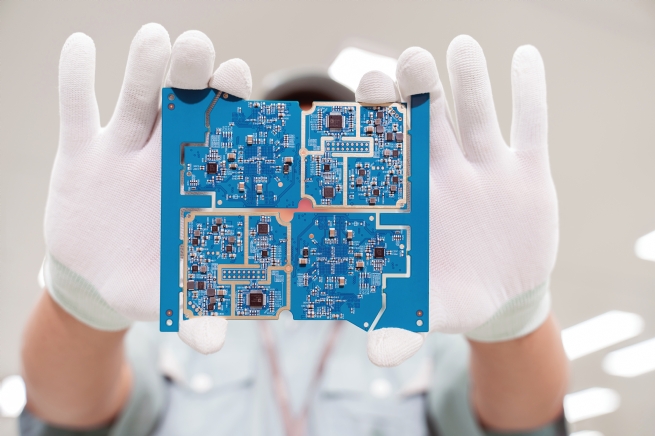
Vietnam's semiconductor industry is expected to earn US$21 billion in 2025
Great potential
According to Do Thi Thuy Huong, a member of the Executive Committee of the Vietnam Electronic Industries Association (VEIA), the electronics and semiconductor industries are important to Vietnam’s economy, especially in exports. Data from the Department of Vietnam Customs shows that in 2024, electronic product exports reached US$126.9 billion, accounting for about one-third of the country’s total export turnover. By 2025, the semiconductor industry alone is projected to reach US$21 billion, up 18% year-on-year, with a compound annual growth rate (CAGR) of 10% from 2025 to 2029, hitting US$31 billion in 2029.
Vietnam has become an appealing destination for global giants like Intel, Samsung, Qualcomm, and Amkor, thanks to competitive labor costs, political stability, and an extensive network of free trade agreements (FTAs). The industry currently focuses on assembly, packaging, and testing, but is gradually shifting toward microchip design.
Vietnam also holds substantial reserves of rare earth elements, making up 18% of the world’s total and ranking second globally in these raw materials essential for semiconductor manufacturing. The country also has a sizable pool of technical talent, with around 1,400 semiconductor-related graduates each year, though this remains far below the projected demand of 50,000 engineers by 2030.
Vietnam’s semiconductor industry is actively adopting advanced technologies such as artificial intelligence (AI), the Internet of Things (IoT), and 5G, driving demand for high-performance microchips. Emerging technologies like nanotechnology, graphene, and silicon carbide are being explored to create smaller, faster, and more energy-efficient components. At the same time, many businesses are integrating green technology into their production processes to minimize environmental impact and promote sustainable manufacturing. AI is increasingly applied to optimize chip design, detect manufacturing defects, and predict market trends.
The government has issued Decision 1018/QD-TTg (dated September 21, 2024), setting a goal to transform Vietnam into a global semiconductor hub. The 2024-2030 roadmap prioritizes attracting foreign direct investment (FDI) and building a highly skilled workforce, opening up opportunities for high-tech supporting industry enterprises to join the global value chain.
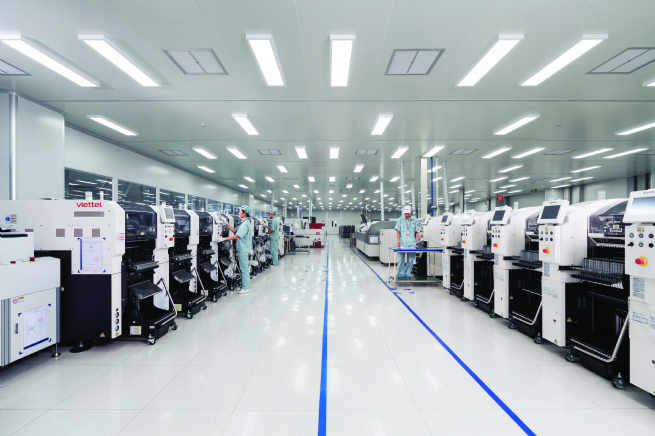
Vietnam’s electronics and semiconductor industry aims to become a regional IC hub, driven by policies, investment, and local resources
International standard manufacturing infrastructure needed
According to Ms. Huong, the global semiconductor industry is projected to reach US$1,000 billion in revenue by 2030, fueled by growing demand in AI, IoT, and 5G applications. Although Vietnam is emerging as a rising destination in the global semiconductor supply chain, advancing to higher value-added stages like chip design and fabrication requires international-standard manufacturing infrastructure, including fabrication plants (fabs), cleanrooms, and advanced quality control systems.
Major corporations such as Intel, Samsung, and Taiwan Semiconductor Manufacturing Company (TSMC) demand that their suppliers meet rigorous international standards for quality, precision, and sustainable production. Semiconductor facilities must adhere to certifications like ISO 9001 (quality management), ISO 14001 (environmental management), and cleanroom classifications from Class 1 to Class 10.
“Standard infrastructure is a decisive factor in attracting FDI, enhancing Vietnam’s competitiveness, and a prerequisite for domestic enterprises - especially SMEs - to move deeper into the global supply chain and beyond traditional assembly and processing,” Huong emphasized.
In practice, Vietnam’s supporting industries for the semiconductor sector remain limited. The country currently has no semiconductor fabs and focuses mainly on packaging and testing operations, such as Intel’s factory in Ho Chi Minh City and Amkor’s facility in Bac Ninh province. Most existing facilities serve FDI enterprises and often fall short of international standards for high-tech production. According to the Global Innovation Index (2023), Vietnam ranked 71st out of 132 countries for infrastructure, underscoring a substantial gap compared to the stringent demands of the semiconductor industry.
Vietnam also faces a shortage of specialized laboratories and international-standard research and development (R&D) centers, limiting its capacity to develop core technologies and modern microchip designs. This infrastructure shortfall weakens the competitiveness of domestic high-tech supporting industry enterprises, particularly SMEs. Huong believed that building international standard production infrastructure would help Vietnamese SMEs meet the requirements of multinational corporations, creating opportunities to win contracts and enter high value-added segments like microchip design, which contributes 53% of a chip’s value. It would also support local players such as FPT Semiconductor and Viettel in producing "Made in Vietnam" chips.
The development and modernization of high-tech parks, including Saigon Hi-Tech Park, Hoa Lac Hi-Tech Park, and Da Nang Hi-Tech Park, with preferential tax incentives and advanced infrastructure, will promote technology transfer from leading economies like the U.S., South Korea, and Taiwan, while attracting major investors such as TSMC, Nvidia, and Qualcomm to Vietnam.
Moreover, international standard infrastructure forms the foundation for a comprehensive semiconductor ecosystem, including R&D centers, laboratories, and human resource training facilities. This ecosystem will support Vietnam’s target of establishing 100 IC design enterprises and 10 packaging and testing factories by 2030, as set out in the Semiconductor Industry Development Strategy.
The semiconductor industry demands strict management of toxic waste and efficient energy use. Therefore, building international standard infrastructure - with advanced environmental management systems and green energy solutions - is important to meet international partners’ expectations and ensure sustainable, responsible growth.
To promote international standard production infrastructure, Huong recommended expanding and upgrading high-tech parks in Ho Chi Minh City, Hoa Lac, and Da Nang with cleanroom facilities, testing centers, and stable energy systems. She also suggests encouraging public-private partnerships (PPP) to mobilize investment for infrastructure projects, especially small-scale chip manufacturing plants for specialized chip research and production. Financial and technical support should be provided to high-tech supporting industry firms, particularly SMEs, to invest in cleanroom systems, quality control technologies, and other international-standard infrastructure.
Vietnam’s electronics and semiconductor industry is at a pivotal moment, with the potential to become a regional hub for IC design and manufacturing, driven by strategic policies, international investment, and strong domestic resources. To realize this potential, Vietnam must prioritize human resource training, R&D investment, and building a sustainable, globally competitive semiconductor ecosystem. With a clear roadmap to 2030 and a long-term vision to 2050, the industry is set to become a major driver of economic growth, significantly boosting the nation’s GDP and export turnover.
Source: VCCI
Related News

MEMBER CORNER / PROMOTIONS
HCMC | CERTIFIED SUSTAINABILITY PROFESSIONAL (CSP) TRAINING | REGISTRATION OPEN
As sustainability becomes deeply embedded in corporate strategy and supply-chain operations across Vietnam, Hong Kong Business Association Vietnam is pleased to endorse the upcoming Certified Sustainability Professional (CSP) training program by the Asia Institute for Sustainability (AIS) - a premier internationally recognized ESG credential in Vietnam.
VIETNAM ECONOMY INVESTMENT
HCM CITY SAYS HOW IT PLANS TO ACHIEVE 10-11% ANNUAL EXPORT GROWTH FOR REST OF DECADE
The southern economic hub aims to strengthen its role as the country’s largest import-export centre while developing into a regional transhipment centre in Southeast Asia, supported by green and digital transformation and a circular economy. HCM City has outlined measures to expand production capacity, cut logistics costs, diversify export markets, and help businesses meet increasingly stringent international standards as it targets average annual export growth of 10-11 per cent through 2030.
VIETNAM ECONOMY INVESTMENT
HCM CITY LEADS ECONOMIC RESTRUCTURING IN SOUTHEAST REGION
According to Associate Professor, Dr Vũ Tuấn Hưng, director of the Institute of Social Sciences of the Southern Region, the Southeast is a strategically important socio-economic space in Việt Nam’s development given its advantages in location, industry, trade, services, logistics, science and technology, urbanisation and human resources.
TECHNOLOGY
DIGITAL TRANSFORMATION TURNED INTO PRACTICAL TOOLS FOR PEOPLE, BUSINESSES
Việt Nam is moving its digital transformation agenda beyond policy frameworks and individual technology platforms towards practical applications that address everyday needs, as authorities seek measurable outcomes from science, technology and innovation. Under Politburo Resolution No. 57-NQ/TW issued on December 22, 2024, the implementation is increasingly shifting from simply completing assigned tasks towards developing concrete products and services for citizens and businesses.
TECHNOLOGY
APPLYING TECHNOLOGY FOR ECONOMIC TRANSFORMATION
Having completed its new rural development program, Hanoi is shifting its focus toward improving development quality and building smart, sustainable rural areas. The transformation of Dong La orchid-growing village in An Khanh, a western commune of Hanoi, shows how digital technology is becoming a driver of production, market expansion, and higher incomes for local residents.

MEMBER CORNER / PROMOTIONS
VIGLACERA HONORED AS THE "LEADING GREEN INDUSTRIAL REAL ESTATE DEVELOPER 2026"
Organized by the Vietnam Investment Review, this prestigious awards program recognizes industry pioneers advancing eco-industrial parks, clean energy transition, and rigorous ESG standards. Outperforming competitors through a rigorous evaluation, Viglacera Corporation – JSC proudly ranked among the Top 5 highest-positioned enterprises in the Leading Green Industrial Real Estate Developers 2026 category, reinforcing its premier position in Vietnam’s industrial real estate sector.
Events Sponsors






















