Want to be in the loop?
subscribe to
our notification
Business News
INVESTMENT OPPORTUNITIES SEEN IN RUBBER, STEEL INDUSTRIES IN 2025
The potential for transforming rubber land into industrial zones has emerged as a lucrative avenue for investment.

A Phuruco worker collecting latex at a rubber plantation. — Photo phr.vn
HÀ NỘI — As the Vietnamese stock market gears up for the challenges and opportunities of 2025, a wave of transformations is sweeping through various sectors, promising potential growth and profitability for savvy investors.
One such sector experiencing significant shifts is industrial real estate, particularly the conversion of rubber plantations into industrial zones, which is opening up new avenues for investment and development.
The strategic conversion of rubber plantations into industrial zones gained momentum towards the end of 2024, following the approval of provincial development plans and the enactment of new laws delegating responsibility to local authorities.
This strategic move is expected to unleash a wave of project approvals in 2025, bolstering the growth prospects for companies poised to benefit from this transition.
Enterprises in the rubber industry are now presented with a golden opportunity to repurpose their land holdings for industrial purposes.
For instance, Phước Hòa Rubber Company (Phuruco) has gathered approximately 15,000 hectares (ha) of rubber land in Bình Dương Province.
With the recent governmental approval of the Bình Dương provincial development plan for the period 2021-2030, Phuruco can potentially convert a significant portion of its rubber land (2,800ha) into industrial zones, paving the way for substantial industrial development.
According to Vietcap Securities JSC, Phuroco has the potential to expand around 650ha of industrial zone/industrial cluster land from 2026 to 2036 and convert 2,450ha of rubber plantation into industrial zone/industrial cluster and urban land between 2027 and 2040.
Moreover, its revenue stream in 2025 is poised for a significant upturn, fuelled by the VSIP III and Nam Tân Uyên Phase 2 expansion projects.
The company holds a 20 per cent stake in VSIP III as it transitions into a phase of robust revenue generation from land leasing.
With a 33 per cent ownership in the Nam Tân Uyên Phase 2 expansion project, slated to commence leasing activities in 2025 at rental rates ranging from US$180 to $190 per square metre, Phuroco is positioned for substantial cash flow.
Vietcombank Securities (VCBS) expects that the collective area of the VSIP III and Nam Tân Uyên Phase 2 expansion projects spans 1,300ha. Projections suggest that after 2025, Phuroco stands to realise an additional profit of VNĐ300- 400 billion (US$11.9-15.9 million) annually from these ventures.
Similarly, Đồng Phú Rubber JSC (Doruco) is strategically positioned in Bình Phước Province, an area with a high potential for attracting industrial growth. The company is eyeing the expansion of its industrial zones, such as the Bắc Đồng Phú Industrial Zone to 317ha and the Nam Đồng Phú Industrial Zone to 480ha, capitalising on the robust demand for industrial spaces in the region.
The Bắc Đồng Phú project currently spans 189ha with an occupancy rate of 99 per cent, while the Nam Đồng Phú project covers 69ha with an occupancy rate close to 100 per cent.
However, amid these promising prospects, there are also risks.
SSI Research has highlighted potential delays in obtaining permits for the expansion of industrial zones, which could pose challenges for companies like Doruco in 2025.
The conversion process from rubber plantations to industrial zones is a complex and time-consuming endeavour, subject to regulatory procedures and approvals that could impact the timelines and outcomes for these projects.

Inside a Hoa Sen Group warehouse. —Photo hoasengroup.vn
Steel’s recovery prospects
In parallel, the steel industry is also on investors' radar, with signs of a potential recovery on the horizon.
Driven by a projected 10 per cent increase in domestic steel demand in 2025 and bolstered by a resurgent real estate market and government infrastructure investments, companies like Hoa Sen Group are anticipated to witness a substantial uptick in profits.
SSI Research forecasts that the profit of Hoa Sen in fiscal year 2024-2025 will increase by 37 per cent to VNĐ700 billion. This growth momentum is driven by the recovery of steel prices and higher domestic consumption volume.
In fiscal year 2023-2024 (from October 1, 2023 to September 30, 2024), Hoa Sen recorded revenue of over VNĐ39.2 trillion, up 24.1 per cent year-on-year, while profit after tax was VNĐ514.67 billion, 16.12 times higher than the previous financial year.
Despite the positive outlook, there are inherent risks associated with investments in the steel sector.
Fluctuating steel prices, inventory management challenges and market uncertainties could pose obstacles to companies like Hoa Sen, necessitating a cautious approach to navigate through the complexities of the market.
The persistent downward trend in hot-rolled coil (HRC) steel prices from early 2024 through July 2024, followed by a period of stagnation, presents a notable risk to companies.
The price movement is particularly critical for steel manufacturers like Hoa Sen, potentially having resulted in operational losses during the fourth quarter of the 2023-2024 fiscal year. — VNS
Source: VNS
Related News

CHARITY / EXHIBITION / OTHER EVENTS
INVESTMENT OPPORTUNITIES IN CA MAU PROVINCE: 96 PROJECTS AND 20 STRATEGIC PROJECTS
We are pleased to share with you information on investment projects currently seeking investors in Ca Mau Province. Should your esteemed company or association be interested, we kindly invite you to review the project information and complete the registration form via the links provided. The Ho Chi Minh City Investment and Trade Promotion Centre (ITPC) will consolidate the expressions of interest and facilitate connections with the leadership of Ca Mau Province at a meeting tentatively scheduled for 13 November 2026 in Ho Chi Minh City.

MEMBER CORNER / PROMOTIONS
BẰNG KIỀU LIVESHOW - A SYMPHONY OF LOVE UNDER THE GOLDEN GLOW
A masterclass in live music that takes the audience on a soulful journey through immortal love songs, guided by the peerless artistry and emotive storytelling of renowned singer Bằng Kiều. The highlight of the night is his seamless musical chemistry with special guest Triệu Hồng Ngọc, promising passionate and deeply resonant duets inside the magnificent Grand Ballroom.
INFRASTRUCTURE / CONSTRUCTION / LOGISTIC / PORT
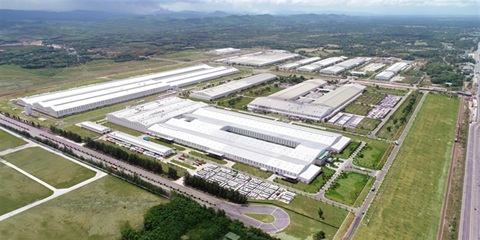
ĐÀ NẴNG GREEN-LIGHTS US$105 MILLION THAI DEVELOPMENT DEAL
The central city has approved an investment proposal by Thailand’s WHA Group to develop infrastructure for the 400ha WHA Đà Nẵng Industrial Park project on two communes of Thăng Bình and Đồng Dương, with an investment of more than VNĐ2.7 trillion (US$105 million). The city said it approved WHA Industrial Development International's status as an investor in the project, which is expected to take place between 2027 and 2034.
VIETNAM ECONOMY INVESTMENT
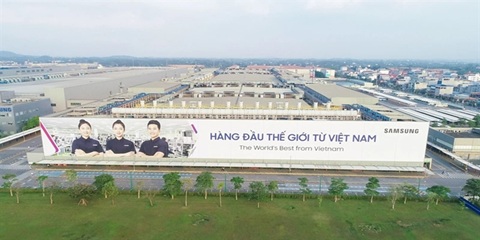
MOBILE PHONE EXPORTS RISE 20% TO $51.8 BILLION IN FIRST NINE MONTHS
Exports of mobile phones and components rose 20 per cent year-on-year to nearly US$51.8 billion in the first nine months of 2026, with China, the US and Republic of Korea accounting for more than half of the total. Shipments to the three markets reached a combined $26.18 billion, or 50.6 per cent of total exports of the product group during the period, according to data from the Vietnam Department of Customs under the Ministry of Finance.
INFRASTRUCTURE / CONSTRUCTION / LOGISTIC / PORT
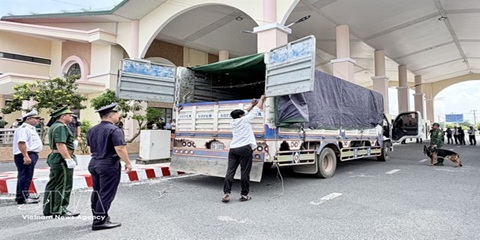
VIỆT NAM-CAMBODIA TRADE GATHERS PACE TOWARDS $20 BILLION TARGET
Trade between Việt Nam and Cambodia continues to grow, remaining a bright spot and a key pillar of bilateral cooperation as the two countries aim to raise two-way trade to US$20 billion in the coming years. After setting a record of more than $11.3 billion last year, bilateral trade reached about $8.7 billion in the first eight months of this year, up 8.3 per cent year on year.
VIETNAM ECONOMY INVESTMENT
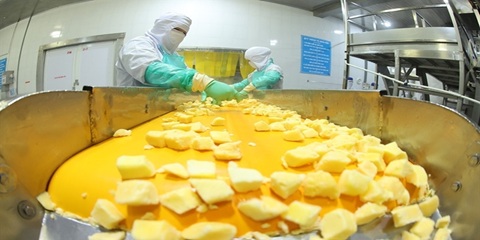
FRUIT AND VEGETABLE EXPORTS POISED TO HIT $10 BILLION IN 2026
Fruit and vegetable exports are on track to reach nearly US$10 billion in 2026, after rising 19.9 per cent year on year to nearly US$7.4 billion in the first nine months, driven by strong seasonal demand and abundant tropical fruit supplies. The Ministry of Agriculture and Environment said the growth reflected stronger international demand for fresh produce and processed agricultural products.
Events Sponsors






















