Want to be in the loop?
subscribe to
our notification
Business News
INVESTORS INCREASE HIGH-TECH ACTIVITIES
Vietnam’s prioritised semiconductor and high technology industries are on the radar of foreign investors, especially those from Japan and South Korea.
Meiko Electronics, an Apple supplier, is preparing procedures for its expanded printed circuit board (PCB) manufacturing facility in the northern province of Hoa Binh. The company aims to complete the procedures for the expansion in the second quarter and finish the construction of the expanded facility by the end of the year.
Previously, a representative of the company used to share at the groundbreaking ceremony in April 2024 that the first facilities have an investment of $200 million, and would be increased to $500 million for the second phase.
The new factory in Hoa Binh will produce ultra-small, energy-efficient PCBs for the iPhone. These products will meet the increasing technological demands of Apple’s new AI applications. Once finished, they will be exported to India for the next assembly step, which is a part of Apple’s strategy to diversify the supply chain.
At the same time, the company is also accelerating the construction of a $200 million PCB factory in an industrial zone in Hoa Binh.
In early April, LG Display reportedly finalised the sale of its large LCD panel and module plant in Guangzhou to TCL’s subsidiary, China Star Optoelectronics Technology.
The final sale price was confirmed at approximately $1.54 billion, exceeding initial expectations. This transaction marks LG Display’s complete exit from the large LCD business as it focuses on advancing its OLED operations. For LG Display, this move is part of a larger restructuring effort aimed at focusing on higher-margin products amidst a competitive global display market.
A source told VIR that LG Display will spend the money earned from the deal on expanding an OLED screen manufacturing facility in Haiphong, in northern Vietnam. Early this year, the group received approval from local authorities for the expanded factory, worth $1 billion. The new investment will bring its investment in Vietnam to $5.65 billion.
The venture is one of LG’s biggest investments in Vietnam. It currently has a monthly output of 14 million OLED display product units.
Elsewhere, Ho Chi Minh City is working with consular officials from major markets to boost foreign investment inflow in the high-tech sector.
In mid-April, the Ho Chi Minh City Centre for the Fourth Industrial Revolution, in collaboration with the External Relations Department, the Department of Science and Technology, and the Management Board of Saigon High-Tech Park, held a working session with delegations from the consulates general of the United States, Japan, and South Korea in Ho Chi Minh City to exchange information, explore opportunities, and discuss cooperation in scientific and technological research, as well as attract investment in high-tech fields.
“The city seeks extensive cooperation with these parties to develop advanced high-tech industries, establish semiconductor research centres, and train high-quality personnel,” said centre director Le Truong Duy. “We hope these three countries, together with Vietnam, will establish a technology exchange platform based on a public-private partnership model that meets international standards. This platform will serve as a hub to connect and share advanced technologies among participating countries.”
Nguyen Van Toan, vice chairman of the Vietnam’s Association of Foreign-invested Enterprises, said, “Foreign investors still trust Vietnam’s investment environment. At the time, the country needs to continue boosting institutional reforms, ensure fair competition, and support businesses capable of innovation and adopting high technology.”
According to the former Ministry of Planning and Investment, by the end of 2024, Vietnam attracted 174 registered foreign-invested projects in the semiconductor industry, with a total registered capital of nearly $11.6 billion. Most major players in this industry, such as Intel, Nvidia, Marvell Technology, Samsung, CoAsia SEMI, and Renesas, are already present in Vietnam.
Prof. Vo Xuan Vinh, dean of the Institute of Business Research at the University of Economics Ho Chi Minh City, said the semiconductor production process was complex, requiring the participation of companies from multiple countries.
“Currently, foreign-invested factories in Vietnam are performing well in semiconductor packaging and testing. Developing the semiconductor industry is not the task of a single nation,” Vinh said. “Thus, in its strategy to restructure investment attraction, Vietnam should focus on the capital inflow from diverse markets such as Europe and Africa, where the potential remains vast.”
“The smartest investment attraction strategy right now is to invite US investors into Vietnam, particularly in high-tech sectors. We could even establish dedicated technology clusters or industrial areas for them. Additionally, amidst global uncertainties, attracting funding from abroad, and from new markets is essential. This will help boost trade with new markets and reduce heavy reliance on the key markets.”
Source: VIR
Related News
MEMBER CORNER / PROMOTIONS
A CULINARY MASTERPIECE
Don't need a special occasion to treat yourself to a perfect Chinese dining experience. This October, Ngan Dinh Restaurant introduces an exquisite three-dish menu, promising to satisfy diners who appreciate culinary innovation and refined flavors. Enjoy 20% OFF a glass of house red/white wine, or Imported German Veltins Draught Beer/Maisel's Weisse Dunkel when ordering any of the above dishes!

MEMBER CORNER / PROMOTIONS
ONE YEAR OF PRIME MOMENTS — LET’S CELEBRATE!
Olivia’s Prime Saigon is turning one, and we’d love to celebrate this special milestone with you! Order any featured steak size and enjoy all its designated complimentary pasta, side dishes and sauces — with a combined value of up to 80% of your steak price! Thank you for being part of our journey. Here’s to great steaks, wonderful company, and many more prime moments together!
MEMBER CORNER / PROMOTIONS
SENTRYSAFE - PROTECT WHAT MATTERS MOST
From cash, important documents and records to valuable belongings, a quality safe gives you greater peace of mind against unexpected risks. SentrySafe - a trusted safe brand from the USA, suitable for homes, offices and various storage needs. Contact Sen Wai Vietnam for expert advice and to find the right safe for your needs.
MEMBER CORNER / PROMOTIONS
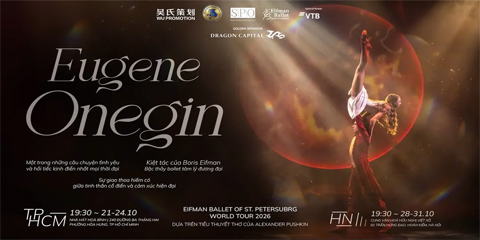
50% DISCOUNT FOR HKBAV MEMBER: EUGENE ONEGIN - EIFMAN BALLET OF ST. PETERSBURG WORLD TOUR 2026
Adapted from the classic novel in verse by acclaimed Russian poet Alexander Pushkin, Eugene Onegin explores timeless themes of love, pride, choices, and irreversible regret. Eifman's distinctive language of psychological ballet is brought to life through Tchaikovsky's music alongside contemporary rock by Alexander Sitkovetsky, creating an extraordinary artistic experience.
MEMBER CORNER / PROMOTIONS
COSMOPARK – ENERGY ADVANTAGES FOR POWER-INTENSIVE INDUSTRIES
As global corporations place increasing emphasis on energy security, renewable energy adoption, and carbon emissions reduction, electricity is no longer viewed merely as a component of technical infrastructure. For high-tech projects, data centers, and large-scale manufacturing facilities, reliable energy infrastructure has become a critical factor in investment location decisions.
VIETNAM ECONOMY INVESTMENT
FOREIGN INVESTORS TO BE WIDENED FOR MARKET ACCESS
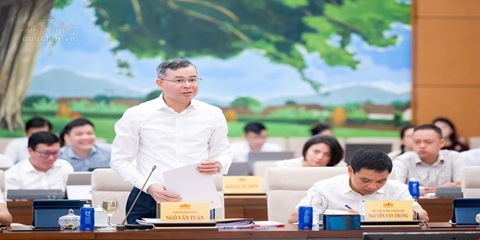
Vietnam is moving to widen market access, improve investment incentives, and streamline procedures, with greater support tied to investors’ actual commitments and results, as part of the law on amending and supplementing a number of articles of the Law on Investment. The proposal was mentioned at the sixth session of the National Assembly Standing Committee in Hanoi on September 30, on amending the Law on Investment.
Events Sponsors






















