Want to be in the loop?
subscribe to
our notification
Business News
KEY ISSUES IN LAND VALUATION PROCESS MUST BE ADDRESSED
Land valuation has been said to be a major bottleneck in Việt Nam's socio-economic development, said Deputy Prime Minister Trần Hồng Hà during a government meeting on Monday.
The deputy PM said improper application of methods or the use of subjective, non-transparent, and inaccurate data inputs employed during the valuation process has often resulted in inaccurate pricing and caused revenue losses to the State budget. Additionally, the complexity of valuation methods and the lack of comprehensive and reliable land price databases in the market also contribute to inconsistent results.
He said the forthcoming amended Land Law will provide a legal framework to establish a land prices database and land value map for the country.
In a report by the Ministry of Natural Resources and Environment (MoNRE), there are currently five different methods to evaluate land prices used by Government agencies: direct comparison, deduction, income, surplus, and land price adjustment coefficient methods. The aim of said methods has been to bring prices closer to market level, minimising losses to the State budget, and ensuring the rights of landowners whose land is being acquired.
However, in the last decade, there have been concerns voiced over their shortcomings and limitations. Certain localities are still uncertain in their application, affecting the progress of determining land prices. Some land valuation methods are not suitable for real market information conditions, and the transparency of land use rights is lacking, making them inconsistent with state management on land prices, especially in the absence of a complete land price database.
The ministry said it's high time the country reviewed and revised its land valuation methods, as well as created new procedures. In addition, detailed guidance should be given to local authorities to help them with the implementation of such methods. This is especially important as the new approach to land valuation places local governments at the centre with additional autonomy and delegation of power.
The new approach should aim to minimise assumptions and subjective preferences, ensure uniformity in selecting and applying these methods, specify the information sources required for applying each method and expand the cases in which the land price adjustment coefficient method can be used.
Economist Cấn Văn Lực urged the Government to quickly establish a set of criteria for cases where additional valuation methods are required, with consideration given to data collection capabilities and the conditions of the land being valued.
Regarding the surplus method, he said that the law should provide detailed and specific guidelines for determining initial assumptions, such as expected future profits and forecasted incurred costs when implementing projects.
Nguyễn Tiến Thỏa, chairman of the Vietnam Valuation Association, said as each method has different application conditions, there must be very detailed and specific criteria and guidelines for each.
Land information
Deputy Minister of Finance Nguyễn Văn Chi stressed on the importance of a strict and scientific method in collecting land information.
"Collecting information is the first, and the most crucial step in the valuation process. Without a proper database of information, it doesn't matter what methods are being employed," said Deputy Minister of Public Security Lê Văn Tuyến.
He said a large number of violations during the process have been committed by Government officials and businesses, often to put lands' value significantly lower than their market level.
Representatives from Hà Nội and HCM City, two of the country's largest cities, and the Vietnam Real Estate Association voiced their concerns over a number of issues regarding current legal frameworks, procedures and valuators' responsibility and accountability.
The Deputy PM instructed MoNRE, the Ministry of Finance and the Ministry of Construction to closely collaborate with other ministries to clarify the criteria and conditions for collecting information and input data for each specific land plot or project.
"The criteria for input information must be standardised, transparent, publicly available, simple, and feasible to serve as the basis for applying the appropriate valuation method," he said.
Source: VNS
Related News

MEMBER CORNER / PROMOTIONS
KNIC ENGAGES WITH GOVERNMENT AND HIGH-TECH BUSINESS COMMUNITIES IN CHINA
From Beijing to Shandong, KN Holdings and KN Industrial City are continuing to expand their engagement with government authorities, trade promotion organizations, and high-tech business communities in China. In Beijing, the delegation met with the Center for International Economic and Technological Cooperation under the Ministry of Industry and Information Technology (MIIT), exchanging perspectives on industrial and technology cooperation between the two markets.

VIETNAM ECONOMY INVESTMENT
VIETNAM’S TRADE TOPS $825 BILLION BY MID-SEPTEMBER
Figures released on September 21 showed goods trade reached nearly $55 billion in the first 15 days of September alone, bringing cumulative turnover since the beginning of the year to more than $825 billion. The strong growth reflects robust trade flows, with demand for consumer goods and production inputs remaining high.

TECHNOLOGY
VIỆT NAM'S BUSINESSES MOVE TOWARDS AI AGENTS
Việt Nam’s AI landscape is entering a new phase as businesses move beyond generative AI (GenAI) tools designed to assist human users towards autonomous AI, agentic AI and AI agents that can take action with limited supervision, experts have said. The shift comes as Việt Nam seeks to accelerate science and technology, innovation and digital transformation under Politburo Resolution 57-NQ/TW, issued on December 22, 2024.
GARMENT / TEXTILE
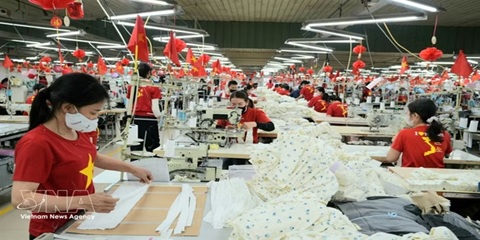
VIỆT NAM TARGETS $48 BILLION IN TEXTILE-GARMENT EXPORTS
Việt Nam’s textile and garment industry is facing both opportunities and challenges amid complex and unpredictable developments in the global market, prompting businesses to improve growth quality, optimise production costs and enhance adaptability in pursuit of an export turnover of about $48 billion this year. The target is considered an important milestone that requires concerted efforts from management agencies and the business community.
INFRASTRUCTURE / CONSTRUCTION / LOGISTIC / PORT
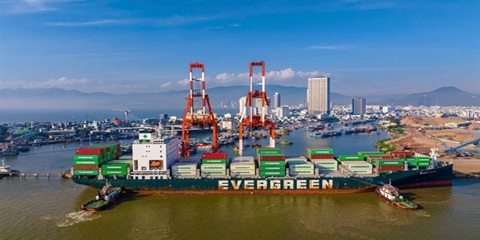
CUTTING LOGISTICS COSTS KEY TO BOOSTING EXPORTS
Reducing costs has become an increasingly urgent priority for import-export activities, particularly logistics costs, a conference in Hà Nội was told on Tuesday. According to Deputy General Director of the Ministry of Industry and Trade's Agency for Foreign Trade, Trần Thanh Hải, import-export activities has remained a bright spot for the economy in recent years, playing an important role and helping drive macroeconomic growth.

LEGAL UPDATE / POLICY
FLEXIBLE FISCAL POLICY HELPS DRIVE ECONOMIC GROWTH
Việt Nam’s fiscal policy has been implemented in a targeted expansionary manner since early 2026, helping maintain macroeconomic stability and supporting the country’s goal of achieving double-digit economic growth. According to the Ministry of Finance, State budget revenue in the first eight months of 2026 was estimated at VNĐ2.02 quadrillion (US$77.7 billion), equivalent to 80 per cent of the annual estimate and up 16 per cent year-on-year.
Events Sponsors






















