Want to be in the loop?
subscribe to
our notification
Business News
KEY TO UNLOCK NEW OPPORTUNITIES FOR VIETNAM'S ECONOMIC DEVELOPMENT
The "Doi Moi" (renovation) policy, initiated by the 6th Congress of the Communist Party of Vietnam (December 1986) and further improved and developed by following congresses, has opened a turning point in the cause of national construction and development. 35 years of renovation has accelerated rapid economic growth, enabling Vietnam to make breakthrough progress from a poor to a low-middle income country with amazing achievements in economic development, trade and investment.
Impressive growth
According to the World Bank (WB), Vietnam's 35-year development is admirable. In 2002-2018, Vietnam's per capita GDP increased by 2.7 times, reaching over US$2,700 in 2019. Besides, more than 45 million Vietnamese people escaped poverty, with the poverty rate sliding sharply from more than 70% to less than 6%.
In 2019, Vietnam's economy continued to demonstrate its strength and resilience thanks to robust domestic consumer demand and export-oriented manufacturing. Vietnam's net GDP grew by 7% in 2019, making Vietnam one of the fastest-growing countries in the region.
In 2020, driven by deep global economic integration, Vietnam’s economy was heavily affected by the COVID-19 pandemic but it showed strong resilience to this adversity. According to the WB, COVID-19 impacts in Vietnam were not as severe as those in other countries, as Vietnam quickly applied active measures at the national and local levels. The macroeconomic and fiscal framework remained stable, with GDP growth of 2.91% in 2020. Party General Secretary Nguyen Phu Trong emphasized, "The year 2020 is considered to be more successful than 2019 and the most successful in the past years”. Vietnam achieved outstanding results. While the world saw overall negative growth, Vietnam’s economic growth was positive, with all major balances guaranteed.
In the first half of 2021, Vietnam's economy remained stable and developed on positive momentum generated in 2020, although the fourth wave of COVID-19, which broke out from late April, was complicated and challenging to economic administration and social security. According to the General Statistics Office (GSO), GDP expanded by 5.64% in the first six months of 2021, with the second quarter growing 6.61%, higher than 4.48% in the first quarter of 2021.
Trade and investment keep expanding despite COVID-19 pandemic
Vietnam is among the most opening economies in the world. In recent years, Vietnam's import and export value has increased steadily. As the world economy and trade rebound, especially developed countries that signed free trade agreements with Vietnam (such as CPTPP, EVFTA and RCEP), Vietnam’s economy will certainly revive and expand much more strongly thanks to robust impulses of investment flows, market expansion opportunities and prices. Indeed, the country’s export and import value was estimated at US$373.36 billion in the first seven months of 2021, up 30.2% year on year. Specifically, exports were worth US$185.33 billion, up 25.5%, while imports valued US$188.03 billion, up 35.3%.
As many as 27 exports each brought home over US$1 billion, accounting for 90.2% of the country’s total exports, with five items each generating over US$10 billion, accounting for 57.8%. Specifically, telephones and components remained the largest export that brought home US$29.4 billion, accounting for 15.8% of the nation’s total exports. The main export markets included the United States, China, ASEAN, the European Union, Japan, and South Korea.
After 35 years of renovation and opening, Vietnam has also become one of the most successful countries in attracting foreign direct investment (FDI) in the region. According to the Foreign Investment Agency (FIA) under the Ministry of Planning and Investment, 140 countries and territories invested US$349.9 billion in 33,463 projects. South Korea is the biggest foreign investor in Vietnam, followed by Japan, Singapore and Taiwan (China).
Notably, despite being affected by the COVID-19 pandemic, FDI flows still increased in 2020 and the first months of 2021. Major high-tech projects included the LG Display Hai Phong Project (additional US$750 million), the Jinko Solar PV Vietnam Photovoltaic Cell Technology Project (additional US$498 million), Intel’s project (additional US$480 million), and Foxconn's projects (additional US$280 million). Other remarkable large-scale projects consisted of Long An I and II LNG Power Plant Projects (US$3.1 billion, Singapore) in Long An province, and O Mon II Thermal Power Plant (US$1.31 billion, Japan).
In particular, in addition to licensed projects, many other terrific FDI projects are also lining up to enter Vietnam. Many investors are looking to Vietnam as a new destination amid globally redirected investment flows.
By industry, foreign investors invested in 18 industries, with the processing and manufacturing industry being the biggest recipient with US$6.98 billion or 45.7% of the total. Electricity is the second most attractive to foreign investors, with US$5.34 billion or nearly 35% of the total.
Obviously, foreign investment matched Vietnam’s approach to high-tech projects that laid the foundation for Vietnam to improve its competitiveness and join global value chains. Do Nhat Hoang, Director of the Foreign Investment Agency (FIA) under the Ministry of Planning and Investment, said the foreign investment redirection is increasingly clear. The prestige of Vietnam's business and investment environment increased, boosted by many advantages like geographical location and young human resources.
After 35 years, with strong efforts for growth, Vietnam has affirmed a new status in the international arena. With these achievements, the country will surely reap more success and climb new milestones in the coming time, becoming an innovative, dynamic and developing country.
Source: VCCI
Related News
VIETNAM ECONOMY INVESTMENT
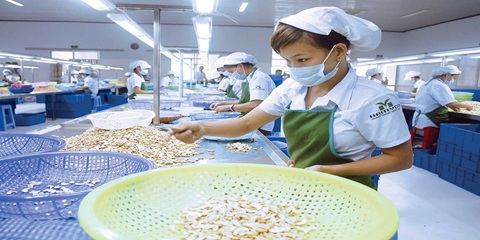
VIETNAMESE COMPANIES OPTIMISTIC ON INTERNATIONAL GROWTH
Vietnamese businesses are among the most confident about the outlook for international trade, according to HSBC’s Global Trade Pulse Survey 2026, released on November 16. The survey captures the views of 10,000 senior business leaders across 26 markets on trade, tariffs, supply chains, and technology. Findings show that 94 per cent of Vietnamese businesses expect their international trade to grow over the next two years. Vietnam ranks joint top in the survey with the Philippines, compared with 86 per cent globally.
TECHNOLOGY
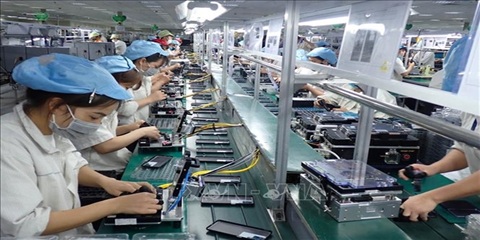
VIỆT NAM'S DIGITAL TECHNOLOGY INDUSTRY REVENUE SURGES 53% TO $254.6B
Việt Nam's digital technology industry generated an estimated US$254.6 billion in revenue in the first 10 months of 2026, up 53 per cent from a year earlier, while exports rose 46.2 per cent to $212 billion, the Ministry of Science and Technology said in its latest report. According to the report, hardware and electronics exports reached an estimated $30.681 billion in October, up 108 per cent from the same month last year.
CHARITY / EXHIBITION / OTHER EVENTS
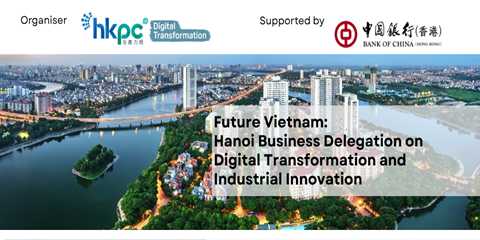
BOCHK ‧ HKPC FUTURE VIETNAM: HANOI BUSINESS DELEGATION ON DIGITAL TRANSFORMATION AND INDUSTRIAL INNOVATION
Interested in exploring Vietnam’s latest developments in digital transformation, technology adoption and industrial innovation? Organised by the Hong Kong Productivity Council (HKPC) and fully supported by Bank of China (Hong Kong) Limited, the "Future Vietnam: Hanoi Business Delegation on Digital Transformation and Industrial Innovation” will feature visits to leading high-tech enterprises across Vietnam and engage with local chambers of commerce, industry organisations and associations. Join us to expand your high-value business network and seize emerging opportunities in the ASEAN market!
GARMENT / TEXTILE
TEXTILE, GARMENT FIRMS REFORM TO MEET CPTPP ORIGIN RULES
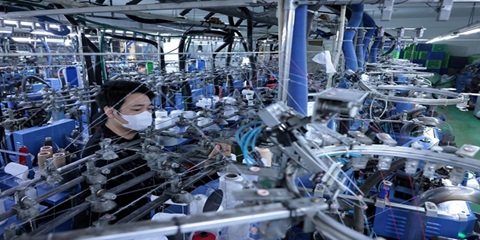
Vietnamese textile and garment manufacturers are aggressively restructuring their supply chains and diversifying material sources to unlock untapped tariff benefits. To capitalise on the Comprehensive and Progressive Agreement for Trans-Pacific Partnership (CPTPP), companies are racing to align with the pact's strict "yarn-forward" rules — a task made difficult by a shortage of raw materials within the trade bloc.
TECHNOLOGY
ĐÀ NẴNG SEEKS TO BUILD HIGH-TECH AGRICULTURE, INTEGRATED VALUE CHAINS
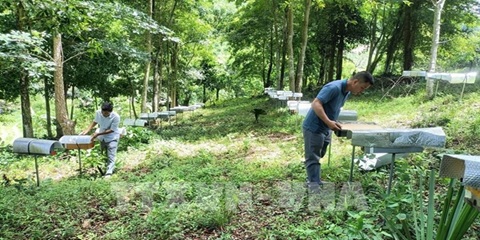
Đà Nẵng is seeking to transform its agricultural sector from a supplier of raw materials into a technology-driven, market-oriented economy, with investment opportunities spanning concentrated production areas, deep processing, logistics and agricultural product distribution. The city aims to shift from traditional agricultural production towards agricultural economic development, organising value chains and increasing the technological content and added value of products through closer links between production and processing.
INFRASTRUCTURE / CONSTRUCTION / LOGISTIC / PORT
HCM CITY ACCELERATES POWER INFRASTRUCTURE INVESTMENT TO ATTRACT HIGH-TECH CAPITAL
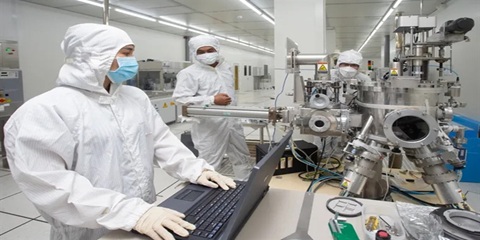
High-tech projects, particularly data centres, are not confined to SHTP but are also expanding into export processing zones and industrial parks across HCM City, driving up electricity demand. Proactively developing power infrastructure, diversifying energy supplies and expanding access to green energy are becoming essential for HCM City to maintain its competitive edge in attracting high-tech foreign direct investment (FDI).
Events Sponsors