Want to be in the loop?
subscribe to
our notification
Business News
LABOUR EXPORT RESTRICTION EXACERBATED
The re-emergence of the COVID-19 pandemic has worsened the labour export situation for Vietnam with entry to some key markets remaining almost impossible.

The Ministry of Labour, Invalids and Social Affairs (MoLISA) is again facing fears of not being able to meet its target of sending 90,000 workers to work abroad in 2021. According to the Vietnam Labour Export Association, Vietnam sent just over 29,500 workers to 17 countries and territories in the first quarter of 2021, around 2,500 less than in the same period last year.
A representative of the association said that due to the pandemic, labour export to Japan in particular has faced many difficulties since February. Of the nearly 18,200 workers who went to Japan to work in the first quarter, most had previously been granted a visa and had completed a strict health monitoring process.
In contrast, Taiwan is being seen as a high-potential labour export market thanks to good disease control and increasing demand for foreign workers. The number of Vietnamese workers in Taiwan in the past three months reached over 10,300 people, an increase of more than 200 compared to the first quarter of 2020.
Apart from Japan and Taiwan, the total number of labourers working in the remaining 15 markets was only 1,748 people. The highest was China with 265 people, followed by Romania with 187, Hungary with 183, and South Korea at 135.
A few thousand Vietnamese workers continue to head for work in Taiwan each month because most employers are small-scale enterprises and factories that are not much affected by the pandemic and can flexibly change their production methods.
In addition to the need to employ a large number of unskilled workers, Taiwanese businesses are also willing to arrange accommodation for workers, leading to the market’s popularity.
Meanwhile, Japan and South Korea, despite their strong recruitment demand, have put higher requirements on qualifications, while the operation of most businesses is still frozen.
According to the Department of Overseas Labour under the MoLISA, sending workers abroad is one of the hardest-hit issues after aviation, tourism, and hospitality, since COVID-19 appeared at the beginning of last year.
In 2020, the number of Vietnamese labourers going abroad to work was only 78,600, equivalent to only 60 per cent of the plan assigned by the government and only half compared to 2019.
The MoLISA aims to bring 90,000 labourers to work abroad in 2021, considered a modest number compared with the average for many years of 120,000 labourers and a record high of 148,000 workers in 2019.
Explaining the cause of the decline, Ha Xuan Tung, director of the Centre for Overseas Labour, assessed that the narrowing or suspension of production and bankruptcy of enterprises and factories in receiving countries has had a negative impact, leading to the reduction of the demand for recruited workers from Vietnam.
In addition, some markets have issued temporary policies to re-recruit more than 26,000 Vietnamese workers whose labour contracts have expired but are unable to return home due to the pandemic, which is also the reason for the reduction of the demand for receiving new labourers.
To complete the set targets, the MoLISA is continuing to negotiate with partners on labour cooperation.
The ministry is aiming at labour markets that are beginning to control the pandemic, recover their production activities, and accept foreign workers in stable numbers and with high salaries.
Currently, it is working with South Korea on a plan to recruit workers for 2021 and coordinating with the labour management boards based in Taiwan to organise the sixth Vietnam-Taiwan Labour Conference, when the disease is under control.
Deputy Minister of Labour, Invalids and Social Affairs Le Tan Dung said that the demand for foreign labourers in developed countries will be huge after the pandemic is controlled.
“In the meantime, workers can continue to foster foreign languages and learn about the culture of the countries they will go to work. Labourers will also be consulted and introduced for domestic jobs if they have a need,” Dung said.
Dung also said the MoLISA is building two scenarios regarding pandemic control in order to have options and solutions for Vietnamese workers who have been recruited but cannot leave, or had difficulty returning home after their contracts have expired.
Source: VIR
Related News

INFRASTRUCTURE / CONSTRUCTION / LOGISTIC / PORT
VIỆT NAM-CAMBODIA TRADE GATHERS PACE TOWARDS $20 BILLION TARGET
Trade between Việt Nam and Cambodia continues to grow, remaining a bright spot and a key pillar of bilateral cooperation as the two countries aim to raise two-way trade to US$20 billion in the coming years. After setting a record of more than $11.3 billion last year, bilateral trade reached about $8.7 billion in the first eight months of this year, up 8.3 per cent year on year.
TECHNOLOGY
AI BEGINNING TO RESHAPE RECRUITMENT CRITERIA
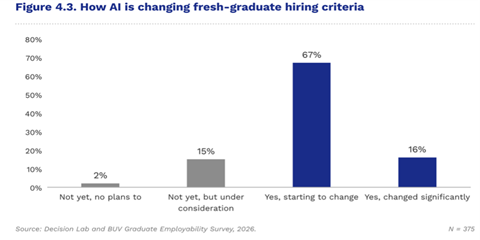
Digital literacy is the only capability area in which fresh graduates meet employers’ expectations, according to a new report. Yet, it is also the standard rising fastest, as businesses increasingly expect new hires to use AI effectively in the workplace. Some 83 per cent of employers say AI has changed, or is beginning to change, their hiring criteria, while 94 per cent report higher expectations for digital and AI capabilities than they had two to three years ago.

INFRASTRUCTURE / CONSTRUCTION / LOGISTIC / PORT
ĐÀ NẴNG GREEN-LIGHTS US$105 MILLION THAI DEVELOPMENT DEAL
The central city has approved an investment proposal by Thailand’s WHA Group to develop infrastructure for the 400ha WHA Đà Nẵng Industrial Park project on two communes of Thăng Bình and Đồng Dương, with an investment of more than VNĐ2.7 trillion (US$105 million). The city said it approved WHA Industrial Development International's status as an investor in the project, which is expected to take place between 2027 and 2034.

VIETNAM ECONOMY INVESTMENT
MOBILE PHONE EXPORTS RISE 20% TO $51.8 BILLION IN FIRST NINE MONTHS
Exports of mobile phones and components rose 20 per cent year-on-year to nearly US$51.8 billion in the first nine months of 2026, with China, the US and Republic of Korea accounting for more than half of the total. Shipments to the three markets reached a combined $26.18 billion, or 50.6 per cent of total exports of the product group during the period, according to data from the Vietnam Department of Customs under the Ministry of Finance.

VIETNAM ECONOMY INVESTMENT
FRUIT AND VEGETABLE EXPORTS POISED TO HIT $10 BILLION IN 2026
Fruit and vegetable exports are on track to reach nearly US$10 billion in 2026, after rising 19.9 per cent year on year to nearly US$7.4 billion in the first nine months, driven by strong seasonal demand and abundant tropical fruit supplies. The Ministry of Agriculture and Environment said the growth reflected stronger international demand for fresh produce and processed agricultural products.
GARMENT / TEXTILE
TEXTILE EXPORTS FACE DUAL CHALLENGES OF SUSTAINING ORDERS AND BOOSTING EFFICIENCY AMID GROWING COMPETITION
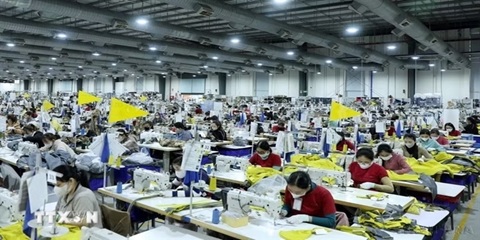
Data shows that the textile and garment sector maintained its growth momentum in the first nine months of this year. The industry's total export turnover reached an estimated US$35.721 billion in the first nine months of this year, up 3.3 per cent year-on-year. Despite posting encouraging export figures, Vietnamese textile and garment enterprises continue to navigate unpredictable market variables.
Events Sponsors






















