Want to be in the loop?
subscribe to
our notification
Business News
LAND RULES DUE FOR A FITTING MAKEOVER
Bottlenecks and conflicts in the current Law on Land continue to put paid to the efficient implementation of foreign-invested projects in Vietnam. The Law on Land 2013 finds application across a wide range of sectors where foreign investment is necessary for the socioeconomic development of Vietnam.
Every project involving land use is subject to the 2013 Law on Land provisions. The importance of this law and how it impacts the future development of investment in Vietnam cannot be understated. Demand for urban land will rise to 450,000 hectares by 2050, a substantial increase from 335,000ha in 2015.
By 2050, urban land will need to serve an expanding population of 52 million people (up from 35 million in 2015). Amid continuous growth, a revised version of the law will be required to facilitate foreign investment, supporting Vietnam’s ambitions to rise to a high-income nation by 2050, and becoming the 20th largest world economy, overtaking Canada and Malaysia in the process.
Despite increasing accessibility of land users to property rights, including access for foreign-invested organisations and individuals, a number of issues remain that still plague the efficient implementation of foreign-invested projects in Vietnam. While an analysis of all investor-related issues could take time, a few issues for an update of the Law on Land can be highlighted.
The most publicised issue for land-related foreign-invested projects in Vietnam is land clearance and compensation. The previous Law on Land allowed for compulsory relocation of residents for the acquisition of land for projects of national defense and security and projects of national or public interest. To minimise such favorable treatment to foreign-invested enterprises, the 2013 version of the law reduces the applicable scope for compulsory land acquisition for projects of national or public interest, excluding privately-funded economic development projects.
According to the law, public interests must be listed in the land use plan while a relocation, support and compensation plan must be agreed with the affected residents. Such compensation must be provided by a third-party and must include any additional investments on such land or land-affixed assets.
Nevertheless, given the ambiguity of the terms “public interest” in the law and the prescribed authority for provincial level governments to interpret and apply such provisions, the results were disparate compensation schemes applied to similarly situated foreign-invested projects.
Some might be classified as falling within the compulsory compensation scheme being considered public interest, while other projects were classified as “private economic purpose” and were therefore subject to a privately-negotiated compensation scheme.
While evidence suggests that the negotiated compensation plans tended to be more successful, often resulting in a more marketable land price value, both negotiated and compulsory land compensation mechanisms often caused dissatisfaction, generating unrest and delays.
Some projects were abandoned due to such delays, leaving land areas partially cleared and compensated with still no project implemented: a lose-lose situation for all interested parties. A clearer approach in a new Law on Land that is fair and definitive would help to ensure that stakeholders are adequately compensated and the projects get implemented.
Another key issue is relevant to the change in land use purpose. For instance, between 2020 and 2021, a power plant struggled to connect to the national power grid. This was caused by constraints in site clearance and compensation, due to land allocation and resettlement issues.
Additionally, the Department of Culture, Sports and Tourism of one of the provinces raised concerns over a section of the project that could affect the environmental landscape of a nearby lake. Simplification of procedures for changing land use purpose and land classification would facilitate the timely delivery of said projects.
A few of the guiding principles for Vietnam’s land use rely upon food security, environmental protection, and national security. Food security meant that Vietnam would always have enough agricultural land for rice production to sustain its entire population. However, such a basis in modern urbanisation is no longer considered an essential tenet.
Vietnam will require much more urban land and a more efficient process for conversion of land use purposes will assist in this goal. Large residential, industrial, or infrastructure projects to mortgage assets also aim to secure favorable financing.
A project enterprise can mortgage land use rights and land-affixed assets in accordance with applicable laws, including the Law on Land.
Nevertheless, foreign-invested enterprises that have leased or acquired land from the state are allowed these rights and assets only through credit institutions licensed in Vietnam and may only execute a mortgage agreement if the full term of the lease has been paid in advance.
This issue greatly affects the bankability of non-recourse investment projects such as energy generation, which needs to secure not only assets on the land but also the land use rights to its lenders. A carve-out for this situation in any new iteration of the Law on Land will help to resolve this impediment.
While conflict among Vietnam’s various laws is always an issue for foreign investors, an outdated Law on Land presents issues. For example, the recently enacted Law on Investment and its guiding decree permit foreign investment in debt trading business without many of conditions that were previously attached to such business lines.
In view of the constraints and Vietnam’s commitment to ensure growth, the implementation of certain measures in a new Law on Land are necessary. Such revisions, among others, would create clearer guidelines eliminating confusion and delay for foreign investors and to prevent difficulties in interpretation and enforcement, while also balancing the needs and values of society.
The principles of a just legal framework, and modernisation of the investment framework aimed at attracting overseas investors, should help Vietnam achieve its goal of becoming a high-income nation in the coming decades.
Source: VIR
Related News

CHARITY / EXHIBITION / OTHER EVENTS
INVESTMENT OPPORTUNITIES IN CA MAU PROVINCE: 96 PROJECTS AND 20 STRATEGIC PROJECTS
We are pleased to share with you information on investment projects currently seeking investors in Ca Mau Province. Should your esteemed company or association be interested, we kindly invite you to review the project information and complete the registration form via the links provided. The Ho Chi Minh City Investment and Trade Promotion Centre (ITPC) will consolidate the expressions of interest and facilitate connections with the leadership of Ca Mau Province at a meeting tentatively scheduled for 13 November 2026 in Ho Chi Minh City.

MEMBER CORNER / PROMOTIONS
BẰNG KIỀU LIVESHOW - A SYMPHONY OF LOVE UNDER THE GOLDEN GLOW
A masterclass in live music that takes the audience on a soulful journey through immortal love songs, guided by the peerless artistry and emotive storytelling of renowned singer Bằng Kiều. The highlight of the night is his seamless musical chemistry with special guest Triệu Hồng Ngọc, promising passionate and deeply resonant duets inside the magnificent Grand Ballroom.
INFRASTRUCTURE / CONSTRUCTION / LOGISTIC / PORT
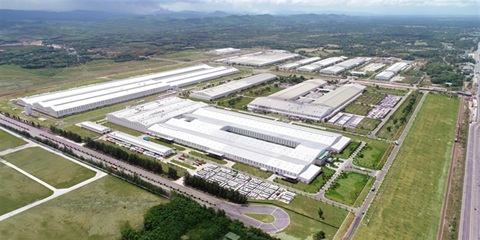
ĐÀ NẴNG GREEN-LIGHTS US$105 MILLION THAI DEVELOPMENT DEAL
The central city has approved an investment proposal by Thailand’s WHA Group to develop infrastructure for the 400ha WHA Đà Nẵng Industrial Park project on two communes of Thăng Bình and Đồng Dương, with an investment of more than VNĐ2.7 trillion (US$105 million). The city said it approved WHA Industrial Development International's status as an investor in the project, which is expected to take place between 2027 and 2034.
VIETNAM ECONOMY INVESTMENT
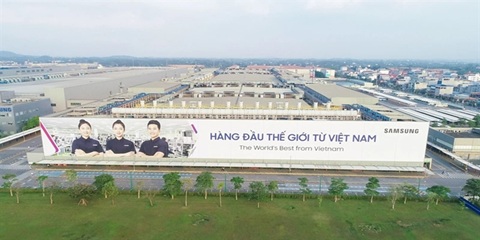
MOBILE PHONE EXPORTS RISE 20% TO $51.8 BILLION IN FIRST NINE MONTHS
Exports of mobile phones and components rose 20 per cent year-on-year to nearly US$51.8 billion in the first nine months of 2026, with China, the US and Republic of Korea accounting for more than half of the total. Shipments to the three markets reached a combined $26.18 billion, or 50.6 per cent of total exports of the product group during the period, according to data from the Vietnam Department of Customs under the Ministry of Finance.
INFRASTRUCTURE / CONSTRUCTION / LOGISTIC / PORT
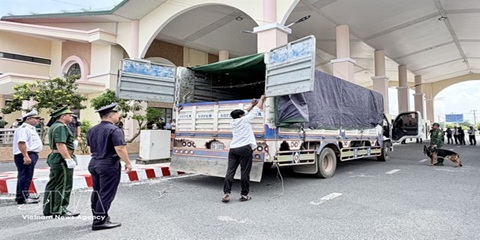
VIỆT NAM-CAMBODIA TRADE GATHERS PACE TOWARDS $20 BILLION TARGET
Trade between Việt Nam and Cambodia continues to grow, remaining a bright spot and a key pillar of bilateral cooperation as the two countries aim to raise two-way trade to US$20 billion in the coming years. After setting a record of more than $11.3 billion last year, bilateral trade reached about $8.7 billion in the first eight months of this year, up 8.3 per cent year on year.
VIETNAM ECONOMY INVESTMENT
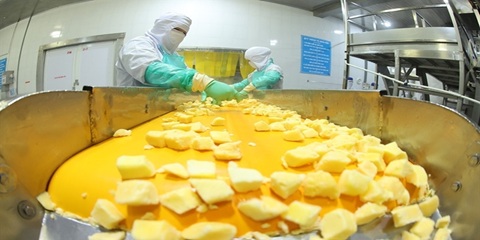
FRUIT AND VEGETABLE EXPORTS POISED TO HIT $10 BILLION IN 2026
Fruit and vegetable exports are on track to reach nearly US$10 billion in 2026, after rising 19.9 per cent year on year to nearly US$7.4 billion in the first nine months, driven by strong seasonal demand and abundant tropical fruit supplies. The Ministry of Agriculture and Environment said the growth reflected stronger international demand for fresh produce and processed agricultural products.
Events Sponsors






















