Want to be in the loop?
subscribe to
our notification
Business News
LAND SPECULATION SURGES AMID APARTMENT MARKET STABILISATION IN Q1
One catalyst behind this trend is unverified information about potential administrative changes — notably plans to merge districts or upgrade rural areas into provincial centres.
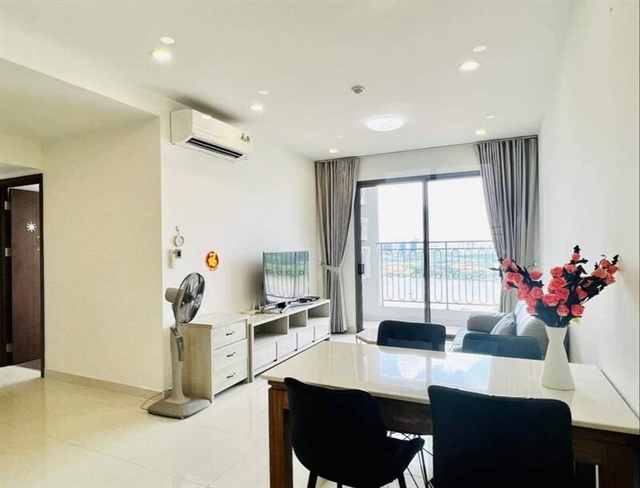
An apartment in Hà Nội. — Photo laodong.vn
HÀ NỘI — As the real estate market enters the second quarter of 2025, a noticeable divergence is emerging between different housing segments.
While apartment prices in key urban centres are stabilising after years of sharp increases, land plots and individual houses in many provincial areas are heating up again and not necessarily for healthy reasons.
According to a first quarter report by the Ministry of Construction, apartment and house transactions across the country totalled 33,585, up 132 per cent from the previous quarter.
Land transactions also climbed, reaching 101,049, a 16.4 per cent increase quarter-on-quarter.
Despite this apparent growth, market dynamics remain uneven.
In major cities such as Hà Nội, HCM City, Đà Nẵng and Cần Thơ, the market for condominiums and apartments has cooled noticeably.
Price levels in Q1 were largely flat compared to Q4 2024, indicating a period of consolidation after years of escalation.
Many experts consider this a natural correction phase.
In Hà Nội, for instance, primary apartment prices surged by over 72 per cent between Q2 2019 and Q4 2024, while Đà Nẵng saw a near 50 per cent increase and HCM City prices climbed over 34.3 per cent in the same period, according to a study conducted by the Vietnam Association of Realtors (VARS).
However, recent data suggests that this momentum is now slowing, possibly due to tighter credit conditions, stricter investor sentiment and a gradual shift toward more realistic pricing.
Additionally, the government’s broader housing strategy is moving forward, albeit with challenges. The national plan to build one million social housing units by 2030 remains a key priority.
As of Q1 2025, 103 social housing projects have been completed with 66,755 units delivered, while 140 projects are under construction and an additional 414 projects have received investment approval.
But while apartment prices in urban centres remain relatively stable, land prices in various suburban and rural provinces are exhibiting alarming spikes.
The report by the Ministry of Construction points to renewed waves of speculation as the driving force, especially in provinces such as Bắc Giang, Phú Thọ, Ninh Bình, Thái Bình, Hưng Yên, Hải Phòng and Đồng Nai.
One catalyst behind this trend is unverified information about potential administrative changes - notably plans to merge districts or upgrade rural areas into provincial centres.
“The news of upcoming mergers and administrative restructuring has become fertile ground for land price speculation,” the Ministry of Construction warned.
Take Bắc Giang and Phú Thọ Provinces, for example. In just a few months, land prices in some districts have surged by 20 – 30 per cent, largely based on rumours that certain localities may become part of larger urban zones.
Similar patterns are unfolding in Thái Bình and Ninh Bình Provinces, where brokers are marketing land based on speculative future gains rather than actual infrastructure development or demographic demand.
Experts say such behaviour reflects a speculative mindset that is far removed from long-term, sustainable investment.
This creates risks not only for individual investors but also for the broader housing market, as land bubbles can distort development priorities and misallocate capital.
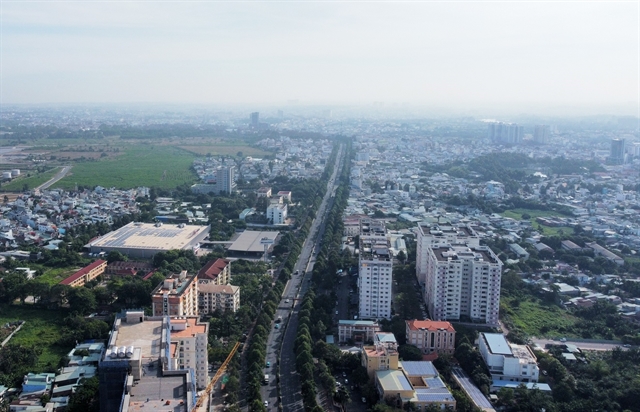
Đồng Nai Province has seen a spike in land plot prices. — VNA/VNS Photo
In Đồng Nai Province, the land price situation is particularly sensitive due to its proximity to HCM City and ongoing infrastructure projects such as Long Thành International Airport.
While some of the price growth in this area may be justified by genuine improvements, the Ministry of Construction cautioned against speculative fever, warning that "price hikes not based on real demand or planning will lead to volatility and higher risks for buyers."
Authorities have urged local governments to closely monitor transaction data and tighten land use and planning regulations.
Provinces are being encouraged to provide accurate, transparent updates to residents to combat misinformation and dampen the effects of rumour-driven speculation.
Financing challenges
The report also points out that only 38 out of 63 provinces had submitted project lists for a significant housing credit programme, which aims to provide VNĐ120 trillion (about US$5.2 billion) in loans for social housing.
So far, the disbursement for this programme has reached only VNĐ3.4 trillion, highlighting the gap between intention and execution.
The government is working to stimulate lending for housing projects, especially those catering to low-income groups.
The State Bank of Vietnam has set a target for credit growth in the real estate sector at around 16 per cent for 2025, which is crucial for supporting ongoing housing initiatives. — BIZHUB/VNS
Source: VNS
Related News

INFRASTRUCTURE / CONSTRUCTION / LOGISTIC / PORT
VIỆT NAM-CAMBODIA TRADE GATHERS PACE TOWARDS $20 BILLION TARGET
Trade between Việt Nam and Cambodia continues to grow, remaining a bright spot and a key pillar of bilateral cooperation as the two countries aim to raise two-way trade to US$20 billion in the coming years. After setting a record of more than $11.3 billion last year, bilateral trade reached about $8.7 billion in the first eight months of this year, up 8.3 per cent year on year.
TECHNOLOGY
AI BEGINNING TO RESHAPE RECRUITMENT CRITERIA
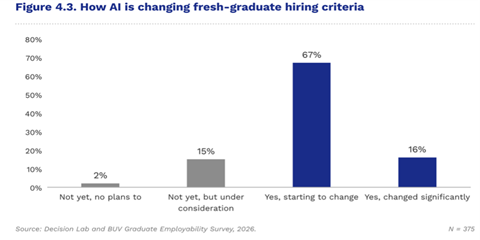
Digital literacy is the only capability area in which fresh graduates meet employers’ expectations, according to a new report. Yet, it is also the standard rising fastest, as businesses increasingly expect new hires to use AI effectively in the workplace. Some 83 per cent of employers say AI has changed, or is beginning to change, their hiring criteria, while 94 per cent report higher expectations for digital and AI capabilities than they had two to three years ago.

INFRASTRUCTURE / CONSTRUCTION / LOGISTIC / PORT
ĐÀ NẴNG GREEN-LIGHTS US$105 MILLION THAI DEVELOPMENT DEAL
The central city has approved an investment proposal by Thailand’s WHA Group to develop infrastructure for the 400ha WHA Đà Nẵng Industrial Park project on two communes of Thăng Bình and Đồng Dương, with an investment of more than VNĐ2.7 trillion (US$105 million). The city said it approved WHA Industrial Development International's status as an investor in the project, which is expected to take place between 2027 and 2034.

VIETNAM ECONOMY INVESTMENT
MOBILE PHONE EXPORTS RISE 20% TO $51.8 BILLION IN FIRST NINE MONTHS
Exports of mobile phones and components rose 20 per cent year-on-year to nearly US$51.8 billion in the first nine months of 2026, with China, the US and Republic of Korea accounting for more than half of the total. Shipments to the three markets reached a combined $26.18 billion, or 50.6 per cent of total exports of the product group during the period, according to data from the Vietnam Department of Customs under the Ministry of Finance.

VIETNAM ECONOMY INVESTMENT
FRUIT AND VEGETABLE EXPORTS POISED TO HIT $10 BILLION IN 2026
Fruit and vegetable exports are on track to reach nearly US$10 billion in 2026, after rising 19.9 per cent year on year to nearly US$7.4 billion in the first nine months, driven by strong seasonal demand and abundant tropical fruit supplies. The Ministry of Agriculture and Environment said the growth reflected stronger international demand for fresh produce and processed agricultural products.
GARMENT / TEXTILE
TEXTILE EXPORTS FACE DUAL CHALLENGES OF SUSTAINING ORDERS AND BOOSTING EFFICIENCY AMID GROWING COMPETITION
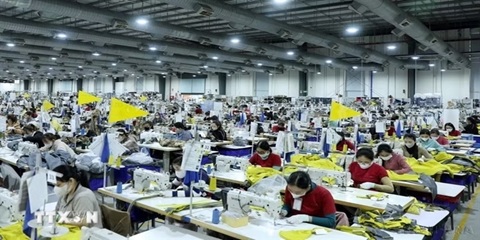
Data shows that the textile and garment sector maintained its growth momentum in the first nine months of this year. The industry's total export turnover reached an estimated US$35.721 billion in the first nine months of this year, up 3.3 per cent year-on-year. Despite posting encouraging export figures, Vietnamese textile and garment enterprises continue to navigate unpredictable market variables.
Events Sponsors






















