Want to be in the loop?
subscribe to
our notification
Business News
LAND USE QUOTA ADJUSTMENT CREATES CONDITIONS FOR LOCALITIES’ DEVELOPMENT: DEPUTY PM
Adjustment of land use targets did not take away land or other resources of localities, but only created conditions for further development, said deputy Prime Minister Trần Hồng Hà.
The Deputy Prime Minister yesterday chaired a meeting on plans to adjust land use targets as per Prime Minister’s Decision 326/QĐ-TTg, dated March 9, 2022.
The decision is to allocate quotas for national land use for the 2021-2030 period, vision to 2050, and a five-year National Land Use Plan of the 2021-2025 period.
The conference was held online in 63 provinces and centrally-run cities nation-wide.
The Deputy PM emphasised that the recent development of plans to allocate and adjust land use targets still encountered many difficulties and problems in planning, legal basis and practice.
Therefore, it is necessary to continue to adjust the allocation of land use targets to keep up with development requirements, from the perspective of ‘national interests first’, he told the meeting.
The adjustment needs to give priorities for key and national infrastructure projects to promote inter-provincial and inter-regional linkages and connection among economic and tourist zones, and the projects of economic restructuring and national development in localities with big advantages in attracting investment and effectively using land resources, he said.
Land quotas for industrial zones and urban areas must be adjusted based on the current status, forecast and potential assessments with scientific, objective, public and transparent performance, and flexible market requirements.
"Adjusting land targets does not take away local resources and land resources, but only brings opportunities for development. The Government will listen to localities to continue to adjust," Hà said.
He also noted that the Ministry of Natural Resources and Environment (MONRE) has to strengthen the legal basis for older land funds in the spirit of ‘both encouraging and controlling this process with a scientific basis’.
According to the MONRE’s report, three types of land use criteria that receive a lot of comments from localities are industrial park land, transportation land and urban land.
The National Assembly decided that by 2025, the whole country will have 152,840ha of industrial park land (including existing industrial parks) while localities proposed to increase more than 49.5ha compared to the approved target.
Notably, some provinces have very low implementation and filling rates of industrial parks and are not in key industrial development areas but still propose additional increases.
MONRE has developed a plan to supplement industrial park land for provinces in development driving regions and industrial belts that have urgent needs, attracted investors, and have synchronous technical and social infrastructure meeting the conditions for industrial parks.
For provinces that do not receive adjustment or adjust downward, the public industrial land target still ensures the implementation of industrial parks that are proposing investment policies and attracting investment.
Regarding the transport land target, the ministry said that a few localities have demand to accelerate progress or supplement key national transport projects after reviewing and evaluating the medium-term public investment plan.
According to the ministry, most provinces have not reviewed land use targets allocated to the district level so when new projects arise, they proposed land quotas instead of reviewing and adjusting the local planning.
Moreover, the localities have not yet determined the order of priority for transport works and projects associated with the medium-term public investment plan and the ability to attract off-budget investment capital.
In the meeting, representatives of the provincial People's committees of Hà Nam, Đắk Nông, Đắk Lắk, Tuyên Quang, Thừa Thiên-Huế and Thái Nguyên requested to clarify the proposal of adjusting and supplementing land quotas for industrial parks and high-tech zones, and transport land to implement key national works and projects, as well as meet local socio-economic development requirements.
Leaders of ministries and sectors discussed and clarified principles and criteria of adjustment of land use targets allocated to localities, in the spirit that this is a very important development resource and must balance needs and efficiency, and have a long-term vision.
MONRE’s deputy minister Lê Minh Ngân said that the principle of adjusting land use targets must ensure publicity, transparency, savings and efficiency on the basis of balancing land use needs of sectors, fields and localities in accordance with reality for the common development goals of the country.
Source: VNS
Related News
INFRASTRUCTURE / CONSTRUCTION / LOGISTIC / PORT
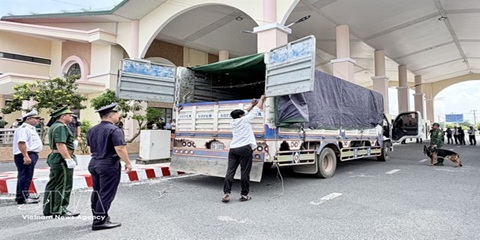
VIỆT NAM-CAMBODIA TRADE GATHERS PACE TOWARDS $20 BILLION TARGET
Trade between Việt Nam and Cambodia continues to grow, remaining a bright spot and a key pillar of bilateral cooperation as the two countries aim to raise two-way trade to US$20 billion in the coming years. After setting a record of more than $11.3 billion last year, bilateral trade reached about $8.7 billion in the first eight months of this year, up 8.3 per cent year on year.
TECHNOLOGY
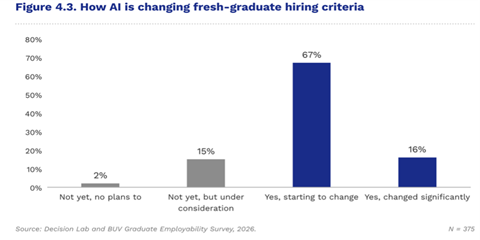
AI BEGINNING TO RESHAPE RECRUITMENT CRITERIA
Digital literacy is the only capability area in which fresh graduates meet employers’ expectations, according to a new report. Yet, it is also the standard rising fastest, as businesses increasingly expect new hires to use AI effectively in the workplace. Some 83 per cent of employers say AI has changed, or is beginning to change, their hiring criteria, while 94 per cent report higher expectations for digital and AI capabilities than they had two to three years ago.
INFRASTRUCTURE / CONSTRUCTION / LOGISTIC / PORT
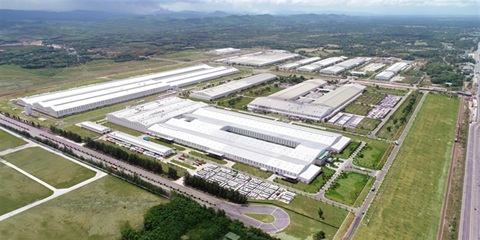
ĐÀ NẴNG GREEN-LIGHTS US$105 MILLION THAI DEVELOPMENT DEAL
The central city has approved an investment proposal by Thailand’s WHA Group to develop infrastructure for the 400ha WHA Đà Nẵng Industrial Park project on two communes of Thăng Bình and Đồng Dương, with an investment of more than VNĐ2.7 trillion (US$105 million). The city said it approved WHA Industrial Development International's status as an investor in the project, which is expected to take place between 2027 and 2034.
VIETNAM ECONOMY INVESTMENT
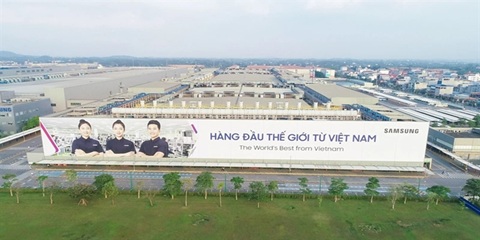
MOBILE PHONE EXPORTS RISE 20% TO $51.8 BILLION IN FIRST NINE MONTHS
Exports of mobile phones and components rose 20 per cent year-on-year to nearly US$51.8 billion in the first nine months of 2026, with China, the US and Republic of Korea accounting for more than half of the total. Shipments to the three markets reached a combined $26.18 billion, or 50.6 per cent of total exports of the product group during the period, according to data from the Vietnam Department of Customs under the Ministry of Finance.
VIETNAM ECONOMY INVESTMENT
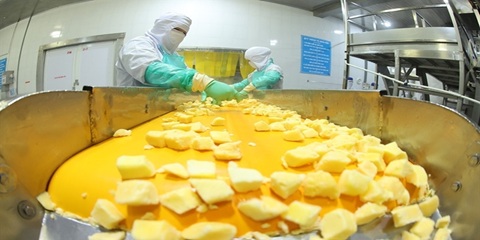
FRUIT AND VEGETABLE EXPORTS POISED TO HIT $10 BILLION IN 2026
Fruit and vegetable exports are on track to reach nearly US$10 billion in 2026, after rising 19.9 per cent year on year to nearly US$7.4 billion in the first nine months, driven by strong seasonal demand and abundant tropical fruit supplies. The Ministry of Agriculture and Environment said the growth reflected stronger international demand for fresh produce and processed agricultural products.
GARMENT / TEXTILE
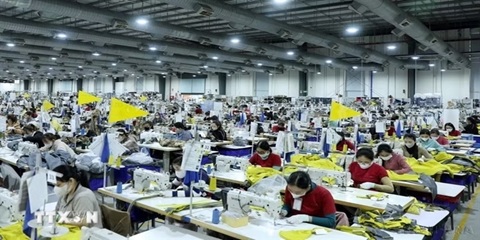
TEXTILE EXPORTS FACE DUAL CHALLENGES OF SUSTAINING ORDERS AND BOOSTING EFFICIENCY AMID GROWING COMPETITION
Data shows that the textile and garment sector maintained its growth momentum in the first nine months of this year. The industry's total export turnover reached an estimated US$35.721 billion in the first nine months of this year, up 3.3 per cent year-on-year. Despite posting encouraging export figures, Vietnamese textile and garment enterprises continue to navigate unpredictable market variables.
Events Sponsors






















