Want to be in the loop?
subscribe to
our notification
Business News
LÀO CAI BORDER TRADE SURGES, DURIAN EXPORTS HIT RECORD HIGH
At Kim Thành II international border gate, more than 2,000 tonnes of durian are exported to China each day, the highest daily volume recorded in the past two years.
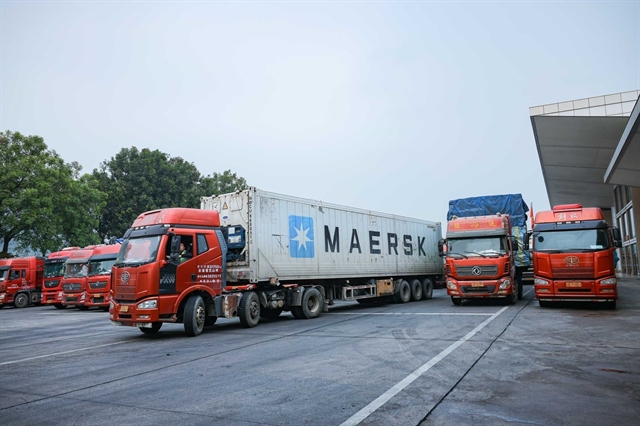
Container trucks at Kim Thành II international border gate, Lào Cai Province. Import-export turnover through border gates in the northern province rose by more than 60 per cent year-on-year in the first half of 2026. — VNA/VNS Photo Hoàng Hiếu
LÀO CAI — Import-export turnover through border gates in the northern province of Lào Cai rose by more than 60 per cent year-on-year in the first half of 2026, driven by a sharp increase in agricultural exports, particularly durian.
Export value reached US$636 million during the six-month period, up 62 per cent from a year earlier and accounting for more than half of the province's total border trade. Agricultural products remained the dominant export category, making up over 90 per cent of outbound shipments.
At Kim Thành II international border gate, more than 2,000 tonnes of durian are exported to China each day, the highest daily volume recorded in the past two years. More than 100,000 tonnes of the fruit were cleared through the border gate in the first half of the year, a 14-fold increase from the same period in 2025. Durian exports were valued at nearly $400 million, representing more than 30 per cent of Lào Cai's total export turnover.
Đoàn Đức Việt, a representative of Trung Đông Import-Export Company, said customs clearance has become significantly faster, enabling the company to export 400–600 tonnes of durian to China daily while reducing storage costs and minimising quality risks.
To ensure smooth exports, businesses have invested in certified growing areas and complied with China's requirements on planting area codes, packing facilities, traceability, plant quarantine and food safety, helping speed up customs clearance and reduce the risk of shipments being rejected.
Vương Trịnh Quốc, head of the Lào Cai Economic Zone Authority, said customs, border guard and plant quarantine forces have adopted flexible working arrangements and electronic customs procedures to meet rising demand. Close coordination with Chinese authorities has also helped resolve clearance bottlenecks, while streamlined inspection procedures have significantly shortened customs clearance times for fresh agricultural products.
According to Nguyễn Thị Thanh Bình, deputy head of the Lao Cai international border gate customs team, more than 90 per cent of export declarations are now processed through the "green lane", allowing businesses to complete customs procedures more quickly.
According to Quốc, agricultural exports are expected to maintain their positive momentum in the coming months as many fruit varieties enter their peak harvest season. At the same time, new export products, including fresh seafood, are increasingly using Kim Thành border gate as their main route to the Chinese market.
As China's economy continues to recover steadily, rising consumer demand is expected to drive stronger import demand, particularly in the final months of the year. This presents an opportunity for Vietnamese businesses to expand their market share, increase export value, and enhance their production and business performance, he said. — VNA/VNS
Source: VNS
Related News
MEMBER CORNER / PROMOTIONS
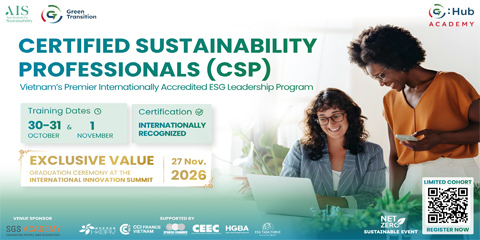
HCMC | CERTIFIED SUSTAINABILITY PROFESSIONAL (CSP) TRAINING | REGISTRATION OPEN
As sustainability becomes deeply embedded in corporate strategy and supply-chain operations across Vietnam, Hong Kong Business Association Vietnam is pleased to endorse the upcoming Certified Sustainability Professional (CSP) training program by the Asia Institute for Sustainability (AIS) - a premier internationally recognized ESG credential in Vietnam.
VIETNAM ECONOMY INVESTMENT
HCM CITY SAYS HOW IT PLANS TO ACHIEVE 10-11% ANNUAL EXPORT GROWTH FOR REST OF DECADE
The southern economic hub aims to strengthen its role as the country’s largest import-export centre while developing into a regional transhipment centre in Southeast Asia, supported by green and digital transformation and a circular economy. HCM City has outlined measures to expand production capacity, cut logistics costs, diversify export markets, and help businesses meet increasingly stringent international standards as it targets average annual export growth of 10-11 per cent through 2030.
VIETNAM ECONOMY INVESTMENT
HCM CITY LEADS ECONOMIC RESTRUCTURING IN SOUTHEAST REGION
According to Associate Professor, Dr Vũ Tuấn Hưng, director of the Institute of Social Sciences of the Southern Region, the Southeast is a strategically important socio-economic space in Việt Nam’s development given its advantages in location, industry, trade, services, logistics, science and technology, urbanisation and human resources.
TECHNOLOGY
DIGITAL TRANSFORMATION TURNED INTO PRACTICAL TOOLS FOR PEOPLE, BUSINESSES
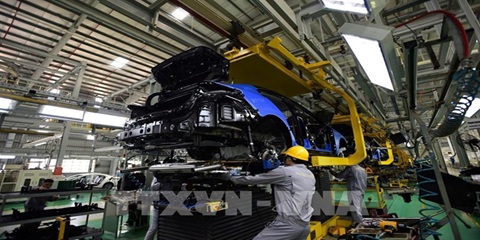
Việt Nam is moving its digital transformation agenda beyond policy frameworks and individual technology platforms towards practical applications that address everyday needs, as authorities seek measurable outcomes from science, technology and innovation. Under Politburo Resolution No. 57-NQ/TW issued on December 22, 2024, the implementation is increasingly shifting from simply completing assigned tasks towards developing concrete products and services for citizens and businesses.
TECHNOLOGY
APPLYING TECHNOLOGY FOR ECONOMIC TRANSFORMATION
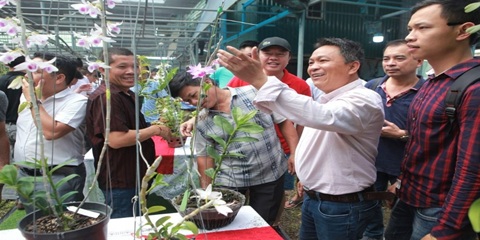
Having completed its new rural development program, Hanoi is shifting its focus toward improving development quality and building smart, sustainable rural areas. The transformation of Dong La orchid-growing village in An Khanh, a western commune of Hanoi, shows how digital technology is becoming a driver of production, market expansion, and higher incomes for local residents.
MEMBER CORNER / PROMOTIONS
VIGLACERA HONORED AS THE "LEADING GREEN INDUSTRIAL REAL ESTATE DEVELOPER 2026"
Organized by the Vietnam Investment Review, this prestigious awards program recognizes industry pioneers advancing eco-industrial parks, clean energy transition, and rigorous ESG standards. Outperforming competitors through a rigorous evaluation, Viglacera Corporation – JSC proudly ranked among the Top 5 highest-positioned enterprises in the Leading Green Industrial Real Estate Developers 2026 category, reinforcing its premier position in Vietnam’s industrial real estate sector.
Events Sponsors






















