Want to be in the loop?
subscribe to
our notification
Business News
LARGE BANKS CONCERNED ABOUT RAISING CAPITAL
State-owned banks are struggling to raise capital to improve their capital adequacy ratio (CAR) in line with Basel II requirements.
According to the National Financial Supervisory Commission (NFSC), the average capital adequacy ratio (CAR) of the credit institution system in 2018 has reached 11.1 per cent thanks to the 12.2 per cent surge in owner’s equity capital and a 10.8 per cent rise in total risk weighted assets. Regulatory Tier 1 capital to risk weighted assets has thus been calculated at 8.8 per cent for 2018, a higher ratio than 2017’s 7.8 per cent.
Another unofficial research, however, showed that the application of Basel II capital safety standards at the 10 pilot banks (including Vietcombank, VIB, VPBank, and OCB) has resulted in these banks having their CAR significantly lower compared to those promising figures released by the NFSC. Specifically, the CAR of four state-owned banks has dropped below 8 per cent with Basel II, down from the almost 9 per cent they had scored prior to applying the standards.
According to the bank industry report 2019 of Vietcombank Securities (VCBS), following Circular No.41/2016/TT-NHNN, the time of application of Basel II for domestic credit institutions will start from January 1, 2020. Thus, in 2019, banks will need to improve their technology systems to calculate safety indicators as well as prepare capital to be ready for Basel II.
Among the Basel II indicators, the minimum capital adequacy ratio (CAR) is one of the core requirements. In order to meet and improve CAR in the long run, it is imperative that many credit institutions implement measures to increase Tier 1 capital required.
Le Duc Tho, chairman of Vietnam JSC Bank for Industry and Trade (VietinBank), said that their top priority mission is to quickly enhance financial capacity, as well as build and implement the roadmap to increase charter capital after receiving approval from the State Bank of Vietnam (SBV). VietinBank would drastically implement the restructuring of charter capital, equity capital, and strictly control the growth of total assets as well as total risk weighted assets.
“VietinBank will adjust and take specific measures to improve the efficiency of capital investment and equity capital usage. This is a synchronous solution to boost the bank's financial capacity from now until 2020,” Tho added.
Le Xuan Nghia, an economic expert, noted that at present, the biggest problem of the banking system is not dealing with bad debts, but increasing capital to meet Basel II requirements before the 10-bank-pilot phase is completed in 2020.
According to Nghia, it is necessary to raise capital for the banking sector by about $3-4 billion each year. However, in the last few years, only half of this amount was reached, and mainly distributed to healthy banks. If there is an appropriate policy, allowing banks with the ability to increase capital to lift their credit growth limit, this will be an incentive to attract foreign investors, as investing in banks with high credit growth is more beneficial.
“The credit growth quota for each bank would limit their income and investment into the banking sector. Vietnam Bank for Agriculture and Rural Development (Agribank), Bank for Investment and Development of Vietnam JSC (BIDV), and VietinBank are having difficulties in raising capital. Therefore, the government needs to provide a detailed capital raising roadmap for these banks, because these are the pillars of the economy and industrial policy in general,” said Nghia.
Source: VIR
Related News

VIETNAM ECONOMY INVESTMENT
MOF'S FIRMS REPORT STRONG GROWTH IN NINE-MONTH
State-owned groups and corporations represented by the Ministry of Finance (MoF) recorded combined revenue of more than VNĐ2 quadrillion (US$79.5 billion) in the first nine months of 2026, up 28.7 per cent year-on-year, while consolidated profit before tax reached nearly VNĐ160 trillion, equivalent to 140.3 per cent of the full-year target.
TECHNOLOGY
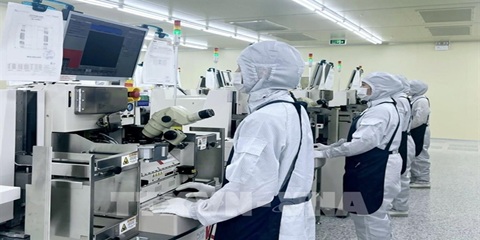
TECH SECTOR GROWTH OPENS UP OPPORTUNITIES FOR VIỆT NAM TO GO GLOBAL
The growth of the electronics, semiconductor and high-tech sectors worldwide is opening up a variety of opportunities for Vietnamese enterprises to integrate more deeply into the global supply chain. However, to become suppliers for these corporations, domestic enterprises must meet rigorous standards regarding quality, technology, productivity and order fulfilment capabilities.

VIETNAM ECONOMY INVESTMENT
SME REVENUE THRESHOLD PROPOSED TO BE RAISED TO $15.2 MILLION
The government has proposed raising the annual revenue threshold for classifying small- and medium-sized enterprises (SMEs) to VNĐ400 billion (US$15.2 million), from currently VNĐ300 billion, as part of a draft law on the development of SMEs. Minister of Finance Ngô Văn Tuấn presented the draft law, which is intended to replace the Law on Supporting SMEs 2017, to the National Assembly at a meeting late last week.

BANKING / FINANCE / INSURANCE / TAX
REMITTANCES TO HCM CITY RISE NEARLY 40% IN Q3
Remittances to HCM City reached more than US$2.83 billion in the third quarter of this year, up 39.5 per cent from the previous quarter and 3.6 per cent year-on-year. This was the first quarter showing positive annual growth this year, helping narrow the decline in remittance inflows over the first nine months. According to the State Bank of Vietnam (SBV)’s Regional Branch 2, remittances transferred to HCM City through credit institutions and economic organisations totalled $2.835 billion in Q3, an increase of more than $802 million from the previous quarter.
PROPERTY / INDUSTRIAL ZONE
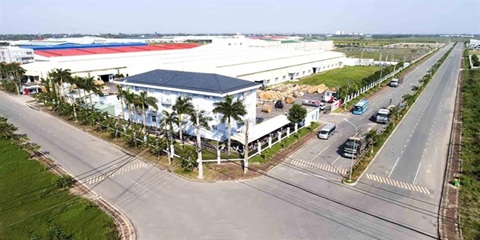
HCM CITY ATTRACTS US$5.7 BILLION INTO EXPORT PROCESSING AND INDUSTRIAL ZONES
HCM City attracted US$5.7 billion in domestic and foreign investment into its export processing and industrial zones during the first nine months of 2026. The figure exceeded the city's full-year target by 31 per cent, highlighting strong momentum in high-quality industrial investment under Resolution No.10-NQ/TW. Total investment reached 131 per cent of the 2026 target of $4.25 billion and represented a 29 per cent increase compared with the same period in 2025, according to the city's Export Processing and Industrial Zones Authority (HEPZA).

CHARITY / EXHIBITION / OTHER EVENTS
INVESTMENT OPPORTUNITIES IN CA MAU PROVINCE: 96 PROJECTS AND 20 STRATEGIC PROJECTS
We are pleased to share with you information on investment projects currently seeking investors in Ca Mau Province. Should your esteemed company or association be interested, we kindly invite you to review the project information and complete the registration form via the links provided. The Ho Chi Minh City Investment and Trade Promotion Centre (ITPC) will consolidate the expressions of interest and facilitate connections with the leadership of Ca Mau Province at a meeting tentatively scheduled for 13 November 2026 in Ho Chi Minh City.
Events Sponsors






















