Want to be in the loop?
subscribe to
our notification
Business News
LAW AND PRACTICE ON LAND ACCESS OF VIETNAMESE BUSINESSES
The Ministry of Justice is carrying out the Prime Minister's Directive 01/CT-TTg on rectifying and strengthening land management and building land information system. To achieve this objective, the ministry has conducted a review for revision of legal regulations on land access. This matter has a great impact on business rights and business performance and land access is a problematic area and receives a lot of recommendations from investors.
Mr Nguyen Hong Hai, Deputy Director of the Civil - Economic Law Department, the Ministry of Justice, said the ministry has to date received written remarks from 12 out of 18 ministries and ministerial level agencies; 55 out of 64 centrally governed provinces and cities; all four State-owned business groups; three out of five business associations; three out of five authorities of industrial, economic and hi-tech zones.
Reviews show a lot of inadequacies and overlaps of land-related laws. Particularly, the Law on Land of 2013 and other relevant acts have many inconsistent regulations.
For example, the Law on Procurement of 2013 governs cases, procedures and processes for project bidding and the Law on Land of 2013 regulates cases of land-use rights auctioning. However, the two laws do not have consistent regulations on whether an auctioned project case needs a land-use rights auction or not and on whether an auctioned land-use rights case needs a project auction or not.
The Law on Enterprises of 2014 has a concept that contributed assets is the value of land-use rights while the Law on Land of 2013 uses the concept of capital contribution in the form of land-use rights. These two concepts are inconsistent and result in various interpretations and applications.
In addition, the Civil Code regulates a separation of three points of time: Time of effective transaction, time of transfer rights, and time of public effectiveness. The Land Law has not clearly defined this issue. The Civil Code distinguishes between land-use rights and assets attached to land and the registration is publicly effective. The Land Law rules the registration of assets attached to land made as required?
The Investment Law (Point g, Clause 1, Article 48) stipulates that an investment project is terminated in the case where the investor fails to perform or is unable to carry out the project within 12 months following the registration schedule with the investment registration body and not be entitled to the extension of the implementation schedule of the investment project as per Article 46 of this Law. However, Point i, Article 64 states that land shall be recovered by the State for land allocated or leased by the State for execution of investment project but not used for 12 consecutive months or land use progress 24 months behind the progress recorded in the investment project since the handover of land in the field must be put land into use. Where the land is not put into use, the investor may extend the use duration of 24 months and pay to the State an amount corresponding to the land use levy or land rent for the delayed time. Therefore, when the project is revoked the investment certificate but revoke land certificate, it causes much difficulty to enforcement bodies.
In addition, some points are not regulated by the Land Law. For example, the Land Law 2013 does not specify the mechanisms and form of land accumulation. Therefore, it is difficult for people and businesses to carry out land accumulation models for agricultural production. The Land Law 2013 only allows the mortgage of land-use rights and assets attached to land at credit institutions authorised to operate in Vietnam and disallows the mortgage of assets attached to land at banks in foreign countries. At present, the Ministry of Natural Resources and Environment is preparing a pilot scheme on mortgaging assets attached to land at overseas banks and submitting it to competent agencies for consideration and decision.
Mr Tran Ngoc Hung, President of the Vietnam Construction Association, said, land compensation is the most pressing issue when the State recovers land. This work causes the most complaints and upsets public opinions.
In Article 74, Clause 2, the principle of land compensation as a result of the State order for revocation has some points of consideration. For example, compulsory compensation “according to specific land price of recovered land types decided by the Provincial People's Committee” (often much lower than market prices) for economic development projects - especially housing projects and production facilities - to allocate the land to investors to get a bigger land rent is improper.
Clause 3 of Article 74 states that land compensation must made democratic, fair and public in time and lawfully. This regulation is not seriously enforced. Many localities have applied coercive impositions, not publicised information, specially compensation price and carried out unfair and undemocratic land acquisition purposes, thus giving rise to complaints that result in social disorder and insecurity. A series of violations concerning this matter have been unearthed.
When the Land Law is enacted, in addition to achievements in improving land management and land-use efficiency to serve economic development, raise living conditions, ensure security and defence, there are still many shortages that bring about many complicated and pressing problems. Rampant wasteful use, bribery, corruption, and group interests in land acquisition, allocation and lease lead to huge financial losses of the State Budget, popular land complaints that may cause insecurity and disorder, and spoil public confidence. Roots of these situations can be found from regulations on land to enforcement of land regulations.
Source: VCCI
Related News

INFRASTRUCTURE / CONSTRUCTION / LOGISTIC / PORT
VIỆT NAM-CAMBODIA TRADE GATHERS PACE TOWARDS $20 BILLION TARGET
Trade between Việt Nam and Cambodia continues to grow, remaining a bright spot and a key pillar of bilateral cooperation as the two countries aim to raise two-way trade to US$20 billion in the coming years. After setting a record of more than $11.3 billion last year, bilateral trade reached about $8.7 billion in the first eight months of this year, up 8.3 per cent year on year.
TECHNOLOGY
AI BEGINNING TO RESHAPE RECRUITMENT CRITERIA
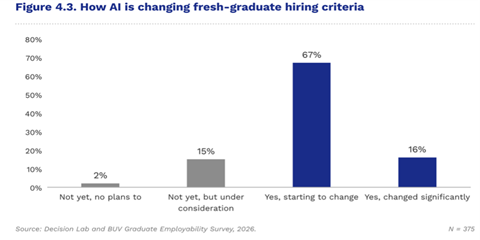
Digital literacy is the only capability area in which fresh graduates meet employers’ expectations, according to a new report. Yet, it is also the standard rising fastest, as businesses increasingly expect new hires to use AI effectively in the workplace. Some 83 per cent of employers say AI has changed, or is beginning to change, their hiring criteria, while 94 per cent report higher expectations for digital and AI capabilities than they had two to three years ago.

INFRASTRUCTURE / CONSTRUCTION / LOGISTIC / PORT
ĐÀ NẴNG GREEN-LIGHTS US$105 MILLION THAI DEVELOPMENT DEAL
The central city has approved an investment proposal by Thailand’s WHA Group to develop infrastructure for the 400ha WHA Đà Nẵng Industrial Park project on two communes of Thăng Bình and Đồng Dương, with an investment of more than VNĐ2.7 trillion (US$105 million). The city said it approved WHA Industrial Development International's status as an investor in the project, which is expected to take place between 2027 and 2034.

VIETNAM ECONOMY INVESTMENT
MOBILE PHONE EXPORTS RISE 20% TO $51.8 BILLION IN FIRST NINE MONTHS
Exports of mobile phones and components rose 20 per cent year-on-year to nearly US$51.8 billion in the first nine months of 2026, with China, the US and Republic of Korea accounting for more than half of the total. Shipments to the three markets reached a combined $26.18 billion, or 50.6 per cent of total exports of the product group during the period, according to data from the Vietnam Department of Customs under the Ministry of Finance.

VIETNAM ECONOMY INVESTMENT
FRUIT AND VEGETABLE EXPORTS POISED TO HIT $10 BILLION IN 2026
Fruit and vegetable exports are on track to reach nearly US$10 billion in 2026, after rising 19.9 per cent year on year to nearly US$7.4 billion in the first nine months, driven by strong seasonal demand and abundant tropical fruit supplies. The Ministry of Agriculture and Environment said the growth reflected stronger international demand for fresh produce and processed agricultural products.
GARMENT / TEXTILE
TEXTILE EXPORTS FACE DUAL CHALLENGES OF SUSTAINING ORDERS AND BOOSTING EFFICIENCY AMID GROWING COMPETITION
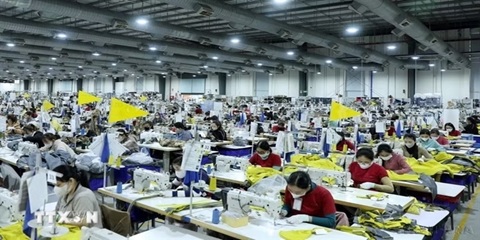
Data shows that the textile and garment sector maintained its growth momentum in the first nine months of this year. The industry's total export turnover reached an estimated US$35.721 billion in the first nine months of this year, up 3.3 per cent year-on-year. Despite posting encouraging export figures, Vietnamese textile and garment enterprises continue to navigate unpredictable market variables.
Events Sponsors






















