Want to be in the loop?
subscribe to
our notification
Business News
LAW ON DEPOSIT INSURANCE TO BE AMENDED
According to the SBV, after 12 years of implementing the Law on Deposit Insurance, there have been a number of difficulties and problems that need to be resolved to further enhance the role of the Deposit Insurance of Vietnam (DIV).
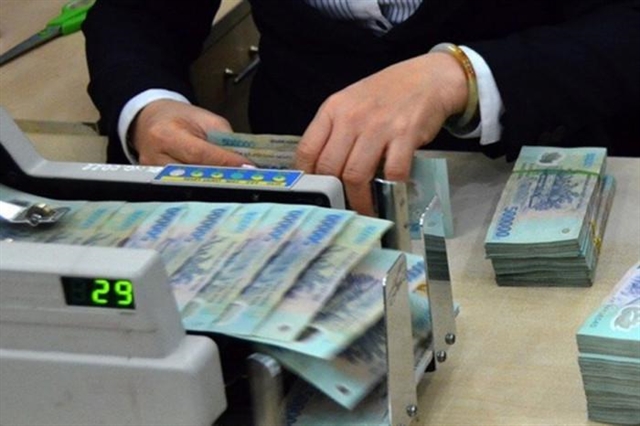
Amendment of the Law on Deposit Insurance will contribute to maintaining the stability and sustainable development of the credit institution system. Photo vneconomy.vn
HÀ NỘI — The State Bank of Vietnam (SBV) has recently submitted to the Government a proposal to amend the Law on Deposit Insurance.
According to the SBV, after 12 years of implementing the Law on Deposit Insurance, there have been a number of difficulties and problems that need to be resolved to further enhance the role of the Deposit Insurance of Vietnam (DIV), ensure the deposit insurance policy to be implemented effectively, and better protect the legitimate rights and interests of depositors.
The SBV expects the changes will contribute to maintaining the stability and sustainable development of the credit institution system.
Under the proposal, the SBV proposes to expand investment forms of deposit insurance organisations in the direction of expanding investment forms. Specifically, the SBV proposes to allow the DIV to buy long-term bonds of credit institutions that receive compulsory transfers.
According to the current regulations, the DIV is allowed to use temporarily idle capital to buy government bonds and SBV’s bills, as well as deposit money at the SBV, to ensure capital safety.
The SBV’s data shows 99 per cent of the total temporarily idle capital of the DIV is currently invested in government bonds as yield of the government bonds is higher than interest rates of SBV’s bills and SBV’s deposits.
However, investment in government bonds has been difficult in recent years and revenue from government bonds has decreased due to low interest rates. This has greatly affected the revenue of the DIV. According to data provided by the DIV, its profitability of idle capital has decreased gradually, from 9.41 per cent in 2013 to only 3.82 per cent in 2023.
Under the SBV’s proposals, the DIV can also participate in developing plans and proposing deposit insurance payment limits for people's credit funds and other credit institutions.
The SBV also proposes regulations to limit risks in investment activities of the DIV. Accordingly, there must be regulations on the responsibilities of the DIV in carrying out investment activities and making provisions for risk for investments according to the Government's instructions. Besides, the Government must stipulate criteria for investment portfolio, investment structure and investment methods of the DIV.
According to the Law on Credit Institutions 2024, the Vietnam Deposit Insurance is assigned a number of new tasks, including the role of participating in restructuring weak credit institutions.
Specifically, the DIV can provide special loans to specially controlled commercial banks according to the SBV’s decision. — VNS
Source: VNS
Related News

CHARITY / EXHIBITION / OTHER EVENTS
INVESTMENT OPPORTUNITIES IN CA MAU PROVINCE: 96 PROJECTS AND 20 STRATEGIC PROJECTS
We are pleased to share with you information on investment projects currently seeking investors in Ca Mau Province. Should your esteemed company or association be interested, we kindly invite you to review the project information and complete the registration form via the links provided. The Ho Chi Minh City Investment and Trade Promotion Centre (ITPC) will consolidate the expressions of interest and facilitate connections with the leadership of Ca Mau Province at a meeting tentatively scheduled for 13 November 2026 in Ho Chi Minh City.

MEMBER CORNER / PROMOTIONS
BẰNG KIỀU LIVESHOW - A SYMPHONY OF LOVE UNDER THE GOLDEN GLOW
A masterclass in live music that takes the audience on a soulful journey through immortal love songs, guided by the peerless artistry and emotive storytelling of renowned singer Bằng Kiều. The highlight of the night is his seamless musical chemistry with special guest Triệu Hồng Ngọc, promising passionate and deeply resonant duets inside the magnificent Grand Ballroom.

INFRASTRUCTURE / CONSTRUCTION / LOGISTIC / PORT
ĐÀ NẴNG GREEN-LIGHTS US$105 MILLION THAI DEVELOPMENT DEAL
The central city has approved an investment proposal by Thailand’s WHA Group to develop infrastructure for the 400ha WHA Đà Nẵng Industrial Park project on two communes of Thăng Bình and Đồng Dương, with an investment of more than VNĐ2.7 trillion (US$105 million). The city said it approved WHA Industrial Development International's status as an investor in the project, which is expected to take place between 2027 and 2034.
VIETNAM ECONOMY INVESTMENT
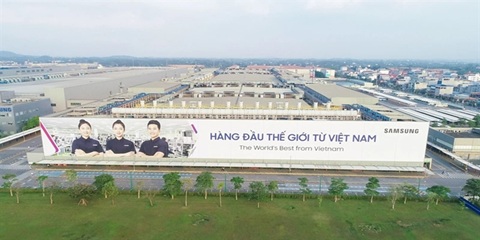
MOBILE PHONE EXPORTS RISE 20% TO $51.8 BILLION IN FIRST NINE MONTHS
Exports of mobile phones and components rose 20 per cent year-on-year to nearly US$51.8 billion in the first nine months of 2026, with China, the US and Republic of Korea accounting for more than half of the total. Shipments to the three markets reached a combined $26.18 billion, or 50.6 per cent of total exports of the product group during the period, according to data from the Vietnam Department of Customs under the Ministry of Finance.
INFRASTRUCTURE / CONSTRUCTION / LOGISTIC / PORT
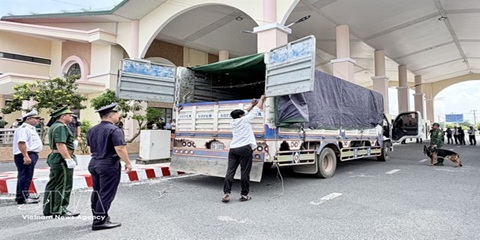
VIỆT NAM-CAMBODIA TRADE GATHERS PACE TOWARDS $20 BILLION TARGET
Trade between Việt Nam and Cambodia continues to grow, remaining a bright spot and a key pillar of bilateral cooperation as the two countries aim to raise two-way trade to US$20 billion in the coming years. After setting a record of more than $11.3 billion last year, bilateral trade reached about $8.7 billion in the first eight months of this year, up 8.3 per cent year on year.
VIETNAM ECONOMY INVESTMENT
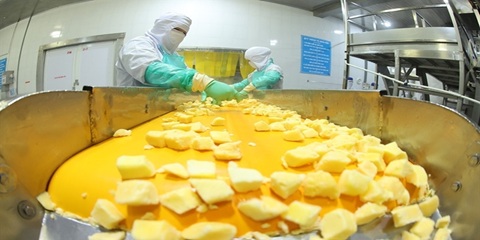
FRUIT AND VEGETABLE EXPORTS POISED TO HIT $10 BILLION IN 2026
Fruit and vegetable exports are on track to reach nearly US$10 billion in 2026, after rising 19.9 per cent year on year to nearly US$7.4 billion in the first nine months, driven by strong seasonal demand and abundant tropical fruit supplies. The Ministry of Agriculture and Environment said the growth reflected stronger international demand for fresh produce and processed agricultural products.
Events Sponsors






















