Want to be in the loop?
subscribe to
our notification
Business News
LEATHER AND FOOTWEAR ON COURSE FOR STRONG RECOVERY: LEFASO
Việt Nam's leather and footwear industry was on course for a strong recovery as more international fashion brands were valuing the country as an important part of the global supply chain, according to the Vietnam Leather, Footwear and Handbag Association (LEFASO).
Phan Thị Thanh Xuân, vice-president of LEFASO, said many Vietnamese leather and footwear producers had secured enough orders to keep production running until the end of the year. This was due in no small part to the country's successful effort to contain and fight off the COVID-19 pandemic.
In addition, the country has become a popular destination for foreign investment after signing a number of historic trade deals such as the Comprehensive and Progressive Agreement for Trans-Pacific Partnership (CPTPP) and the EU-Vietnam Free Trade Agreement (EVFTA). A recent survey by LEFASO showed that more than 40 per cent of international buyers said they were either placing additional orders or planning to do so in the near future.
Domestic firms, in light of the disruption caused by the pandemic and drastic falls in demand in traditional export markets such as the EU (-27 per cent) and the US (-21 per cent) compared with the previous year, were seeking new buyers and pushing for cost-cutting restructuring measures.
As a result, Việt Nam's localisation ratio among leather and footwear producers has seen an improvement to average 30-40 per cent, with key export products including sportswear and footwear up to over 50 per cent.
"As we enter the last quarter of the year, there have been many positive signs of a strong recovery for leather and footwear makers," Xuân said.
Statistics from the General Department of Vietnam Customs and the Ministry of Industry and Trade appeared to support the idea with export volume showing a strong recovery in September, posting a 4.5 per cent increase from August and only a slight 0.4 per cent decrease from the same period last year despite the ongoing pandemic.
Leather and footwear producers have also been recruiting additional workers as production starts kicking back into high gear.
This rosy picture, however, had not been seen by everyone in leather and footwear. 2021 remained unpredictable even for those who were doing well at the moment, said Xuân. Free trade agreements and preferential policies, while giving some advantages for Vietnamese products, could not decide the outcome of the competition.
Việt Nam's leather and footwear industry was still struggling to deal with a host of problems, including its reliance on imports of raw materials and tightened labour regulations.
Xuân said firms must start investing in new technology, improving the labour force and building contingency plans in order to stay quick on their feet and ready to respond and adapt to changes in the business environment.
Việt Nam has over 1,700 leather and footwear makers with a total production capacity of 1.1 billion pairs of footwear, and 400 million bags and backpacks a year.
Footwear exports alone were estimated at US$12.8 billion in the first nine months of the year, an 8.8 per cent decrease compared to the same period last year, and only half of the industry's target of $24 billion set for 2020.
Source: VNS
Related News

INFRASTRUCTURE / CONSTRUCTION / LOGISTIC / PORT
VIỆT NAM-CAMBODIA TRADE GATHERS PACE TOWARDS $20 BILLION TARGET
Trade between Việt Nam and Cambodia continues to grow, remaining a bright spot and a key pillar of bilateral cooperation as the two countries aim to raise two-way trade to US$20 billion in the coming years. After setting a record of more than $11.3 billion last year, bilateral trade reached about $8.7 billion in the first eight months of this year, up 8.3 per cent year on year.
TECHNOLOGY
AI BEGINNING TO RESHAPE RECRUITMENT CRITERIA
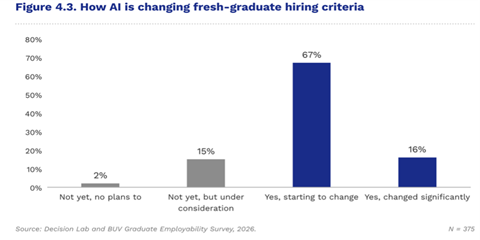
Digital literacy is the only capability area in which fresh graduates meet employers’ expectations, according to a new report. Yet, it is also the standard rising fastest, as businesses increasingly expect new hires to use AI effectively in the workplace. Some 83 per cent of employers say AI has changed, or is beginning to change, their hiring criteria, while 94 per cent report higher expectations for digital and AI capabilities than they had two to three years ago.

INFRASTRUCTURE / CONSTRUCTION / LOGISTIC / PORT
ĐÀ NẴNG GREEN-LIGHTS US$105 MILLION THAI DEVELOPMENT DEAL
The central city has approved an investment proposal by Thailand’s WHA Group to develop infrastructure for the 400ha WHA Đà Nẵng Industrial Park project on two communes of Thăng Bình and Đồng Dương, with an investment of more than VNĐ2.7 trillion (US$105 million). The city said it approved WHA Industrial Development International's status as an investor in the project, which is expected to take place between 2027 and 2034.

VIETNAM ECONOMY INVESTMENT
MOBILE PHONE EXPORTS RISE 20% TO $51.8 BILLION IN FIRST NINE MONTHS
Exports of mobile phones and components rose 20 per cent year-on-year to nearly US$51.8 billion in the first nine months of 2026, with China, the US and Republic of Korea accounting for more than half of the total. Shipments to the three markets reached a combined $26.18 billion, or 50.6 per cent of total exports of the product group during the period, according to data from the Vietnam Department of Customs under the Ministry of Finance.

VIETNAM ECONOMY INVESTMENT
FRUIT AND VEGETABLE EXPORTS POISED TO HIT $10 BILLION IN 2026
Fruit and vegetable exports are on track to reach nearly US$10 billion in 2026, after rising 19.9 per cent year on year to nearly US$7.4 billion in the first nine months, driven by strong seasonal demand and abundant tropical fruit supplies. The Ministry of Agriculture and Environment said the growth reflected stronger international demand for fresh produce and processed agricultural products.
GARMENT / TEXTILE
TEXTILE EXPORTS FACE DUAL CHALLENGES OF SUSTAINING ORDERS AND BOOSTING EFFICIENCY AMID GROWING COMPETITION
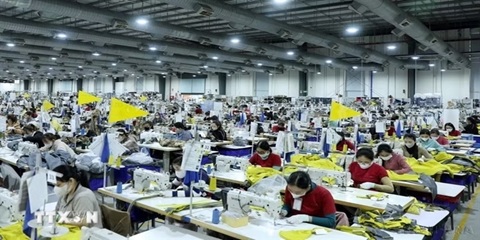
Data shows that the textile and garment sector maintained its growth momentum in the first nine months of this year. The industry's total export turnover reached an estimated US$35.721 billion in the first nine months of this year, up 3.3 per cent year-on-year. Despite posting encouraging export figures, Vietnamese textile and garment enterprises continue to navigate unpredictable market variables.
Events Sponsors






















