Want to be in the loop?
subscribe to
our notification
Business News
LOGISTICS ENTERPRISES: LARGE QUANTITY BUT SMALL MARKET SHARE
Currently there are more than 4,000 transport and logistics companies operating in Vietnam, providing diverse and comprehensive services from the process of transporting goods to taxation or payment; in which 88% are domestic enterprises, 10% are joint-venture enterprises and 2% are foreign enterprises, concentrated mainly in two big cities, Hanoi and Ho Chi Minh City.
Low competitiveness
In fact, the competitiveness of domestic transport and logistics enterprises is still low, compared with FDI enterprises. The number of FDI enterprises is small but accounts for 70% - 80% market share. The main services that Vietnamese logistics businesses provide are basic services, or individual services, mainly depending on price competition. They have little added value and usually act as a subcontractor or agent for foreign companies such as warehousing services, freight transport, loading and unloading, sorting services, packaging, storage. There are other services in the logistics service chain, but the number is not high and has not been developed.
According to the 2018 announcement of the World Bank, Vietnam logistics ranks 39th, an increase of 25 places compared to the ranking in 2016, with logistics performance index (LPI) improved significantly in all indicators, especially the capacity and service quality group, from 2.88 points to 3.4 points. This result comes from efforts in simplifying customs procedures, applying information technology and upgrading infrastructure systems.
However, according to the survey results of Vietnam Report, currently, the transport and logistics industry in Vietnam is facing big challenges, especially infrastructure. Currently, the commercial infrastructure, transportation infrastructure as well as information technology infrastructure are still weak and inconsistent, leading to multimodal transportation services facing many difficulties. Vietnam's logistics cost is much higher than that of other countries. Logistics facilities with a system of warehousing, wharves and crossroads can only meet the needs of import and export, but fail to meet domestic demand, especially needs of e-logistics.
Besides, Vietnam's logistics human resources not only lack quantity but are also weak in quality, especially highly qualified human resources such as managers, good logistics specialists with expertise in international law, capable of application and implementation in businesses. Among domestic businesses, up to 93-95% of workers are not trained in logistics, mainly doing services in small supply chains such as forwarding, warehousing, handling bill of lading. This greatly affects the service quality as well as the company's profit.
Although the Government has made many breakthrough policies to support and create conditions for the development of the transport and logistics industry, 54.55% of businesses still think there are many shortcomings, such as policies regarding import and export, customs clearance of goods is still quite tight, causing many difficulties, the unclear guiding decree gives new businesses considerable nuisances, slowing down the development pace of logistics industry.
Strong growth potential
Vietnam's transport and logistics industry has a lot of potential for growth, becoming more deeply involved in the world's transportation transaction centers due to the Government's policies to facilitate the development of the industry, along with the trend of global economic integration, many trade agreements have been signed, the strong development of e-commerce market and automation industry and increasingly improved infrastructure.
In addition, the transport and logistics industries also have more opportunities from the U.S.-China trade war, as many Chinese companies moved factories to Vietnam and Southeast Asia. Accordingly, nearly 91% of businesses in the survey of Vietnam Report said that the industry growth in 2020 will be over 10%.
Therefore, according to experts and businesses in the industry in the survey of Vietnam Report, there are three solutions that need to be given priority to develop the industry: Perfecting policies and laws related to logistics activities, simplifying administrative procedures, customs procedures, cutting infrastructure charges and fees; Improving infrastructure: transportation, telecommunications and information technology; Expanding human resource training network in the logistics industry.
In addition, the transport and logistics enterprises need solutions to modernize the mode of operation, upgrade service quality, human resources, financial capacity. The development of businesses will contribute to building and improving brand reputation, which is considered a bridge to help businesses get closer to domestic and foreign partners and customers.
Source: VCCI
Related News

MEMBER CORNER / PROMOTIONS
HCMC | CERTIFIED SUSTAINABILITY PROFESSIONAL (CSP) TRAINING | REGISTRATION OPEN
As sustainability becomes deeply embedded in corporate strategy and supply-chain operations across Vietnam, Hong Kong Business Association Vietnam is pleased to endorse the upcoming Certified Sustainability Professional (CSP) training program by the Asia Institute for Sustainability (AIS) - a premier internationally recognized ESG credential in Vietnam.
VIETNAM ECONOMY INVESTMENT
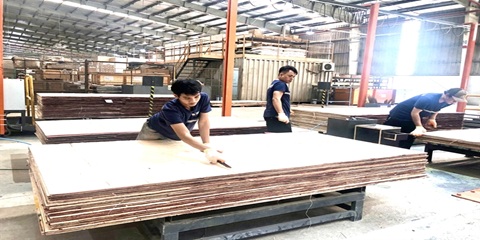
HCM CITY SAYS HOW IT PLANS TO ACHIEVE 10-11% ANNUAL EXPORT GROWTH FOR REST OF DECADE
The southern economic hub aims to strengthen its role as the country’s largest import-export centre while developing into a regional transhipment centre in Southeast Asia, supported by green and digital transformation and a circular economy. HCM City has outlined measures to expand production capacity, cut logistics costs, diversify export markets, and help businesses meet increasingly stringent international standards as it targets average annual export growth of 10-11 per cent through 2030.
VIETNAM ECONOMY INVESTMENT
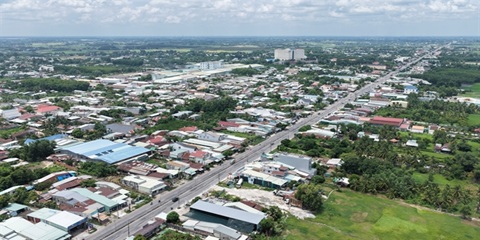
HCM CITY LEADS ECONOMIC RESTRUCTURING IN SOUTHEAST REGION
According to Associate Professor, Dr Vũ Tuấn Hưng, director of the Institute of Social Sciences of the Southern Region, the Southeast is a strategically important socio-economic space in Việt Nam’s development given its advantages in location, industry, trade, services, logistics, science and technology, urbanisation and human resources.
TECHNOLOGY
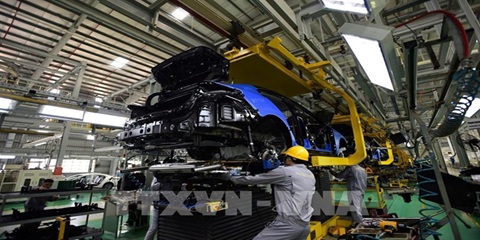
DIGITAL TRANSFORMATION TURNED INTO PRACTICAL TOOLS FOR PEOPLE, BUSINESSES
Việt Nam is moving its digital transformation agenda beyond policy frameworks and individual technology platforms towards practical applications that address everyday needs, as authorities seek measurable outcomes from science, technology and innovation. Under Politburo Resolution No. 57-NQ/TW issued on December 22, 2024, the implementation is increasingly shifting from simply completing assigned tasks towards developing concrete products and services for citizens and businesses.
TECHNOLOGY
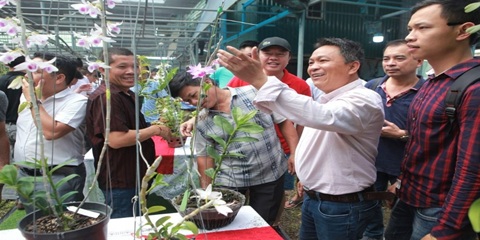
APPLYING TECHNOLOGY FOR ECONOMIC TRANSFORMATION
Having completed its new rural development program, Hanoi is shifting its focus toward improving development quality and building smart, sustainable rural areas. The transformation of Dong La orchid-growing village in An Khanh, a western commune of Hanoi, shows how digital technology is becoming a driver of production, market expansion, and higher incomes for local residents.
MEMBER CORNER / PROMOTIONS
VIGLACERA HONORED AS THE "LEADING GREEN INDUSTRIAL REAL ESTATE DEVELOPER 2026"
Organized by the Vietnam Investment Review, this prestigious awards program recognizes industry pioneers advancing eco-industrial parks, clean energy transition, and rigorous ESG standards. Outperforming competitors through a rigorous evaluation, Viglacera Corporation – JSC proudly ranked among the Top 5 highest-positioned enterprises in the Leading Green Industrial Real Estate Developers 2026 category, reinforcing its premier position in Vietnam’s industrial real estate sector.
Events Sponsors






















