Want to be in the loop?
subscribe to
our notification
Business News
MAJOR LEAP FORWARD IN VIETNAM EXPORTS
From a formerly war-torn, impoverished, and embargoed country, Vietnam has risen to become one of the world’s Top 20 trading economies. In 2024, total import-export turnover reached US$786 billion, up 15.4% from 2023, with a record trade surplus of US$24.77 billion, demonstrating successful integration and Vietnam’s strengthened position in global trade.
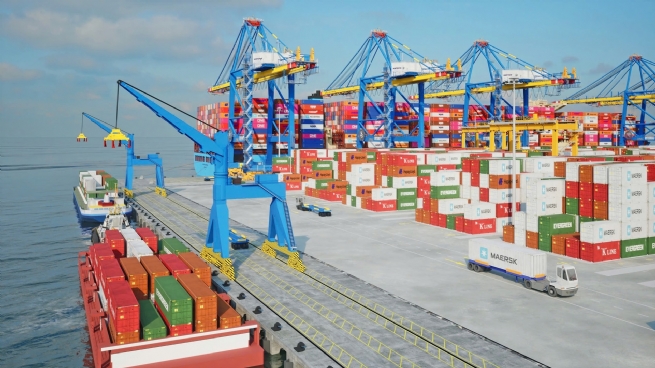
In 2024, Vietnam’s total import-export turnover reached US$786 billion, recording a trade surplus of US$24.77 billion
Solid trade foundation
After national reunification in 1975, Vietnam faced severe economic challenges, including persistent trade deficits, limited resources, and dependence on imports for even basic goods, including rice. A historic turning point came with the 6th Party Congress in 1986, which initiated the Doi Moi (renovation), prioritizing the production of food and consumer goods. Vietnam then pursued a consistent strategy of promoting exports while substituting imports with efficient domestic production.
This approach established the foundation for nearly four decades of sustainable export growth, transforming Vietnam from an import-dependent economy into one of the world’s emerging export powerhouses. Today, Vietnamese goods reach nearly 200 countries and territories, including highly demanding markets such as the United States, Japan, and the European Union, highlighting the country’s competitiveness and rising global standing.
Vietnam has actively integrated into the global economy through multilateral institutions and free trade agreements. To date, it has signed 17 FTAs with over 60 partners, covering nearly all major economies and accounting for almost 90% of global GDP. These agreements not only lower tariffs but also elevate product standards, enabling Vietnamese businesses to expand markets, diversify supply chains, and engage more fully in global production and trade networks.
Trade surplus and world top 20 entry
International integration has produced remarkable results, driving sustainable growth and raising Vietnam’s trade profile. Since 2016, Vietnam has posted trade surpluses for nine consecutive years, including a record US$24.77 billion in 2024. The surplus is largely due to strong performance in processed and manufactured exports and agriculture, combined with effective management of input imports. This has improved the balance of payments, supported stable GDP growth, maintained average annual trade surpluses of US$10-20 billion, eased inflationary pressures, and strengthened foreign reserves.
Leveraging free trade agreements has been a key driver. Vietnam has joined the world’s Top 20 trading economies, consistently recording surpluses - US$10.18 billion in the first seven months of 2025 alone. Landmark agreements such as the Comprehensive and Progressive Agreement for Trans-Pacific Partnership (CPTPP), the EU-Vietnam Free Trade Agreement (EVFTA), and the Regional Comprehensive Economic Partnership (RCEP) have not only opened markets and reduced tariffs but also encouraged institutional reforms. Consequently, trade value for 2024-2029 is projected to grow 6.5% annually, surpassing the 6.2% average of the previous period.
In Southeast Asia, Vietnam has led trade growth for years. In the first half of 2025, trade grew 16.3%, surpassing Indonesia and Thailand in export growth. Strategic location, competitive labor, and proactive integration helped push trade turnover to more than US$514 billion in just seven months. These achievements reinforce Vietnam’s role as a regional trade leader and provide a strong foundation for the 2025 GDP growth target of 8%, with exports as the key driver.
Vietnam focuses on competitive sectors, with major exports including phones and components, computers and electronics, textiles, agriculture, seafood, coffee, cashews, and rice. Several products have reached global leadership positions, reflecting both quality and business capability.
In the textile sector, Vietnam is now the world’s third-largest exporter, with 2025 revenue projected at US$46-48 billion. In the footwear sector, it ranks as the second-largest exporter and third-largest producer globally, generating US$14 billion in the first half of 2025. In seafood, Vietnam leads global exports of pangasius and catfish; in May 2025 alone, pangasius exports reached US$189 million (+12%) and shrimp US$415.3 million. In the first five months, seafood exports totaled US$4.3 billion (+22.3%), on track to reach US$9.2 billion for the year. In rice, Vietnam is set to become the world’s second-largest exporter in 2025, with at least 8 million tons. In wood and furniture, Vietnam is the world’s second-largest furniture exporter, generating US$17 billion annually, while overall wood exports rank sixth globally and first in Southeast Asia.
These industries not only generate high value but also integrate Vietnam more deeply into global supply chains, reduce dependency risks, and enhance competitiveness.
Despite strong performance, Vietnam faces major challenges, including U.S. tariff policies, intense competition from other exporters, and increasingly strict non-tariff barriers in key markets such as the EU, Japan, and South Korea. New regulations on illegal fishing (IUU), the EU’s anti-deforestation rule (EUDR), and stringent technical and food safety standards place growing pressure on Vietnamese businesses.
To respond, Vietnam must pursue many strategies: negotiating U.S. import agreements for LNG, aircraft, pharmaceuticals, medical supplies, and agricultural products to balance trade; strengthening regional coordination within ASEAN to maintain fair trade with the U.S.; and diversifying into emerging markets in the Middle East, Africa, and South America to reduce reliance on traditional markets.
The Vietnam Trade Promotion Agency (the Ministry of Industry and Trade) is developing the 2026–2030 Trade Promotion Strategy, aiming to create a modern, integrated ecosystem that helps enterprises manage distribution, increase domestic sales, and expand exports in high-tech and high-value sectors. Export growth is projected at 13-16% per year.
The strategy highlights three pillars: digital and green transformation, professionalized promotion systems, and cluster-based promotion. Six priority sectors are electronics and components, textiles, footwear, transport equipment and parts, processed agro-aquatic products, and wood and handicrafts. IT, logistics, and environmental goods are also prioritized.
From the early days of Doi Moi (renovation) to the present, Vietnam has consistently turned challenges into opportunities, transforming from an import-dependent economy into a global export powerhouse. With high-quality products, the country projects the image of a dynamic, reliable, and responsible partner contributing to peace and global development. Building on this momentum, Vietnam is poised to achieve new records in 2025, further solidifying its role as a key player in the global economy.
Source: VCCI
Related News
MEMBER CORNER / PROMOTIONS
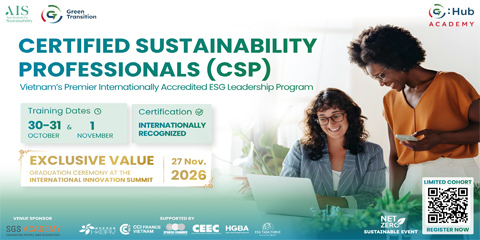
HCMC | CERTIFIED SUSTAINABILITY PROFESSIONAL (CSP) TRAINING | REGISTRATION OPEN
As sustainability becomes deeply embedded in corporate strategy and supply-chain operations across Vietnam, Hong Kong Business Association Vietnam is pleased to endorse the upcoming Certified Sustainability Professional (CSP) training program by the Asia Institute for Sustainability (AIS) - a premier internationally recognized ESG credential in Vietnam.
VIETNAM ECONOMY INVESTMENT
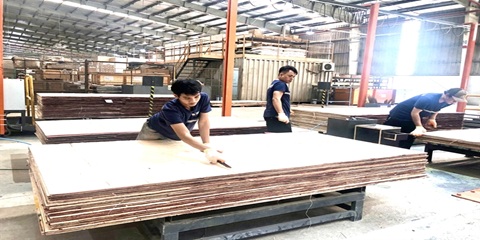
HCM CITY SAYS HOW IT PLANS TO ACHIEVE 10-11% ANNUAL EXPORT GROWTH FOR REST OF DECADE
The southern economic hub aims to strengthen its role as the country’s largest import-export centre while developing into a regional transhipment centre in Southeast Asia, supported by green and digital transformation and a circular economy. HCM City has outlined measures to expand production capacity, cut logistics costs, diversify export markets, and help businesses meet increasingly stringent international standards as it targets average annual export growth of 10-11 per cent through 2030.
VIETNAM ECONOMY INVESTMENT
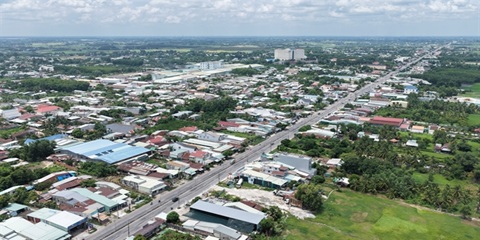
HCM CITY LEADS ECONOMIC RESTRUCTURING IN SOUTHEAST REGION
According to Associate Professor, Dr Vũ Tuấn Hưng, director of the Institute of Social Sciences of the Southern Region, the Southeast is a strategically important socio-economic space in Việt Nam’s development given its advantages in location, industry, trade, services, logistics, science and technology, urbanisation and human resources.
TECHNOLOGY
DIGITAL TRANSFORMATION TURNED INTO PRACTICAL TOOLS FOR PEOPLE, BUSINESSES
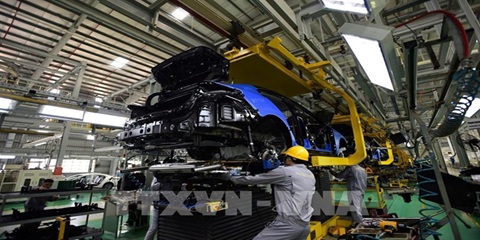
Việt Nam is moving its digital transformation agenda beyond policy frameworks and individual technology platforms towards practical applications that address everyday needs, as authorities seek measurable outcomes from science, technology and innovation. Under Politburo Resolution No. 57-NQ/TW issued on December 22, 2024, the implementation is increasingly shifting from simply completing assigned tasks towards developing concrete products and services for citizens and businesses.
TECHNOLOGY
APPLYING TECHNOLOGY FOR ECONOMIC TRANSFORMATION
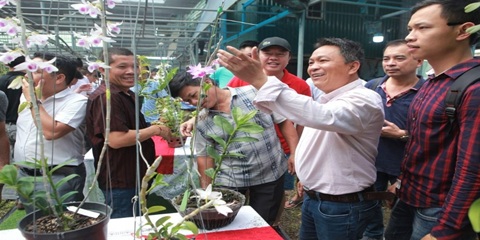
Having completed its new rural development program, Hanoi is shifting its focus toward improving development quality and building smart, sustainable rural areas. The transformation of Dong La orchid-growing village in An Khanh, a western commune of Hanoi, shows how digital technology is becoming a driver of production, market expansion, and higher incomes for local residents.

MEMBER CORNER / PROMOTIONS
VIGLACERA HONORED AS THE "LEADING GREEN INDUSTRIAL REAL ESTATE DEVELOPER 2026"
Organized by the Vietnam Investment Review, this prestigious awards program recognizes industry pioneers advancing eco-industrial parks, clean energy transition, and rigorous ESG standards. Outperforming competitors through a rigorous evaluation, Viglacera Corporation – JSC proudly ranked among the Top 5 highest-positioned enterprises in the Leading Green Industrial Real Estate Developers 2026 category, reinforcing its premier position in Vietnam’s industrial real estate sector.
Events Sponsors






















