Want to be in the loop?
subscribe to
our notification
Business News
MINISTRIES PROTEST SPECIAL CONSUMPTION TAX ON SOFT DRINKS
Numerous ministries and associations protested against the Ministry of Finance (MoF)’s proposal to apply a special consumption tax (SCT) of 10-20 per cent on soft drinks.
According to newswire Vnexpress, in a document sent to MoF to contribute an opinion related the adjustment and addition of the SCT, the Ministry of Industry and Trade (MoIT) stated that citing soft drinks’ impact on health is not convincing enough to apply the SCT.
Besides, mentioning tea and coffee products that contain no added sugar in the soft-drink group makes MoF’s definition inconsistent. Thus, MoIT asked MoF to clarify the reasons for the application of SCT on soft drinks as well as the reason for issuing a quota on these products.
The Ministry of Agriculture and Rural Development (MARD) also disagreed with MoF’s proposal. The ministry stated that there has yet to be an official study showing that sugar drinks, including instant tea and coffee, causs obesity and diabetes in Vietnam, especially among children.
As Vietnam is stimulating the development of the agricultural product processing industry, MARD also asked MoF to clarify the definition of soft drinks, and simultaneously proposed to remove instant tea and coffee from the subjects to the SCT.
The Ministry of Planning and Investment proposed MoF to study the impact of this policy on the beverage sector, the state budget, and other factors, including jobs and production facilities.
According to the Association of Tea of Vietnam, mentioning instant tea on the list will impact the operation of tea manufacturing firms as well as tea growing households.
Associate Prof. and PhD Ngo Tri Long proposed that the calculation of the SCT needs to be based on the percentage of sugar content in each soft drink product.
Responding to the above opinions, MoF quoted a report from WHO, which shows that consuming too many drinks containing added sugar will have a negative impact on health.
WHO also stated that 40 countries currently apply SCT on soft drinks. Besides, three countries in the ASEAN, namely Myanmar, the Philippines, and Indonesia, are also considering applying SCT on soft drinks.
According to the calculations of MoF, applying the SCT of 10 per cent on soft drinks from 2019 will contribute over VND5 trillion ($220.2 million) to the state budget per year.
This is not the first time that MoF’s proposal has received objections. In February 2014, government agencies and beverage companies, and most notably, foreign beverage producers in Vietnam showed pronounced opposition to MoF’s proposal from the moment it made headlines.
Finally, in August 2014, MoF decided to withdraw its proposal.
Source: VIR
Related News
VIETNAM ECONOMY INVESTMENT
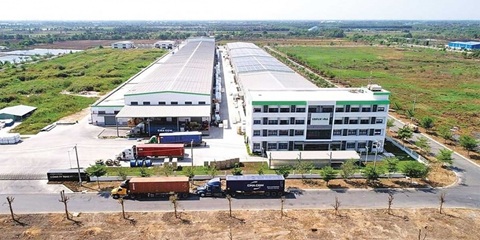
FOREIGN INVESTORS SEEKING A SYNCHRONISED MANUFACTURING ECOSYSTEM
Instead of focusing only on land costs and incentives as usual, foreign investors are seeking a synchronised manufacturing ecosystem, from stable power supply and logistics to shared infrastructure and the convenience of completing residence procedures for experts to serve their long-term investment in the country.
INFRASTRUCTURE / CONSTRUCTION / LOGISTIC / PORT
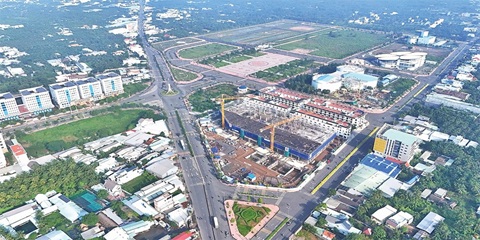
DONG THAP PROVINCE STEPS UP INDUSTRIAL EXPANSION AND INFRASTRUCTURE CONNECTIVITY
Accelerating public investment, strengthening inter-regional connectivity, and expanding industrial land are helping Dong Thap efficiently bolster competitiveness and drive economic growth. Following the 2025 merger of the former Dong Thap and Tien Giang provinces, the expanded Dong Thap province in the Mekong Delta faces mounting pressure to accelerate infrastructure development and strengthen connectivity among local economic zones, urban areas, industrial parks (IPs), and production centres.
PROPERTY / INDUSTRIAL ZONE
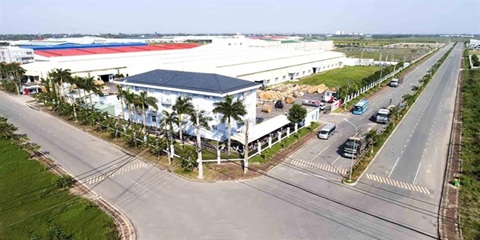
HCM CITY ATTRACTS US$5.7 BILLION INTO EXPORT PROCESSING AND INDUSTRIAL ZONES
HCM City attracted US$5.7 billion in domestic and foreign investment into its export processing and industrial zones during the first nine months of 2026. The figure exceeded the city's full-year target by 31 per cent, highlighting strong momentum in high-quality industrial investment under Resolution No.10-NQ/TW. Total investment reached 131 per cent of the 2026 target of $4.25 billion and represented a 29 per cent increase compared with the same period in 2025, according to the city's Export Processing and Industrial Zones Authority (HEPZA).
BANKING / FINANCE / INSURANCE / TAX
REMITTANCES TO HCM CITY RISE NEARLY 40% IN Q3
Remittances to HCM City reached more than US$2.83 billion in the third quarter of this year, up 39.5 per cent from the previous quarter and 3.6 per cent year-on-year. This was the first quarter showing positive annual growth this year, helping narrow the decline in remittance inflows over the first nine months. According to the State Bank of Vietnam (SBV)’s Regional Branch 2, remittances transferred to HCM City through credit institutions and economic organisations totalled $2.835 billion in Q3, an increase of more than $802 million from the previous quarter.
VIETNAM ECONOMY INVESTMENT
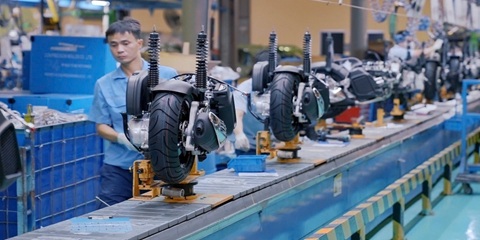
LOCALITIES REPORT BREAKTHROUGH RESULTS IN FDI IN FIRST NINE MONTHS
In Ho Chi Minh City, total registered capital reached $17.2 billion in the first nine months, up 4.2 times from the same period last year. The figure included more than $9.35 billion in newly registered capital and over $4.9 billion in additional capital for existing projects. Foreign investors also registered more than $2.9 billion through capital contributions and share purchases.
TECHNOLOGY
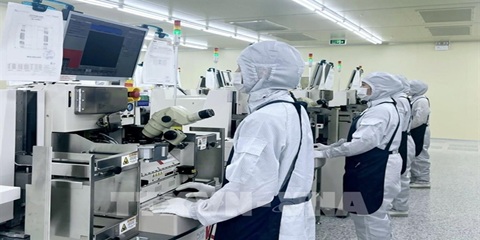
TECH SECTOR GROWTH OPENS UP OPPORTUNITIES FOR VIỆT NAM TO GO GLOBAL
The growth of the electronics, semiconductor and high-tech sectors worldwide is opening up a variety of opportunities for Vietnamese enterprises to integrate more deeply into the global supply chain. However, to become suppliers for these corporations, domestic enterprises must meet rigorous standards regarding quality, technology, productivity and order fulfilment capabilities.
Events Sponsors






















