Want to be in the loop?
subscribe to
our notification
Business News
MINISTRY OF FINANCE TO REDUCE, SIMPLIFY 176 ADMINISTRATIVE PROCEDURES
The Ministry of Finance recently issued Decision 2141/QD-BTC approving the plan for reduction and simplification of administrative procedures within its jurisdiction. Accordingly, the ministry will cut and streamline 176 administrative procedures in 13 fields, of which 148 administrative procedures will be reviewed for elimination and 28 administrative procedures will be simplified.
Specifically, the tax sector will have seven administrative procedures removed and two procedures streamlined. Administrative procedures to be abolished will relate to VAT declaration for telecommunications products; declaration on monthly and yearly tax revenue; VAT refund for some products; VAT declaration for hydropower generators.
The customs sector will have five administrative procedures abolished and nine administrative procedures rationalised. Formalities to be removed consist of procedure for consulting citizens and enterprises on customs procedures; procedure for re-grant of the list of duty-free imported goods; and declaration for notarised copy of customs procedures, general and private guarantee procedures. Five papers to be rationalised cover the recognition of business conditions for duty-free shops.
Other sectors such as state treasury, securities, insurance will also have many procedures simplified to facilitate the business community. With this round of reductions and simplifications, the total number of administrative procedures within the jurisdiction of the Ministry of Finance will be 839, including 291 in the tax sector, 178 in the customs sector, 148 in the securities sector, 12 in the state treasury and 210 in the financial sector.
Source: VCCI
Related News

TECHNOLOGY
TECH SECTOR GROWTH OPENS UP OPPORTUNITIES FOR VIỆT NAM TO GO GLOBAL
The growth of the electronics, semiconductor and high-tech sectors worldwide is opening up a variety of opportunities for Vietnamese enterprises to integrate more deeply into the global supply chain. However, to become suppliers for these corporations, domestic enterprises must meet rigorous standards regarding quality, technology, productivity and order fulfilment capabilities.
PROPERTY / INDUSTRIAL ZONE
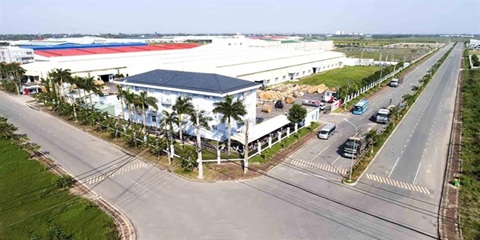
HCM CITY ATTRACTS US$5.7 BILLION INTO EXPORT PROCESSING AND INDUSTRIAL ZONES
HCM City attracted US$5.7 billion in domestic and foreign investment into its export processing and industrial zones during the first nine months of 2026. The figure exceeded the city's full-year target by 31 per cent, highlighting strong momentum in high-quality industrial investment under Resolution No.10-NQ/TW. Total investment reached 131 per cent of the 2026 target of $4.25 billion and represented a 29 per cent increase compared with the same period in 2025, according to the city's Export Processing and Industrial Zones Authority (HEPZA).

BANKING / FINANCE / INSURANCE / TAX
REMITTANCES TO HCM CITY RISE NEARLY 40% IN Q3
Remittances to HCM City reached more than US$2.83 billion in the third quarter of this year, up 39.5 per cent from the previous quarter and 3.6 per cent year-on-year. This was the first quarter showing positive annual growth this year, helping narrow the decline in remittance inflows over the first nine months. According to the State Bank of Vietnam (SBV)’s Regional Branch 2, remittances transferred to HCM City through credit institutions and economic organisations totalled $2.835 billion in Q3, an increase of more than $802 million from the previous quarter.
VIETNAM ECONOMY INVESTMENT
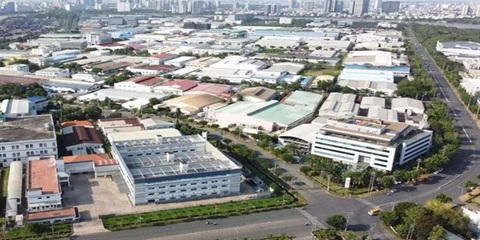
HCM CITY ADDRESSES MANUFACTURING, LAND HURDLES FOR Q4 GROWTH PUSH
HCM City is adjusting growth scenarios for lagging sectors and removing key bottlenecks in manufacturing and industrial land pricing to achieve a 13.23 per cent expansion in the fourth quarter of 2026. This sharp fourth-quarter acceleration is required to secure the city's full-year double-digit targets, following a 9.06 per cent GRDP growth recorded in the first nine months.
VIETNAM ECONOMY INVESTMENT
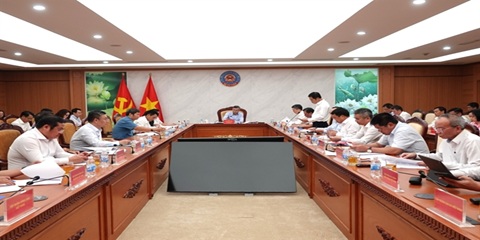
MOF'S FIRMS REPORT STRONG GROWTH IN NINE-MONTH
State-owned groups and corporations represented by the Ministry of Finance (MoF) recorded combined revenue of more than VNĐ2 quadrillion (US$79.5 billion) in the first nine months of 2026, up 28.7 per cent year-on-year, while consolidated profit before tax reached nearly VNĐ160 trillion, equivalent to 140.3 per cent of the full-year target.

VIETNAM ECONOMY INVESTMENT
SME REVENUE THRESHOLD PROPOSED TO BE RAISED TO $15.2 MILLION
The government has proposed raising the annual revenue threshold for classifying small- and medium-sized enterprises (SMEs) to VNĐ400 billion (US$15.2 million), from currently VNĐ300 billion, as part of a draft law on the development of SMEs. Minister of Finance Ngô Văn Tuấn presented the draft law, which is intended to replace the Law on Supporting SMEs 2017, to the National Assembly at a meeting late last week.
Events Sponsors






















