Want to be in the loop?
subscribe to
our notification
Business News
MODEL FOR GREEN AND DIGITAL ECONOMY COOPERATION
Amid the global shift toward sustainable development and digitalization, Vietnam and Singapore have established a green and digital economic partnership, serving as a strategic pillar of their comprehensive strategic partnership.

Starting with the memorandum of understanding (MoU) signed on February 9, 2023, the green and digital economic partnership not only injects a new momentum into economic growth but also contributes to shaping a sustainable development model within ASEAN. The two countries are leveraging their strengths in technology, finance, and resources to foster green growth and effective digital transformation.
Building a holistic digital economic foundation
Digital economic cooperation between Vietnam and Singapore is developing robustly, centered around three main pillars: Digital government, digital economy, and digital society. With its leading regional experience in digital transformation, Singapore has actively supported Vietnam in developing digital infrastructure in key areas such as population management, finance-banking, land, and e-commerce.
One of the highlights of this cooperation is the cross-border retail payment connection project using QR codes. This solution helps businesses in both countries conduct convenient and low-cost transactions while expanding the scale of e-commerce between the two markets. Vietnam is actively applying AI in e-commerce across Southeast Asia and leveraging technology platforms to accelerate its digital transformation. Large platforms such as Shopee and Lazada (headquartered in Singapore) also play an important role in helping Vietnam optimize supply chains and launch effective e-commerce services.
Besides, the two countries are strengthening the connection of national databases regarding goods, means of transport, and commercial activities, aiming for comprehensive digitalization of import and export procedures. Several pilot projects using AI and big data are also being implemented in Hanoi and Ho Chi Minh City, yielding positive results. For example, the smart traffic management system in Hanoi has helped reduce congestion time by 15% during peak hours while logistics optimization solutions in Ho Chi Minh City have increased freight efficiency by 20%.
In addition to technological infrastructure, digital human resource training is a priority in bilateral cooperation. In 2025, over 1,500 Vietnamese students and officials have participated in specialized training programs in Singapore, with a focus on such areas as information technology, fintech, and smart urban management. These programs not only enhance the capacity of the technical team but also create a solid foundation for a sustainable and deep cooperation relationship in high technology between the two countries.
Sustainable green economic development journey
On the path to net-zero emissions by 2050, Vietnam and Singapore are bolstering green economic cooperation at multiple levels. Singapore, with its Green Plan 2030, is leading the region in developing renewable energy and sustainable cities and reducing greenhouse gas emissions. Vietnam, with its great potential for wind and solar energy in Khanh Hoa and Lam Dong provinces, has become a strategic partner of Singapore in the transition to clean energy in the ASEAN region.
One of the typical cooperation projects is the plan to export offshore wind power from Vietnam to Singapore, within the framework of the ASEAN Power Grid Initiative. As of mid-2025, the project has reached a transmission capacity of 500 MW, helping reduce approximately 1.2 million tons of CO₂ emissions a year. Along with providing clean energy, the project has also opened up a carbon credit trading market through Singapore’s CIX Exchange, which is an important step in pricing and reducing emissions in the region.
Besides cooperation in the wind power sector, the two countries are jointly building a sustainable energy supply chain by developing liquefied natural gas (LNG) and hydrogen infrastructure. In industrial cooperation, Singaporean businesses have made positive contributions, typically Sembcorp Industries - one of the largest foreign investors in Vietnam. Sembcorp has invested in 20 Vietnam–Singapore Industrial Parks (VSIPs) across Vietnam.
The VSIP system continues to play a symbolic role in green economic cooperation between the two countries, provides modern infrastructure for businesses and applies sustainable development solutions like renewable energy use, water conservation, and emission reduction.
As of June 2025, the VSIP projects nationwide had attracted US$20.5 billion in investment capital and created jobs for over 320,000 workers. Notably, new-generation VSIPs in Ho Chi Minh City and Bac Ninh are being transformed into smart industrial parks, integrating solar energy systems and energy management technology, helping reduce carbon emissions by up to 30% in some pilot locations.
High-tech sectors are also becoming magnets for green capital from Singapore. In 2025, new projects from Singapore into Vietnam invested a total value of US$4.2 billion, mainly focusing on semiconductor chip manufacturing, renewable energy, and environmentally friendly data centers. Major corporations such as Keppel Corporation and Mapletree Investments are expanding their investments in sustainable industrial infrastructure, smart cities, and green capital markets.
Bilateral cooperation is also underpinned by free trade agreements such as the Comprehensive and Progressive Agreement for Trans-Pacific Partnership (CPTPP) and the Regional Comprehensive Economic Partnership (RCEP), which boost the export of agricultural, forestry, fisheries, and processed food products from Vietnam to Singapore, while facilitating the implementation of green logistics platforms and cross-border e-commerce.
Regarding cooperation in new areas such as green finance and innovation, Singapore is supporting Vietnam in building green data centers and tech startup platforms, through projects like the National Innovation Center (NIC), to utilize Vietnam's strengths in young human resources and a dynamic digital market.
The green and digital economic partnership between Vietnam and Singapore is gradually shaping an effective, sustainable, and adaptable regional cooperation model in line with global trends. In the coming time, the two countries will continue to expand cooperation in high technology, clean energy, and green finance, thus helping bolster growth and elevate their positions in ASEAN.
Source: VCCI
Related News

MEMBER CORNER / PROMOTIONS
BẰNG KIỀU LIVESHOW - A SYMPHONY OF LOVE UNDER THE GOLDEN GLOW
A masterclass in live music that takes the audience on a soulful journey through immortal love songs, guided by the peerless artistry and emotive storytelling of renowned singer Bằng Kiều. The highlight of the night is his seamless musical chemistry with special guest Triệu Hồng Ngọc, promising passionate and deeply resonant duets inside the magnificent Grand Ballroom.

INFRASTRUCTURE / CONSTRUCTION / LOGISTIC / PORT
ĐÀ NẴNG GREEN-LIGHTS US$105 MILLION THAI DEVELOPMENT DEAL
The central city has approved an investment proposal by Thailand’s WHA Group to develop infrastructure for the 400ha WHA Đà Nẵng Industrial Park project on two communes of Thăng Bình and Đồng Dương, with an investment of more than VNĐ2.7 trillion (US$105 million). The city said it approved WHA Industrial Development International's status as an investor in the project, which is expected to take place between 2027 and 2034.

VIETNAM ECONOMY INVESTMENT
MOBILE PHONE EXPORTS RISE 20% TO $51.8 BILLION IN FIRST NINE MONTHS
Exports of mobile phones and components rose 20 per cent year-on-year to nearly US$51.8 billion in the first nine months of 2026, with China, the US and Republic of Korea accounting for more than half of the total. Shipments to the three markets reached a combined $26.18 billion, or 50.6 per cent of total exports of the product group during the period, according to data from the Vietnam Department of Customs under the Ministry of Finance.

INFRASTRUCTURE / CONSTRUCTION / LOGISTIC / PORT
VIỆT NAM-CAMBODIA TRADE GATHERS PACE TOWARDS $20 BILLION TARGET
Trade between Việt Nam and Cambodia continues to grow, remaining a bright spot and a key pillar of bilateral cooperation as the two countries aim to raise two-way trade to US$20 billion in the coming years. After setting a record of more than $11.3 billion last year, bilateral trade reached about $8.7 billion in the first eight months of this year, up 8.3 per cent year on year.

VIETNAM ECONOMY INVESTMENT
FRUIT AND VEGETABLE EXPORTS POISED TO HIT $10 BILLION IN 2026
Fruit and vegetable exports are on track to reach nearly US$10 billion in 2026, after rising 19.9 per cent year on year to nearly US$7.4 billion in the first nine months, driven by strong seasonal demand and abundant tropical fruit supplies. The Ministry of Agriculture and Environment said the growth reflected stronger international demand for fresh produce and processed agricultural products.
GARMENT / TEXTILE
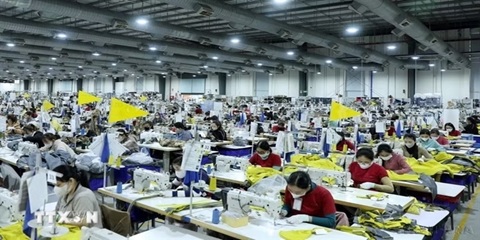
TEXTILE EXPORTS FACE DUAL CHALLENGES OF SUSTAINING ORDERS AND BOOSTING EFFICIENCY AMID GROWING COMPETITION
Data shows that the textile and garment sector maintained its growth momentum in the first nine months of this year. The industry's total export turnover reached an estimated US$35.721 billion in the first nine months of this year, up 3.3 per cent year-on-year. Despite posting encouraging export figures, Vietnamese textile and garment enterprises continue to navigate unpredictable market variables.
Events Sponsors






















