Want to be in the loop?
subscribe to
our notification
Business News
MOF OUTLINES STRATEGY TO ATTRACT HIGH-QUALITY FOREIGN RESOURCES
Speaking at the 33rd Diplomatic Conference on August 4, Deputy Minister of Finance Nguyen Thi Bich Ngoc called for a fundamental shift in Vietnam's approach to attracting international resources, arguing that economic diplomacy should focus on mobilising capital, technology, and strategic partnerships.
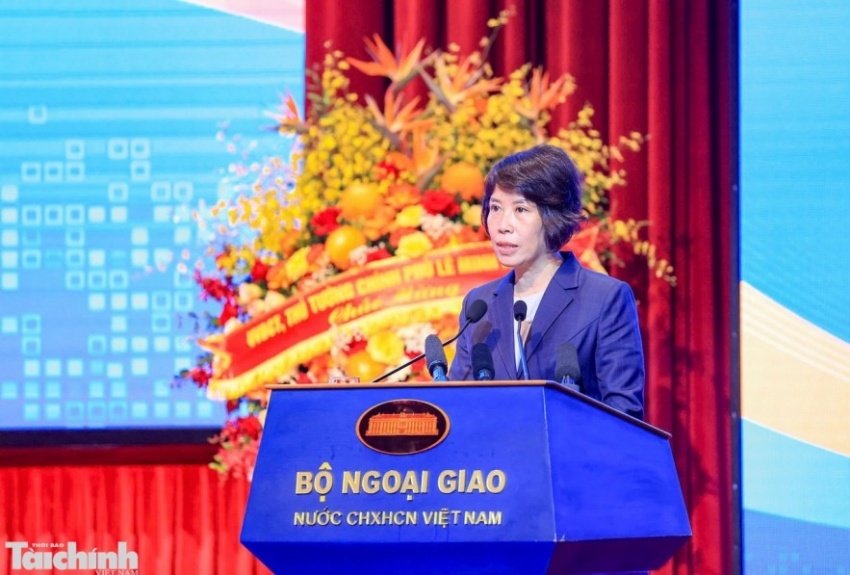
Deputy Minister of Finance Nguyen Thi Bich Ngoc. Photo: Duc Thanh
Addressing a plenary session titled on diplomacy, the deputy minister presented a keynote speech on priorities for mobilising external resources to support economic growth and the roles of the Ministry of Foreign Affairs (MoFA) and Vietnam's overseas representative missions.
Investors prioritise institutional quality
Deputy Minister Ngoc said the rapidly changing and increasingly complex global landscape has reshaped international capital flows, with investors placing greater emphasis on institutional quality, policy stability, and regulatory predictability, rather than relying solely on production costs or market size.
"International investors are now asking practical questions before committing capital: whether projects are ready for immediate investment, where financing will come from, how risks are allocated, whether mechanisms exist to hedge foreign exchange risks and facilitate exit, whether investor rights are adequately protected, and, importantly, whether authorities have the capacity to resolve implementation issues efficiently," she said.
In the view of the Ministry of Finance (MoF), Vietnam's challenge in the next development phase is not simply to attract more capital, but to answer three strategic questions: what types of external resources are needed to support the country's new growth model, which partners can enhance Vietnam's position in global value chains, and how external resources can be transformed into productivity, technological capability, competitiveness, and stronger domestic capacity.
She stated that Vietnam continues to demonstrate strong appeal to international investors. The country's stock market capitalisation rose to $414 billion, equivalent to approximately 82.3 per cent of 2025 GDP.
She also noted that FTSE Russell has announced a roadmap to upgrade Vietnam's stock market from frontier to secondary emerging market status, with the reclassification expected to take effect in September 2026. "The upgrade would provide an important foundation for expanding access to international capital through both direct and indirect investment channels," the deputy minister said.
However, she stressed that higher capital inflows did not automatically translate into better quality, stronger economic spillovers, or greater efficiency. Linkages between domestic and foreign-invested enterprises remain limited, while technology transfer and research and development activities have yet to meet expectations. The participation of Vietnamese businesses in global supply chains also remains modest, with investors continuing to pay close attention to workforce quality, supporting industries, and policy consistency.
Five strategic shifts in foreign investment
Deputy Minister Ngoc said the Politburo's Resolution No.10-NQ/TW on developing FDI sets out a new strategic direction, requiring several major shifts in attracting resources.
The first is moving from attracting capital alone to mobilising a broader combination of resources. Investment projects should be assessed not only by the size of committed capital, but also by their technology, value added, job quality, research and development capability, budget contribution, and linkages with domestic enterprises.
Second, Vietnam should move away from broad-based investment promotion towards a more selective approach by prioritising leading corporations and investors capable of developing industrial ecosystems, creating new markets, bringing core technologies, introducing advanced governance standards, and integrating Vietnam into global networks.
Third, investment incentives should gradually shift towards performance-based support. Government support policies should be tied to measurable commitments on technology transfer, research and development, workforce training, business linkages, environmental protection, and tangible contributions to the economy.
Fourth, Vietnam should transition from attracting individual projects to developing complete investment ecosystems. Strategic projects can only realise their full potential when supported by supplier networks, research centres, educational institutions, logistics infrastructure, and strong domestic enterprises.
Fifth, investment promotion should evolve into results-based investment management, with performance measured by the number of projects implemented, shorter preparation timelines, effective resolution of investor concerns, reinvestment levels, and technology transfer outcomes.
Building an international resource map
Looking ahead, the deputy minister said coordination between the MoF, the MoFA, and Vietnam's overseas representative offices should evolve from isolated investment promotion activities towards a systematic, data-driven, and results-oriented approach.
She proposed five key areas of cooperation.
The first is jointly developing an "international resource map" to support Vietnam's development strategy. The database should be regularly updated by country, region, and sector, tracking global supply chain shifts, multinational corporations planning overseas expansion, investment funds, financial institutions, outbound investment policies of partner countries, cooperation opportunities, and emerging trade, investment, and geopolitical risks.
Second, the two ministries should establish a database of target investors, including detailed profiles covering corporate strategies, key decision-makers, risk concerns, and the conditions required for investment disbursement in Vietnam.
Third, they should establish joint task forces for major investment transactions, particularly sovereign wealth funds, strategic foreign-invested projects, infrastructure funds, bond programmes, and financial institutions planning to operate in Vietnam's future international financial centres.
Fourth, overseas missions should strengthen their market intelligence and early warning functions by providing timely information on developments related to carbon pricing, technological regulations, export controls, and difficulties faced by investors.
Fifth, the MoF proposed expanding cooperation in financial, tax, and customs diplomacy. MoFA and Vietnam's overseas representative offices were encouraged to strengthen engagement with international financial institutions, investment funds, tax authorities, customs agencies, and market regulators in host countries.
Deputy Minister Ngoc noted that the effectiveness of economic diplomacy in the new era should no longer be measured by the number of meetings held or agreements signed, but by the volume of foreign currency and long-term capital mobilised for the economy, the number of international financial institutions operating in Vietnam, and the number of Vietnamese enterprises participating in global value chains.
"Diplomacy should not only open doors; it must also open capital flows, creating pathways for investment, technology, and development opportunities for Vietnam. For its part, the MoF is committed to working closely, substantively, and responsibly with the MoFA, Vietnam's overseas representative offices, ministries, sectors, and localities to transform potential into projects, meetings into commitments, and commitments into investment flows for national development," she said.
Source: VIR
Related News
MEMBER CORNER / PROMOTIONS
KNIC ENGAGES WITH GOVERNMENT AND HIGH-TECH BUSINESS COMMUNITIES IN CHINA
From Beijing to Shandong, KN Holdings and KN Industrial City are continuing to expand their engagement with government authorities, trade promotion organizations, and high-tech business communities in China. In Beijing, the delegation met with the Center for International Economic and Technological Cooperation under the Ministry of Industry and Information Technology (MIIT), exchanging perspectives on industrial and technology cooperation between the two markets.
VIETNAM ECONOMY INVESTMENT
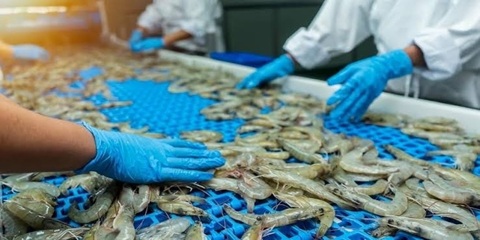
VIETNAM’S TRADE TOPS $825 BILLION BY MID-SEPTEMBER
Figures released on September 21 showed goods trade reached nearly $55 billion in the first 15 days of September alone, bringing cumulative turnover since the beginning of the year to more than $825 billion. The strong growth reflects robust trade flows, with demand for consumer goods and production inputs remaining high.

TECHNOLOGY
VIỆT NAM'S BUSINESSES MOVE TOWARDS AI AGENTS
Việt Nam’s AI landscape is entering a new phase as businesses move beyond generative AI (GenAI) tools designed to assist human users towards autonomous AI, agentic AI and AI agents that can take action with limited supervision, experts have said. The shift comes as Việt Nam seeks to accelerate science and technology, innovation and digital transformation under Politburo Resolution 57-NQ/TW, issued on December 22, 2024.
GARMENT / TEXTILE
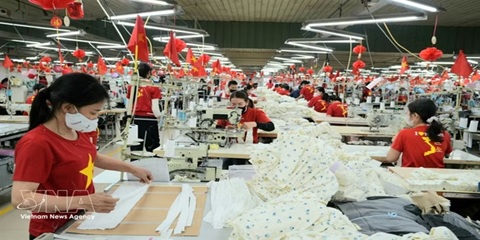
VIỆT NAM TARGETS $48 BILLION IN TEXTILE-GARMENT EXPORTS
Việt Nam’s textile and garment industry is facing both opportunities and challenges amid complex and unpredictable developments in the global market, prompting businesses to improve growth quality, optimise production costs and enhance adaptability in pursuit of an export turnover of about $48 billion this year. The target is considered an important milestone that requires concerted efforts from management agencies and the business community.
INFRASTRUCTURE / CONSTRUCTION / LOGISTIC / PORT
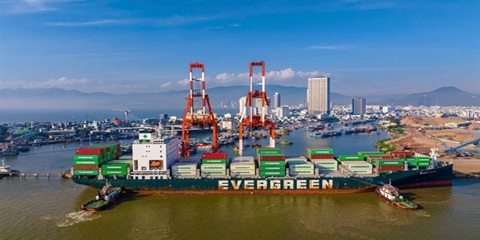
CUTTING LOGISTICS COSTS KEY TO BOOSTING EXPORTS
Reducing costs has become an increasingly urgent priority for import-export activities, particularly logistics costs, a conference in Hà Nội was told on Tuesday. According to Deputy General Director of the Ministry of Industry and Trade's Agency for Foreign Trade, Trần Thanh Hải, import-export activities has remained a bright spot for the economy in recent years, playing an important role and helping drive macroeconomic growth.
LEGAL UPDATE / POLICY
FLEXIBLE FISCAL POLICY HELPS DRIVE ECONOMIC GROWTH
Việt Nam’s fiscal policy has been implemented in a targeted expansionary manner since early 2026, helping maintain macroeconomic stability and supporting the country’s goal of achieving double-digit economic growth. According to the Ministry of Finance, State budget revenue in the first eight months of 2026 was estimated at VNĐ2.02 quadrillion (US$77.7 billion), equivalent to 80 per cent of the annual estimate and up 16 per cent year-on-year.
Events Sponsors






















