Want to be in the loop?
subscribe to
our notification
Business News
MORE GOODS PASSING THROUGH VN'S SEAPORTS COMPARED TO LAST YEAR
Goods have been moving through Việt Nam's numerous seaports without hiccups despite the COVID-19 pandemic, said the Việt Nam Maritime Administration (VMA).
During the first seven months of this year, some 425 million tonnes of goods have been moved through seaports across the country, a six per cent increase from the same period last year. Of which, exports accounted for 106 million tonnes, a nine per cent increase, imports 133 million tonnes, a two per cent increase and domestic trade 184 million tonnes, a seven per cent increase from the same period last year.
Notably, there has been a jump in containers. The country recorded 14.7 million twenty-foot equivalent units (TEUs), a 21 per cent increase from the same period last year.
The smooth sailing, however, very much depends on how well the country can contain the virus, said Hoàng Hồng Giang, deputy head of the VMA. He said social distancing measures in effect in major towns in the Mekong Delta during the last two months will have an immediate effect on import/export and domestic trade activities. The administration said it's expecting drops in volume of goods passing through seaports for July and August this year.
Regarding skyrocketing costs for ocean transport in recent months, Giang said the Vietnamese fleet are losing on their home turf. As of now, the country's fleet did not have the capacity to operate outside of Asia and ASEAN.
According to the VMA, the country has just 38 container ships, which account for just a five per cent market share, meaning 95 per cent of the country's import/export and domestic trade will have to rely on some 40 foreign fleets. A lack of alternatives and competition leaves Vietnamese importers/exporters with little bargaining power when it comes to price negotiations with shipping firms.
He said the country's most urgent task is to invest in building a stronger fleet and container manufacturing, especially as the country's exports are forecast to rise in the coming years.
There is a large gap between the domestic fleet and international competitors in both operational and sheer shipping capacity. The largest container ships operated by domestic firms have a capacity of 1,800 TEUs. Meanwhile, some competitors have been operating ships with 20,000 TEUs capacity.
In order to address this issue, the administration has made a number of proposals to the Government which included giving the green light to ship owners to purchase new and bigger ships as early as they see fit. This is part of a national strategy to strengthen the Vietnamese fleet to meet the demand for import/export in the near future.
Source: VNS
Related News

CHARITY / EXHIBITION / OTHER EVENTS
INVESTMENT OPPORTUNITIES IN CA MAU PROVINCE: 96 PROJECTS AND 20 STRATEGIC PROJECTS
We are pleased to share with you information on investment projects currently seeking investors in Ca Mau Province. Should your esteemed company or association be interested, we kindly invite you to review the project information and complete the registration form via the links provided. The Ho Chi Minh City Investment and Trade Promotion Centre (ITPC) will consolidate the expressions of interest and facilitate connections with the leadership of Ca Mau Province at a meeting tentatively scheduled for 13 November 2026 in Ho Chi Minh City.

MEMBER CORNER / PROMOTIONS
BẰNG KIỀU LIVESHOW - A SYMPHONY OF LOVE UNDER THE GOLDEN GLOW
A masterclass in live music that takes the audience on a soulful journey through immortal love songs, guided by the peerless artistry and emotive storytelling of renowned singer Bằng Kiều. The highlight of the night is his seamless musical chemistry with special guest Triệu Hồng Ngọc, promising passionate and deeply resonant duets inside the magnificent Grand Ballroom.
INFRASTRUCTURE / CONSTRUCTION / LOGISTIC / PORT
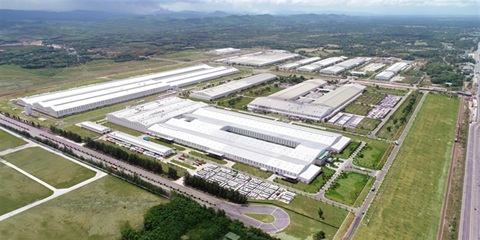
ĐÀ NẴNG GREEN-LIGHTS US$105 MILLION THAI DEVELOPMENT DEAL
The central city has approved an investment proposal by Thailand’s WHA Group to develop infrastructure for the 400ha WHA Đà Nẵng Industrial Park project on two communes of Thăng Bình and Đồng Dương, with an investment of more than VNĐ2.7 trillion (US$105 million). The city said it approved WHA Industrial Development International's status as an investor in the project, which is expected to take place between 2027 and 2034.
VIETNAM ECONOMY INVESTMENT
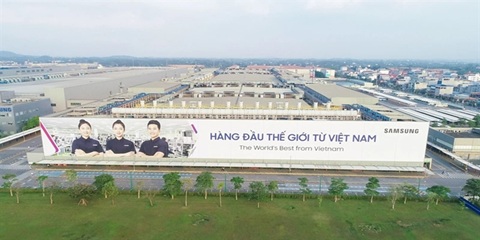
MOBILE PHONE EXPORTS RISE 20% TO $51.8 BILLION IN FIRST NINE MONTHS
Exports of mobile phones and components rose 20 per cent year-on-year to nearly US$51.8 billion in the first nine months of 2026, with China, the US and Republic of Korea accounting for more than half of the total. Shipments to the three markets reached a combined $26.18 billion, or 50.6 per cent of total exports of the product group during the period, according to data from the Vietnam Department of Customs under the Ministry of Finance.
INFRASTRUCTURE / CONSTRUCTION / LOGISTIC / PORT
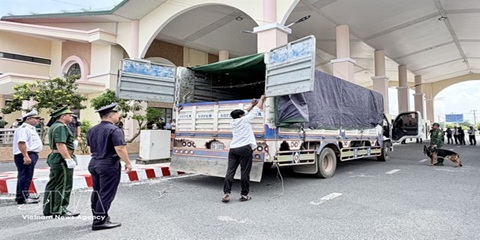
VIỆT NAM-CAMBODIA TRADE GATHERS PACE TOWARDS $20 BILLION TARGET
Trade between Việt Nam and Cambodia continues to grow, remaining a bright spot and a key pillar of bilateral cooperation as the two countries aim to raise two-way trade to US$20 billion in the coming years. After setting a record of more than $11.3 billion last year, bilateral trade reached about $8.7 billion in the first eight months of this year, up 8.3 per cent year on year.
VIETNAM ECONOMY INVESTMENT
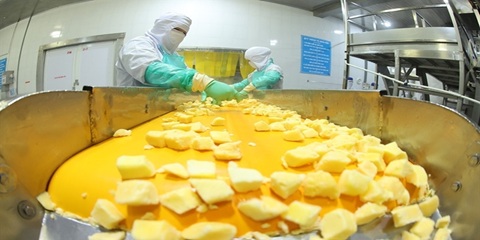
FRUIT AND VEGETABLE EXPORTS POISED TO HIT $10 BILLION IN 2026
Fruit and vegetable exports are on track to reach nearly US$10 billion in 2026, after rising 19.9 per cent year on year to nearly US$7.4 billion in the first nine months, driven by strong seasonal demand and abundant tropical fruit supplies. The Ministry of Agriculture and Environment said the growth reflected stronger international demand for fresh produce and processed agricultural products.
Events Sponsors






















