Want to be in the loop?
subscribe to
our notification
Business News
MORE OPPORTUNITIES FOR SUPPORTING INDUSTRY BUSINESSES
Vietnam's supporting industry has made positive strides, driven by a growing number of businesses joining global supply chains. However, the technological capacity of most Vietnamese supporting industry companies still falls short of requirements, limiting their ability to integrate into the global value chains of leading technology firms.
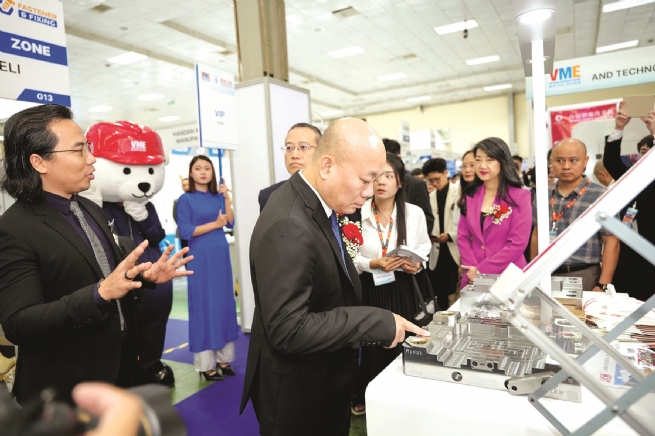
Mr. Nguyen Van, Vice Chairman of the Hanoi Supporting Industry Business Association (HANSIBA), said Vietnam currently has over 5,000 supporting industry businesses which are increasingly adopting modern management standards and tools in their manufacturing and processing. Major firms engaged in fundamental industries, materials, and mechanical manufacturing have emerged and developed, such as Viettel Group, Vingroup, Thanh Cong Group and Hoa Phat Group. Some products like electrical cables, gearboxes, and plastic components are now being exported to major global markets like South Korea, Japan, China, and the United States.
In the past time, the Party and the Government have introduced many policies to boost supporting industry development, featured by Decree 205/2025/ND-CP on amendments and supplements to some articles of Decree 111/2015/ND-CP dated November 3, 2015 on the development of supporting industries. The new ruling includes several important provisions: Make this Organizations and individuals engaged in research, application, technology transfer, and innovation to produce supporting industry products on the prioritized list will receive incentives and support from the National Technology Innovation Fund, the National Foundation for Science and Technology Development, the National High-Tech Development Program, as well as additional incentives and support for technology transfer in accordance with current regulations.
The decree also adds support for technology application and transfer activities for the manufacturing of prioritized supporting industry products, which will be supported by the Supporting Industry Development Program. Specifically, the program provides up to 50% funding for machinery and equipment, sample products, designs, software, inventions, and other products for projects involving cooperative technology research, application, and transfer between businesses and scientific and technology organizations. It also offers up to 70% funding for activities and tasks aimed at improving the quality and quantity of experts and consulting units specializing in technology application and transfer.
Other policies include support for environmental protection, legal assistance, testing, inspection, quality certification, and human resource training as well as tax incentives, and exemptions or reductions of land and water surface rental fees. The decree, effective from September 1, 2025, is considered a significant step forward, facilitating businesses to enhance their competitiveness and integrate more deeply into global supply chains.
Nonetheless, in reality, only a small number of supporting industry businesses meet high requirements and supporting industries remain in a very low value-added segment of the supply chain, Mr. Nguyen Van noted. Supporting industry products are mainly concentrated in a few sectors, including textiles and garments, leather and footwear, wood processing, and mechanics, while high-tech, sophisticated, and complex supporting industry products remain largely dominated by FDI firms. According to statistics, about 100 businesses act as Tier-1 suppliers to multinational corporations while approximately 700 businesses are Tier-2 and Tier-3 suppliers. Furthermore, while research and development (R&D) at supporting industry businesses have received some attention, it has not been at an adequate level. Human resources for supporting industries remain insufficient.
In the context of global economic integration, supporting industries are playing an increasingly crucial role in determining production costs, enhancing the added value of final products, and improving their competitiveness.
He believed that, to develop supporting industries, the first important step is proposing the government to promptly draft and submit the Law on Supporting Industries to the National Assembly for approval. This will serve as a crucial foundation for more successful industrialization and modernization.
“Supporting industry companies also propose that the government establish a national interagency steering committee for industrial development, with a dedicated Deputy Prime Minister to ensure that business proposals and recommendations are addressed in a timely manner,” he shared.
At the same time, it is essential to develop a specific plan and roadmap for the growth of supporting industry businesses, which are expected to account for 5-10% of all Vietnamese businesses by 2025, with a vision to 2030. To achieve this, according to Mr. Nguyen Van, there is a need for urgent and specific solutions regarding capital (e.g. loan interest rates and terms, credit limits and collateral) and for planning and developing supporting industry zones linked to the supply chains of international corporations and domestic businesses with reasonable costs and policies. With respect to capital, he believed that credit institutions should facilitate access to good capital for supporting industry businesses with long loan terms, as many need to invest for 2-3 years, or even 5-10 years, before they become profitable.
Source: VCCI
Related News
MEMBER CORNER / PROMOTIONS
BẰNG KIỀU LIVESHOW - A SYMPHONY OF LOVE UNDER THE GOLDEN GLOW
A masterclass in live music that takes the audience on a soulful journey through immortal love songs, guided by the peerless artistry and emotive storytelling of renowned singer Bằng Kiều. The highlight of the night is his seamless musical chemistry with special guest Triệu Hồng Ngọc, promising passionate and deeply resonant duets inside the magnificent Grand Ballroom.

INFRASTRUCTURE / CONSTRUCTION / LOGISTIC / PORT
ĐÀ NẴNG GREEN-LIGHTS US$105 MILLION THAI DEVELOPMENT DEAL
The central city has approved an investment proposal by Thailand’s WHA Group to develop infrastructure for the 400ha WHA Đà Nẵng Industrial Park project on two communes of Thăng Bình and Đồng Dương, with an investment of more than VNĐ2.7 trillion (US$105 million). The city said it approved WHA Industrial Development International's status as an investor in the project, which is expected to take place between 2027 and 2034.

VIETNAM ECONOMY INVESTMENT
MOBILE PHONE EXPORTS RISE 20% TO $51.8 BILLION IN FIRST NINE MONTHS
Exports of mobile phones and components rose 20 per cent year-on-year to nearly US$51.8 billion in the first nine months of 2026, with China, the US and Republic of Korea accounting for more than half of the total. Shipments to the three markets reached a combined $26.18 billion, or 50.6 per cent of total exports of the product group during the period, according to data from the Vietnam Department of Customs under the Ministry of Finance.

INFRASTRUCTURE / CONSTRUCTION / LOGISTIC / PORT
VIỆT NAM-CAMBODIA TRADE GATHERS PACE TOWARDS $20 BILLION TARGET
Trade between Việt Nam and Cambodia continues to grow, remaining a bright spot and a key pillar of bilateral cooperation as the two countries aim to raise two-way trade to US$20 billion in the coming years. After setting a record of more than $11.3 billion last year, bilateral trade reached about $8.7 billion in the first eight months of this year, up 8.3 per cent year on year.

VIETNAM ECONOMY INVESTMENT
FRUIT AND VEGETABLE EXPORTS POISED TO HIT $10 BILLION IN 2026
Fruit and vegetable exports are on track to reach nearly US$10 billion in 2026, after rising 19.9 per cent year on year to nearly US$7.4 billion in the first nine months, driven by strong seasonal demand and abundant tropical fruit supplies. The Ministry of Agriculture and Environment said the growth reflected stronger international demand for fresh produce and processed agricultural products.
GARMENT / TEXTILE
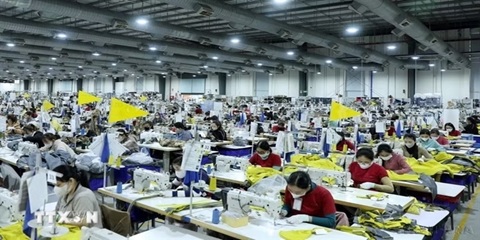
TEXTILE EXPORTS FACE DUAL CHALLENGES OF SUSTAINING ORDERS AND BOOSTING EFFICIENCY AMID GROWING COMPETITION
Data shows that the textile and garment sector maintained its growth momentum in the first nine months of this year. The industry's total export turnover reached an estimated US$35.721 billion in the first nine months of this year, up 3.3 per cent year-on-year. Despite posting encouraging export figures, Vietnamese textile and garment enterprises continue to navigate unpredictable market variables.
Events Sponsors






















