Want to be in the loop?
subscribe to
our notification
Business News
MULTINATIONALS KEEN TO THRASH OUT GLOBAL TAX ARRANGEMENTS
Multinational enterprises are willing to pay the global minimum tax in Vietnam, but the calculation and implementation of top-up fees may cause a headache.
At last week’s international workshop on implementing Pillar 2 of the global minimum tax (GMT) in Vietnam, Dong Thi Hong Anh, chief accountant of its Vietnam operations, said tech giant Samsung stands ready to pay more taxes in Vietnam in line with the GMT roadmap.
“Samsung has been aware of the GMT since its early days, and is eager to gain insights into the Vietnamese government’s support for businesses in line with its implementation,” she said at the event, hosted by the Vietnam Association of Foreign Invested Enterprises and the Washington-based International Tax and Investment Centre (ITIC).
Samsung Electronics Vietnam – the country’s largest foreign investor – posted revenues of about $75 billion in 2023, accounting for nearly 20 per cent of Vietnam’s export turnover, creating jobs for nearly 200,000 direct workers and millions of indirect workers. It plans to rapidly ramp up investment in IT and semiconductors, and hopes the government to ensure fair and equitable benefits for the company.
At a seminar organised by the National Assembly’s Committee for Finance and Budget, CEO of Samsung Electronics Vietnam said that the company paid 2023 corporate income tax at a 6.9 per cent rate. If the tax rate increases to 15 per cent, it will have to pay an additional $650 million.
The CEO has proposed the government refund it $100 million for technological innovation, $150 million for research and development, and $100 million for matching with Vietnamese businesses. This would be equivalent to half of the top-up tax.
Intel representative Do Thi Thu Huong expressed similar sentiments at last week’s workshop. “As Vietnam is drafting detailed legislation on implementing the GMT and providing support for businesses, Intel looks forward to cooperating with the government on this issue,” she said.
In another case, at the end of February, LG Chem is expected to be obliged to pay an additional $112 million to the South Korean government. The company holds more than 80 per cent shares of LG Energy Solution, which is expected to benefit from about $1.5 billion in tax incentives in the United States under the Inflation Reduction Act. A representative of this company said that LG Chem’s paying additional taxes or not depends on its decision to sell its shares in the subsidiary.
According to the GMT’s Pillar 2, a multinational corporation (MNC) whose revenue stated in the consolidated financial statements of the ultimate parent entity for at least two years in the four immediately preceding years to the taxable year is equivalent to €750 million (approximately $800 million) or more is subject to the GMT. All countries can apply the GMT to the ultimate parent entity of MNCs in their jurisdiction, even when the MNCs do not meet the revenue threshold.
The GMT is applied on a country-by-country basis. The computation of the effective tax rate, excess profits tax, and top-up tax will be based on all the constituent entities of the MNC in each country.
The General Department of Taxation raised an example that Samsung Group has seven constituent entities in Vietnam, then the effective tax rate, excess profits tax, and top-up tax of Samsung Group in Vietnam will be computed based on aggregate income or losses of the entities.
If Vietnam’s Group A has investments in Cambodia (with three constituent entities) and Laos (four constituent entities), the top-up tax on Group A will be computed separately in Cambodia based on three constituent entities in Cambodia and separately in Laos on the basis of four constituent entities in Laos.
Jonathan Pemberton, senior advisor with the ITIC, said that some countries could be tempted to fiddle and offer tax incentives or simplify the rules, but that it would not work. MNCs expect consistency in tax filings, so competent authorities should engage and support each other to help them.
Payment of the top-up tax is ensured by three interlocking rules, including the income inclusion rule, the qualified domestic minimum top-up tax, and the undertaxed profits rule.
“A common tax base is essential if the Global Anti-Base Erosion rules are to achieve their objective of minimum taxation of all profits globally, with no duplication and no gaps,” Pemberton said. “The starting point is the profit, or loss, of each constituent entity of the MNC as determined for the Consolidated Financial Statements of the ultimate parent entity prepared according to accepted accounting standards.”
Pillar 2 liabilities computations are based on a distinct set of rules, so filing and reporting will take place in parallel with corporate income tax obligations. However, compliance and risk assessment processes for large MNCs will need to be coordinated. Many of the potential risk areas are the same: both Pillar 2 and corporate income tax are predicated on compliance with the arm’s length principle, the expert said.
Countries that have outbound investments will mostly apply the GMT from 2024 to collect the difference between the effective tax rate and the GMT (15 per cent), including the economies that are large investors in Vietnam such as South Korea, Japan, Singapore, and Hong Kong.
Residence countries like Vietnam are working on policies to respond to the GMT, including applying the qualified domestic minimum top-up tax to prevent top-up taxes on the income of constituent entities that enjoy effective tax rates lower than the minimum level from going to countries where the parent company is headquartered. At the same time, they are also studying a number of financial incentives to retain foreign-invested enterprises subject to the GMT and draw in new foreign investors.
Source: VIR
Related News

CHARITY / EXHIBITION / OTHER EVENTS
INVESTMENT OPPORTUNITIES IN CA MAU PROVINCE: 96 PROJECTS AND 20 STRATEGIC PROJECTS
We are pleased to share with you information on investment projects currently seeking investors in Ca Mau Province. Should your esteemed company or association be interested, we kindly invite you to review the project information and complete the registration form via the links provided. The Ho Chi Minh City Investment and Trade Promotion Centre (ITPC) will consolidate the expressions of interest and facilitate connections with the leadership of Ca Mau Province at a meeting tentatively scheduled for 13 November 2026 in Ho Chi Minh City.

MEMBER CORNER / PROMOTIONS
BẰNG KIỀU LIVESHOW - A SYMPHONY OF LOVE UNDER THE GOLDEN GLOW
A masterclass in live music that takes the audience on a soulful journey through immortal love songs, guided by the peerless artistry and emotive storytelling of renowned singer Bằng Kiều. The highlight of the night is his seamless musical chemistry with special guest Triệu Hồng Ngọc, promising passionate and deeply resonant duets inside the magnificent Grand Ballroom.
INFRASTRUCTURE / CONSTRUCTION / LOGISTIC / PORT
ĐÀ NẴNG GREEN-LIGHTS US$105 MILLION THAI DEVELOPMENT DEAL
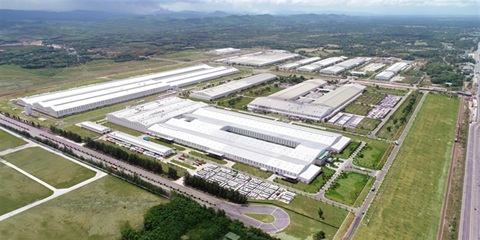
The central city has approved an investment proposal by Thailand’s WHA Group to develop infrastructure for the 400ha WHA Đà Nẵng Industrial Park project on two communes of Thăng Bình and Đồng Dương, with an investment of more than VNĐ2.7 trillion (US$105 million). The city said it approved WHA Industrial Development International's status as an investor in the project, which is expected to take place between 2027 and 2034.
VIETNAM ECONOMY INVESTMENT
MOBILE PHONE EXPORTS RISE 20% TO $51.8 BILLION IN FIRST NINE MONTHS
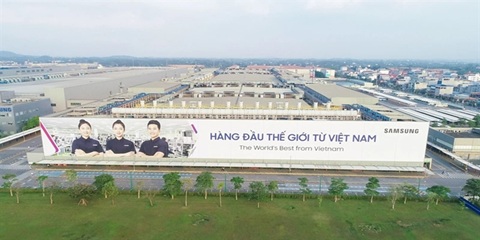
Exports of mobile phones and components rose 20 per cent year-on-year to nearly US$51.8 billion in the first nine months of 2026, with China, the US and Republic of Korea accounting for more than half of the total. Shipments to the three markets reached a combined $26.18 billion, or 50.6 per cent of total exports of the product group during the period, according to data from the Vietnam Department of Customs under the Ministry of Finance.

INFRASTRUCTURE / CONSTRUCTION / LOGISTIC / PORT
VIỆT NAM-CAMBODIA TRADE GATHERS PACE TOWARDS $20 BILLION TARGET
Trade between Việt Nam and Cambodia continues to grow, remaining a bright spot and a key pillar of bilateral cooperation as the two countries aim to raise two-way trade to US$20 billion in the coming years. After setting a record of more than $11.3 billion last year, bilateral trade reached about $8.7 billion in the first eight months of this year, up 8.3 per cent year on year.
VIETNAM ECONOMY INVESTMENT
FRUIT AND VEGETABLE EXPORTS POISED TO HIT $10 BILLION IN 2026
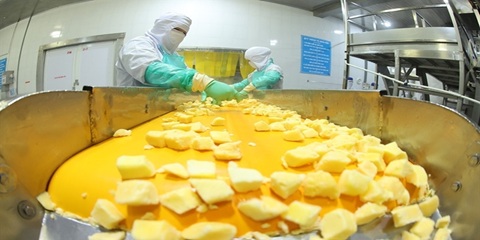
Fruit and vegetable exports are on track to reach nearly US$10 billion in 2026, after rising 19.9 per cent year on year to nearly US$7.4 billion in the first nine months, driven by strong seasonal demand and abundant tropical fruit supplies. The Ministry of Agriculture and Environment said the growth reflected stronger international demand for fresh produce and processed agricultural products.
Events Sponsors






















