Want to be in the loop?
subscribe to
our notification
Business News
NEW CROSS-HOLDING RULE TO HIT BANKS
A new law is set to ban bank owners in Vietnam from taking up senior positions at non-financial firms, a move aimed at overhauling the banking sector, which has been mired in cross-holding controversy.
Last week, the National Assembly passed the amended Law on Credit Institutions, which will take effect on January 15, 2018. Under it, people holding senior positions at credit institutions will be prohibited from concurrently running a non-banking firm. Specifically, board members, CEOs, and deputy CEOs of a bank cannot hold top positions in any other businesses.
Analysts expect the new rule to have profound implications for Vietnam’s financial sector, as several bank owners in the country are also running side businesses, most of them are major diversified corporations. For example, Do Quang Hien is the chairman of both Saigon-Hanoi Bank and T&T Group, Vu Van Tien owns both ABBank and Geleximco, Nguyen Thi Nga holds the top position at SeABank and BRG Group, and Do Minh Phu runs both TPBank and Doji.
The list goes on. Techcombank’s chairman Ho Hung Anh is concurrently the deputy chairman at Masan Group. His counterpart at VIB, Dang Khac Vy, also owns Mareven Food Holdings. Vo Quoc Thang, chairman at Kien Long Bank, is also both chairman and CEO of brick maker Dong Tam Group.
Other examples include Vietjet Air’s chairwoman Nguyen Thi Phuong Thao and Vinamilk’s chairwoman Nguyen Thi Bang Tam, both of whom hold senior positions at HDBank. Most recently, Duong Cong Minh, chairman of Him Lam Group, was appointed Sacombank’s chairman at the lender’s general meeting.
To comply with the new law, these businesspeople must give up their involvement at either the bank or the side business. This will not be an easy decision, but it is necessary for the banking sector, said Nguyen Khac Quoc Bao, head of the Finance Department at Ho Chi Minh City’s University of Economics. The professor said that the amended bill will improve the overall transparency of Vietnam’s finance industry.
“It is also a matter of ethics. A businessman running both a bank and a side business faces a lot of moral dilemmas, especially when it comes to transparency in lending and capital raising activities. The new bill will make it harder for them to misuse the bank’s funds for their private gain,” Bao said.
The most prominent example of such misuse is banking tycoon Tram Be, who owned Binh Chanh Construction Investment and several banks like Sacombank, ACB, Southern Bank, and Eximbank. Tram Be was arrested this year for “serious violations of banking rules” and Sacombank divested its entire stake at Binh Chanh Construction afterwards.
Experts believe that to deal with the new rules, some of the affected owners may ask a relative or business partner to hold the bank’s shares on their behalf. In another high-profile case of embezzlement and fraud, Pham Cong Danh used this tactic when working at Construction Bank. Regulators will need to address this problem when implementing the revised law next year, said analysts.
The new Law on Credit Institutions also forbids senior executives of any bank to sit on the board of another financial firm, unless it is the bank’s subsidiary or the assignment has been ordered by the State Bank of Vietnam.
The landmark Circular 36/2014/TT-NHNN stated that a commercial bank in Vietnam can only hold stake in two other financial institutions, and can only own less than 5 per cent of each.
Source: VIR
Related News
VIETNAM ECONOMY INVESTMENT
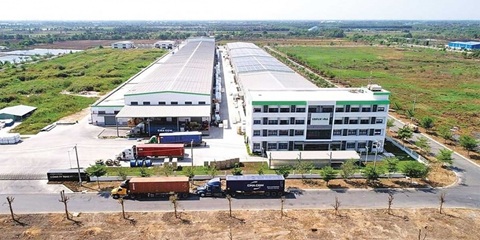
FOREIGN INVESTORS SEEKING A SYNCHRONISED MANUFACTURING ECOSYSTEM
Instead of focusing only on land costs and incentives as usual, foreign investors are seeking a synchronised manufacturing ecosystem, from stable power supply and logistics to shared infrastructure and the convenience of completing residence procedures for experts to serve their long-term investment in the country.
INFRASTRUCTURE / CONSTRUCTION / LOGISTIC / PORT
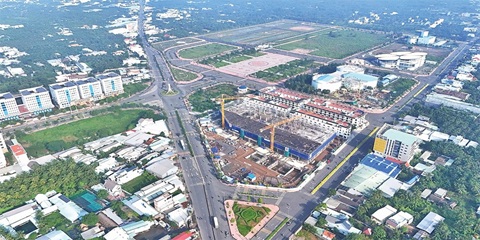
DONG THAP PROVINCE STEPS UP INDUSTRIAL EXPANSION AND INFRASTRUCTURE CONNECTIVITY
Accelerating public investment, strengthening inter-regional connectivity, and expanding industrial land are helping Dong Thap efficiently bolster competitiveness and drive economic growth. Following the 2025 merger of the former Dong Thap and Tien Giang provinces, the expanded Dong Thap province in the Mekong Delta faces mounting pressure to accelerate infrastructure development and strengthen connectivity among local economic zones, urban areas, industrial parks (IPs), and production centres.
PROPERTY / INDUSTRIAL ZONE
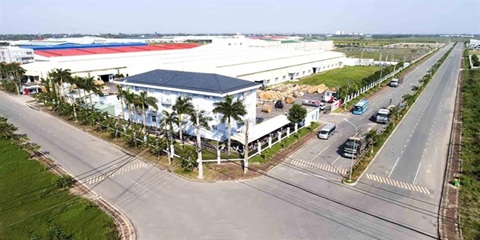
HCM CITY ATTRACTS US$5.7 BILLION INTO EXPORT PROCESSING AND INDUSTRIAL ZONES
HCM City attracted US$5.7 billion in domestic and foreign investment into its export processing and industrial zones during the first nine months of 2026. The figure exceeded the city's full-year target by 31 per cent, highlighting strong momentum in high-quality industrial investment under Resolution No.10-NQ/TW. Total investment reached 131 per cent of the 2026 target of $4.25 billion and represented a 29 per cent increase compared with the same period in 2025, according to the city's Export Processing and Industrial Zones Authority (HEPZA).

BANKING / FINANCE / INSURANCE / TAX
REMITTANCES TO HCM CITY RISE NEARLY 40% IN Q3
Remittances to HCM City reached more than US$2.83 billion in the third quarter of this year, up 39.5 per cent from the previous quarter and 3.6 per cent year-on-year. This was the first quarter showing positive annual growth this year, helping narrow the decline in remittance inflows over the first nine months. According to the State Bank of Vietnam (SBV)’s Regional Branch 2, remittances transferred to HCM City through credit institutions and economic organisations totalled $2.835 billion in Q3, an increase of more than $802 million from the previous quarter.

VIETNAM ECONOMY INVESTMENT
LOCALITIES REPORT BREAKTHROUGH RESULTS IN FDI IN FIRST NINE MONTHS
In Ho Chi Minh City, total registered capital reached $17.2 billion in the first nine months, up 4.2 times from the same period last year. The figure included more than $9.35 billion in newly registered capital and over $4.9 billion in additional capital for existing projects. Foreign investors also registered more than $2.9 billion through capital contributions and share purchases.

TECHNOLOGY
TECH SECTOR GROWTH OPENS UP OPPORTUNITIES FOR VIỆT NAM TO GO GLOBAL
The growth of the electronics, semiconductor and high-tech sectors worldwide is opening up a variety of opportunities for Vietnamese enterprises to integrate more deeply into the global supply chain. However, to become suppliers for these corporations, domestic enterprises must meet rigorous standards regarding quality, technology, productivity and order fulfilment capabilities.
Events Sponsors






















