Want to be in the loop?
subscribe to
our notification
Business News
NEW LAWS AIM TO RESOLVE PROPERTY MARKET'S ISSUES
Three major new laws related to property ownership, recently approved by the National Assembly, are expected to bring about changes to the market, said business insiders and experts.
Insiders have praised the new laws' effects, which include the 2024 Land Law, the 2023 Real Estate Business Law and the 2023 Housing Law, in directing the market's structure and its business scale as new regulations aimed at creating a more favourable environment for property developers and their projects alike.
For instance, the new Land Law demands land funds for commercial housing projects acquired through auctions or biddings are only made available for large projects with adequate and synchronised technical and social infrastructure.
The new laws also allow the State to recover lands and put them up for bidding, which typically favours large developers with proven capabilities including financial, technical and experience qualifications. It will likely generate greater benefits to the public and local communities.
Industry experts said the new laws are also likely to prompt smaller players to merge or adapt to the industry's higher standards and enhance competitive ability, which, in turn, will improve product quality and service.
Older projects may need to adjust their direction, preferably towards providing social housing units or complying with the new regulations.
Some projects where investors have already accumulated land may need to shift their business direction, possibly transitioning to social housing or adjusting to comply with the new regulations.
Nguyễn Văn Đính, Vice President of the Vietnam Real Estate Association, said that the real estate market has grown rapidly in the last two decades. However, after a period of strong growth, signs of difficulty have emerged since 2018-2019 with one of the primary causes said to include institutional and legal obstacles. Đính said there were more than 1,200 projects across the country, valued at over US$30 billion, awaiting review and inspection.
He said the new laws aimed to unify institutional reforms related to land use, avoiding overlaps and conflicts between different laws, which will likely improve land utilisation and enhance the effectiveness of investment activities.
However, Đính said difficulties are part of the game, and more importantly they act as filters to eliminate businesses with inadequate capacity.
"Once the new laws fully take effect, the day of speculators and poor performers in the market will be numbered, leaving consumers with a handful of capable and reputable developers," he said.
This, according to him, is necessary as starting and implementing property projects will become more difficult and require large capital commitments compared to before.
Nguyễn Hoàng Nam, CEO of G-Home - a social housing developer based in the capital city of Hà Nội - said the 2023 Housing Law has removed several issues plaguing developers for years.
For example, the new law has allowed social housing developers to adjust prices for rental units based on the market. Previously, rental units located within social housing projects were severely handicapped because their prices were set higher than private rental units. To make matters worse, most potential clients were often scared off by the complex and lengthy legal hoops involved.
More importantly, Nam said was the Government's determination to speed up administrative reforms to shorten the time required to inspect and approve projects, which will likely result in significant savings in capital costs for developers.
He said the income requirements to purchase social housing units have finally started making sense. Under the new laws, unmarried individuals with an income lower than VNĐ15 million (US600) or a married couple with a total income not exceeding VNĐ30 million are qualified.
It had created a situation in which it was nearly impossible for buyers qualified for social housing to afford it because they didn't have the income while those with sufficient income were not qualified to make purchases.
"All these factors will give investors greater confidence in developing social housing. Along with many new circulars to guide the implementation of the new laws, I'm looking forward to seeing additional issues being resolved," Nam said.
Meanwhile, there have been calls from economists and policymakers for measures to keep property prices under control.
They said while the new laws were designed to limit speculation and stabilise the market in the long run, they may introduce pressure to increase prices in the short run.
A streamlined and transparent valuation method is a must to produce an accurate value of the lands. As stipulated in the 2024 Land Law, the old valuation has been shelved and replaced by prices issued annually by local authorities, a major step in keeping it close to market prices.
They said while large developers may find land compensation easier compared to previously, development costs will also increase, which will force developers to raise prices.
In the meantime, prices will likely remain high with possible modest gains in the short to medium run with analysts saying prices can rise as high as 20 per cent annually this year before stabilising.
Source: VNS
Related News

INFRASTRUCTURE / CONSTRUCTION / LOGISTIC / PORT
VIỆT NAM-CAMBODIA TRADE GATHERS PACE TOWARDS $20 BILLION TARGET
Trade between Việt Nam and Cambodia continues to grow, remaining a bright spot and a key pillar of bilateral cooperation as the two countries aim to raise two-way trade to US$20 billion in the coming years. After setting a record of more than $11.3 billion last year, bilateral trade reached about $8.7 billion in the first eight months of this year, up 8.3 per cent year on year.
TECHNOLOGY
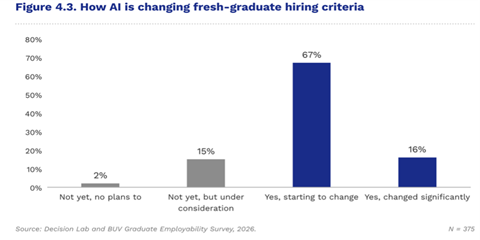
AI BEGINNING TO RESHAPE RECRUITMENT CRITERIA
Digital literacy is the only capability area in which fresh graduates meet employers’ expectations, according to a new report. Yet, it is also the standard rising fastest, as businesses increasingly expect new hires to use AI effectively in the workplace. Some 83 per cent of employers say AI has changed, or is beginning to change, their hiring criteria, while 94 per cent report higher expectations for digital and AI capabilities than they had two to three years ago.

INFRASTRUCTURE / CONSTRUCTION / LOGISTIC / PORT
ĐÀ NẴNG GREEN-LIGHTS US$105 MILLION THAI DEVELOPMENT DEAL
The central city has approved an investment proposal by Thailand’s WHA Group to develop infrastructure for the 400ha WHA Đà Nẵng Industrial Park project on two communes of Thăng Bình and Đồng Dương, with an investment of more than VNĐ2.7 trillion (US$105 million). The city said it approved WHA Industrial Development International's status as an investor in the project, which is expected to take place between 2027 and 2034.

VIETNAM ECONOMY INVESTMENT
MOBILE PHONE EXPORTS RISE 20% TO $51.8 BILLION IN FIRST NINE MONTHS
Exports of mobile phones and components rose 20 per cent year-on-year to nearly US$51.8 billion in the first nine months of 2026, with China, the US and Republic of Korea accounting for more than half of the total. Shipments to the three markets reached a combined $26.18 billion, or 50.6 per cent of total exports of the product group during the period, according to data from the Vietnam Department of Customs under the Ministry of Finance.

VIETNAM ECONOMY INVESTMENT
FRUIT AND VEGETABLE EXPORTS POISED TO HIT $10 BILLION IN 2026
Fruit and vegetable exports are on track to reach nearly US$10 billion in 2026, after rising 19.9 per cent year on year to nearly US$7.4 billion in the first nine months, driven by strong seasonal demand and abundant tropical fruit supplies. The Ministry of Agriculture and Environment said the growth reflected stronger international demand for fresh produce and processed agricultural products.
GARMENT / TEXTILE
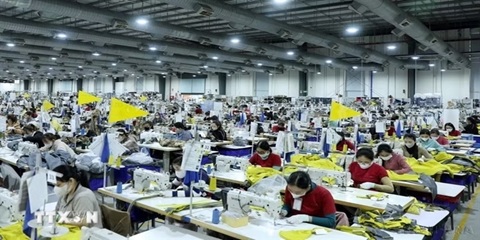
TEXTILE EXPORTS FACE DUAL CHALLENGES OF SUSTAINING ORDERS AND BOOSTING EFFICIENCY AMID GROWING COMPETITION
Data shows that the textile and garment sector maintained its growth momentum in the first nine months of this year. The industry's total export turnover reached an estimated US$35.721 billion in the first nine months of this year, up 3.3 per cent year-on-year. Despite posting encouraging export figures, Vietnamese textile and garment enterprises continue to navigate unpredictable market variables.
Events Sponsors






















