Want to be in the loop?
subscribe to
our notification
Business News
NEW LEGAL FRAMEWORK PAVES WAY FOR REAL ESTATE MARKET IN 2026
The market will no longer be driven by short-term speculative waves this year but will enter a phase of development based on real value, with stricter demands on legal compliance, planning, product quality and capital efficiency.
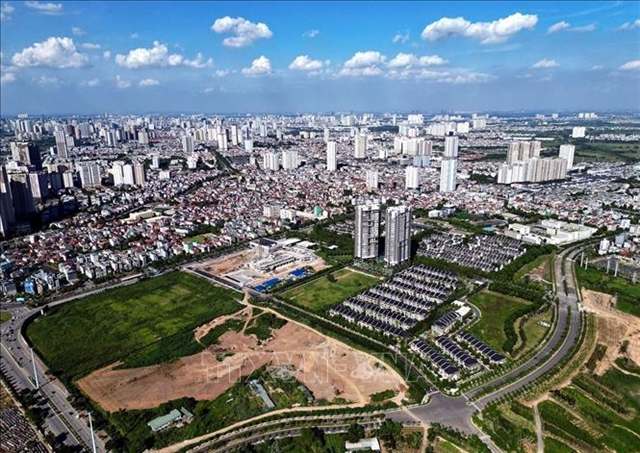
2026 carries particular significance for the property sector.— VNA/VNS Photo
HÀ NỘI — A clearer and more comprehensive legal framework is expected to unlock Việt Nam’s real estate market this year, as regulators, experts and businesses point to a shift towards stability and real value after a prolonged period of adjustment.
That was the shared view at a seminar on the outlook for the real estate market organised by Tiền Phong (Vanguard) newspaper in Hà Nội on Saturday, which brought together policymakers, analysts, developers and investors at a time when the market is emerging from one of its deepest downturns.
Phùng Công Sướng, Editor-in-Chief of Tiền Phong, said 2026 carries particular significance for the property sector. After a phase of overheating followed by a sharp contraction, the market is undergoing a necessary cleansing process and is gradually moving towards a more stable, substantive and sustainable footing.
He noted that recent volatility had exposed clear weaknesses in legal frameworks, planning, product structure and capital allocation, forcing the market to restructure in a healthier direction.
The key issue this year, speakers said, is not only whether the market will recover but the quality of that recovery. This includes identifying which segments will lead growth and how investment capital will shift as requirements for transparency, efficiency and risk management become increasingly stringent.
Rather than being driven by short-term speculative waves, the market is entering a phase centred on real value, with tighter demands on legal compliance, planning discipline, product quality and capital efficiency.
One of the most striking features of the current market is the increasingly clear differentiation among segments, regions and market participants. Experts at the seminar said products lacking legal clarity or priced far above their actual use value continue to face liquidity problems and, in some cases, prolonged stagnation.
By contrast, projects with complete legal status, consistent planning, synchronised infrastructure and genuine housing demand are continuing to record positive interest and absorption. This suggests the market is gradually returning to its core role of serving socio-economic development rather than acting as a short-term speculative channel.
Capital flows are also changing noticeably. Instead of a quick-flip mindset, investment is becoming more cautious and selective, favouring segments with solid fundamentals and long-term value creation potential. Alongside individual investors, institutional capital, investment funds and long-term investors are gradually re-entering the market with more systematic and professional approaches, helping to improve capital quality and reduce overall risks.
From a state management perspective, Hà Quang Hưng, deputy director of the Department of Housing and Real Estate Market Management under the Ministry of Construction, said 2025 ended with many positive macroeconomic signals. Despite ongoing global uncertainties, Việt Nam maintained its recovery momentum, recording GDP growth of about 8.02 per cent, significantly higher than in 2024.
This has provided an important foundation for the real estate market to gradually stabilise. In the sector itself, decisive and coordinated government direction has led to marked improvements in supply, liquidity and market confidence.
Notably, last year saw a strong institutional shift in social housing development, with targets not only met but exceeded. Social housing has played a dual role, supporting social welfare while helping to regulate supply and demand, stabilise the market and lay the groundwork for the 2026–2030 period, Hưng said.
A central theme at the seminar was how the new policy and legal system is reshaping real estate capital flows. Hưng identified six major policy groups that are expected to influence market trends in the coming period.
The first is a breakthrough in social housing institutions through Resolution No.201/2025/QH15, which pilots special mechanisms and policies for social housing development alongside guiding decrees. The shift from strict input controls to greater autonomy for investors, combined with post-inspection, has shortened project timelines, mobilised social resources and increased the supply of affordable housing.
Another key development is the amendment of the Construction Law and urban planning regulations, which is helping to reduce compliance costs, address legal overlaps and accelerate project implementation, thereby enhancing transparency and stability in the investment environment.
Completing land-related institutions remains critical. In 2025, a series of important policies were introduced to remove bottlenecks for stalled projects and restart supply that had been frozen for years.
At the same time, measures to unblock capital flows, including plans to establish a national housing fund and address bad debts linked to real estate, have eased liquidity pressures on businesses and strengthened the credit market.
Further decentralisation and delegation of authority to localities, together with the development of housing and real estate market information systems and databases, are also expected to improve transparency and curb speculation and price manipulation, speakers said. — VNS
Source: VNS
Related News

INFRASTRUCTURE / CONSTRUCTION / LOGISTIC / PORT
VIỆT NAM-CAMBODIA TRADE GATHERS PACE TOWARDS $20 BILLION TARGET
Trade between Việt Nam and Cambodia continues to grow, remaining a bright spot and a key pillar of bilateral cooperation as the two countries aim to raise two-way trade to US$20 billion in the coming years. After setting a record of more than $11.3 billion last year, bilateral trade reached about $8.7 billion in the first eight months of this year, up 8.3 per cent year on year.
TECHNOLOGY
AI BEGINNING TO RESHAPE RECRUITMENT CRITERIA
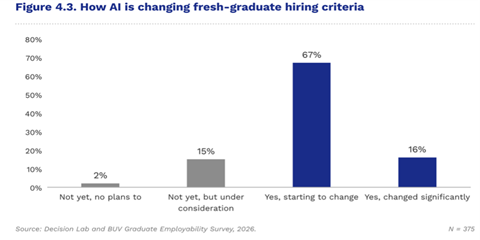
Digital literacy is the only capability area in which fresh graduates meet employers’ expectations, according to a new report. Yet, it is also the standard rising fastest, as businesses increasingly expect new hires to use AI effectively in the workplace. Some 83 per cent of employers say AI has changed, or is beginning to change, their hiring criteria, while 94 per cent report higher expectations for digital and AI capabilities than they had two to three years ago.
INFRASTRUCTURE / CONSTRUCTION / LOGISTIC / PORT
ĐÀ NẴNG GREEN-LIGHTS US$105 MILLION THAI DEVELOPMENT DEAL
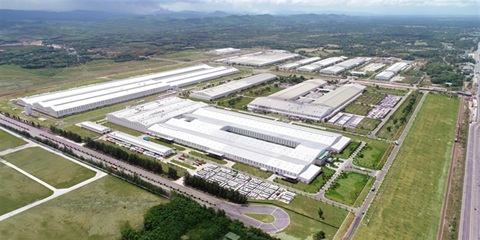
The central city has approved an investment proposal by Thailand’s WHA Group to develop infrastructure for the 400ha WHA Đà Nẵng Industrial Park project on two communes of Thăng Bình and Đồng Dương, with an investment of more than VNĐ2.7 trillion (US$105 million). The city said it approved WHA Industrial Development International's status as an investor in the project, which is expected to take place between 2027 and 2034.

VIETNAM ECONOMY INVESTMENT
MOBILE PHONE EXPORTS RISE 20% TO $51.8 BILLION IN FIRST NINE MONTHS
Exports of mobile phones and components rose 20 per cent year-on-year to nearly US$51.8 billion in the first nine months of 2026, with China, the US and Republic of Korea accounting for more than half of the total. Shipments to the three markets reached a combined $26.18 billion, or 50.6 per cent of total exports of the product group during the period, according to data from the Vietnam Department of Customs under the Ministry of Finance.

VIETNAM ECONOMY INVESTMENT
FRUIT AND VEGETABLE EXPORTS POISED TO HIT $10 BILLION IN 2026
Fruit and vegetable exports are on track to reach nearly US$10 billion in 2026, after rising 19.9 per cent year on year to nearly US$7.4 billion in the first nine months, driven by strong seasonal demand and abundant tropical fruit supplies. The Ministry of Agriculture and Environment said the growth reflected stronger international demand for fresh produce and processed agricultural products.
GARMENT / TEXTILE
TEXTILE EXPORTS FACE DUAL CHALLENGES OF SUSTAINING ORDERS AND BOOSTING EFFICIENCY AMID GROWING COMPETITION
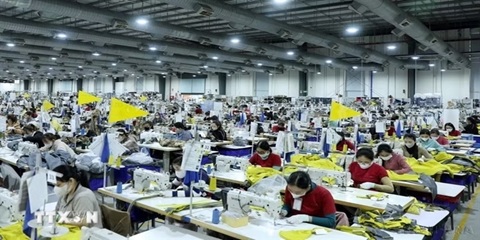
Data shows that the textile and garment sector maintained its growth momentum in the first nine months of this year. The industry's total export turnover reached an estimated US$35.721 billion in the first nine months of this year, up 3.3 per cent year-on-year. Despite posting encouraging export figures, Vietnamese textile and garment enterprises continue to navigate unpredictable market variables.
Events Sponsors






















