Want to be in the loop?
subscribe to
our notification
Business News
NEW REAL ESTATE INVESTMENT TRENDS FOR 2025
Real estate investors, both individual and institutional, are redirecting investments from downtown to suburbs and neighboring regions, capitalizing on available land and strong infrastructure growth.
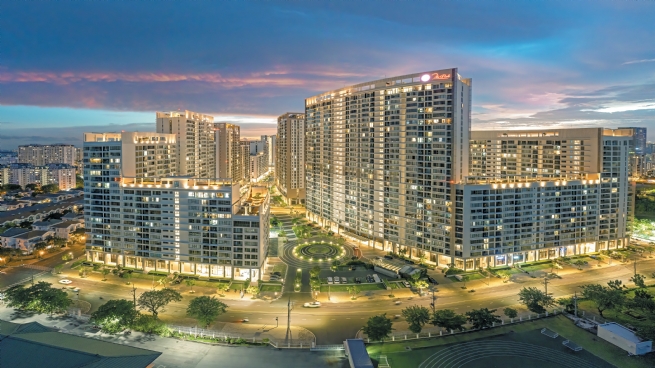
Downtown real estate prices in Hanoi and Ho Chi Minh City hit record highs, hindering investment amid rising costs and shrinking margins
Ms. Pham Thi Mien, Deputy Director of the Market Research, Investment Promotion and Consulting Department, the Vietnam Association of Realtors (VARS), said: This trend not only shows the need for property investment opportunities but also objective factors like planning policies, transport infrastructure and new buyer demand.
In fact, downtown real estate prices in large cities, typically Hanoi and Ho Chi Minh City, are rising, even to record levels, making investments more difficult amid growing capital costs, narrowing profit margins or uncertain success. These force investors with weak financial resources to look for opportunities in the suburbs.
Shaped by many factors
“Especially for the apartment segment, the primary price of an apartment averages VND70 million per square meters in 2024. Newly opened projects are offered from VND60 million per square meter in Hanoi where buyers need to have the minimum monthly income from VND45 million to VND210 million, depending on areas. In business districts like Hoan Kiem, Ba Dinh and Tay Ho, the gap between the minimum annual income required for mortgage repayment and the average household income reaches tens of billions of VND. As a result, many homebuyers struggle and postpone purchases, while investors face capital shortages, hindering their ability to continue projects,” she added.
Meanwhile, central and local governments are promoting satellite urban development planning, expanding urban spaces to reduce population pressure and infrastructure in the downtown, helping suburban districts and neighboring provinces of the two metropolises truly become attractive destinations for both individual and institutional investors.
In addition, transport infrastructure investment, including highways, beltways or public transport systems, reduces the travel time between downtown and its satellite areas and creates added value for real estate. “All in one” mega urban projects on the outskirts also play a very important role in promoting infrastructure and strong commercial development, thus adding value to real estate in surrounding areas and catching the fancy of investors.
“When investors move more quickly to areas with softer land prices and high growth potential, they often focus on residential land plots, commercial townhouses or new affordable urban area projects. Specifically, instead of picking short-term choices, many investors have opted to buy suburban land and wait for future growth when infrastructure is completed. Beyond housing, suburban second homes, farmstays and resorts have attracted investor interest due to their strong rental potential, especially post-COVID-19, which accelerated green living and remote work trends,” she added.
Opportunities for businesses
This is an opportunity for real estate companies to develop projects of diverse scales, Mien said. Currently, many large real estate firms have seized the opportunity to develop large-scale urban areas in neighboring provinces.
Similarly, for small and medium-sized real estate companies, developing projects in suburban areas, satellite cities or provinces and cities neighboring Hanoi and Ho Chi Minh City is not only an opportunity but also a key approach amid tighter regulations on land, housing and real estate business and rising land costs, which may weaken their competition and project development in the downtown.
Therefore, recently, many small and medium-sized companies have actively sought and purchased cheaper but high potential land on the outskirts for their investment projects. These supplies are also an important factor to boost the strong development of the suburban real estate market to meet housing demands.
Besides the housing segment, many enterprises are stepping up investment in industrial real estate amid high demand from redirected global supply chains and planning-driven motivation, she noted. Given population expansion in satellite areas, the demand for commercial centers, complexes and offices there will continue to increase and encourage real estate developers to expand their investment portfolio.
According to the VARS representative, moving to non-business districts will be a clearer trend because downtown real estate investment is currently only suitable for investors with strong financial potential and long-term asset investment needs. Meanwhile, in non-business districts, real estate prices in some well-planned places with developed infrastructure are still relatively "cheap" relative to future growth prospects. Especially when there is a continued rising demand for housing in non-business districts, preferential policies and incentives for urban development in the suburbs still motivate investors.
However, investors interested in investment in non-business districts need to carefully research and evaluate their choices because they may encounter legal issues relating to planning, land use rights and legal procedures. At the same time, despite great potential, not all areas are attractive enough because of liquidity and limited public utilities.
Sharing the same view, Mr. Le Dinh Chung, General Director of SGO Homes, a property consulting and development firm, recommended that property investors should carefully study local development orientations in the coming period. Besides, they should carefully study local economic indicators and market liquidity before making any investment decision.
"When an area develops well, investors' products will benefit. Investors should only invest in liquid markets; thus, they must carefully pick marketable locations and should not invest in remote areas," he noted.
At a workshop themed "Real Estate in 2025 - Finding opportunities in challenges", Mr. Le Van Binh, Deputy Director of the Department of Land Administration, suggested that low- and middle-income earners should now buy houses about 15-20 km away from the downtown.
Source: VCCI
Related News

CHARITY / EXHIBITION / OTHER EVENTS
INVESTMENT OPPORTUNITIES IN CA MAU PROVINCE: 96 PROJECTS AND 20 STRATEGIC PROJECTS
We are pleased to share with you information on investment projects currently seeking investors in Ca Mau Province. Should your esteemed company or association be interested, we kindly invite you to review the project information and complete the registration form via the links provided. The Ho Chi Minh City Investment and Trade Promotion Centre (ITPC) will consolidate the expressions of interest and facilitate connections with the leadership of Ca Mau Province at a meeting tentatively scheduled for 13 November 2026 in Ho Chi Minh City.
MEMBER CORNER / PROMOTIONS
BẰNG KIỀU LIVESHOW - A SYMPHONY OF LOVE UNDER THE GOLDEN GLOW
A masterclass in live music that takes the audience on a soulful journey through immortal love songs, guided by the peerless artistry and emotive storytelling of renowned singer Bằng Kiều. The highlight of the night is his seamless musical chemistry with special guest Triệu Hồng Ngọc, promising passionate and deeply resonant duets inside the magnificent Grand Ballroom.

INFRASTRUCTURE / CONSTRUCTION / LOGISTIC / PORT
ĐÀ NẴNG GREEN-LIGHTS US$105 MILLION THAI DEVELOPMENT DEAL
The central city has approved an investment proposal by Thailand’s WHA Group to develop infrastructure for the 400ha WHA Đà Nẵng Industrial Park project on two communes of Thăng Bình and Đồng Dương, with an investment of more than VNĐ2.7 trillion (US$105 million). The city said it approved WHA Industrial Development International's status as an investor in the project, which is expected to take place between 2027 and 2034.

VIETNAM ECONOMY INVESTMENT
MOBILE PHONE EXPORTS RISE 20% TO $51.8 BILLION IN FIRST NINE MONTHS
Exports of mobile phones and components rose 20 per cent year-on-year to nearly US$51.8 billion in the first nine months of 2026, with China, the US and Republic of Korea accounting for more than half of the total. Shipments to the three markets reached a combined $26.18 billion, or 50.6 per cent of total exports of the product group during the period, according to data from the Vietnam Department of Customs under the Ministry of Finance.

INFRASTRUCTURE / CONSTRUCTION / LOGISTIC / PORT
VIỆT NAM-CAMBODIA TRADE GATHERS PACE TOWARDS $20 BILLION TARGET
Trade between Việt Nam and Cambodia continues to grow, remaining a bright spot and a key pillar of bilateral cooperation as the two countries aim to raise two-way trade to US$20 billion in the coming years. After setting a record of more than $11.3 billion last year, bilateral trade reached about $8.7 billion in the first eight months of this year, up 8.3 per cent year on year.

VIETNAM ECONOMY INVESTMENT
FRUIT AND VEGETABLE EXPORTS POISED TO HIT $10 BILLION IN 2026
Fruit and vegetable exports are on track to reach nearly US$10 billion in 2026, after rising 19.9 per cent year on year to nearly US$7.4 billion in the first nine months, driven by strong seasonal demand and abundant tropical fruit supplies. The Ministry of Agriculture and Environment said the growth reflected stronger international demand for fresh produce and processed agricultural products.
Events Sponsors






















