Want to be in the loop?
subscribe to
our notification
Business News
NEW REGULATIONS ISSUED OVER OPERATION OF SCIC
The Government has issued two new decrees over the operation mechanism of the State Capital Investment Corporation (SCIC). The decrees prevent the SCIC from investing in companies of relatives but allow it to found subsidiary companies.
Under Decree No 147/2017/ND-CP, SCIC is not allowed to pump capital into buying stakes at enterprises, where the managers are related to the corporation’s chairman, members of the Management Board, controllers and general director, as well as deputy general director and chief accountant.
The relatives include spouses, natural parents, adoptive parents and natural son/daughter, as well as adoptive son/daughter, natural brother, natural sister, brother-in law and sister-in-law.
SCIC will not be allowed to contribute capital with its subsidiary companies to found joint stock companies, limited liability companies or implement business co-operation contracts.
The Decree No 148/2017/ND-CP allowed SCIC to found and contribute capital to subsidiary companies, including fund management companies, following the established laws.
The two decrees were issued and took effect early this week.
SCIC had a charter capital of VND50 trillion (US$2.2 billion). It was founded in 2005 and officially began operation in 2006, with an aim to enhance the efficiency of State capital at enterprises.
SCIC planned to earn a revenue of VND11.2 trillion and a pre-tax profit of VND8.3 trillion in 2017.
Its business report in the first half of this year, the latest one available on its official website, showed that SCIC earned a revenue of VND2.67 trillion in the period, dropping by VND3 trillion over the same period last year. The pre-tax profit also dropped by more than VND2 trillion to VND2.5 trillion.
As of June 30, SCIC’s total assets reached VND60.8 trillion.
SCIC was managing State capitals worth VND18 trillion in book value at 144 enterprises.
Source: VIR
Related News
VIETNAM ECONOMY INVESTMENT
VIETNAMESE COMPANIES OPTIMISTIC ON INTERNATIONAL GROWTH
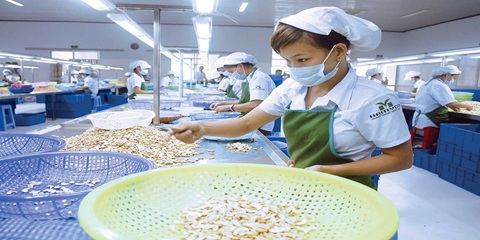
Vietnamese businesses are among the most confident about the outlook for international trade, according to HSBC’s Global Trade Pulse Survey 2026, released on November 16. The survey captures the views of 10,000 senior business leaders across 26 markets on trade, tariffs, supply chains, and technology. Findings show that 94 per cent of Vietnamese businesses expect their international trade to grow over the next two years. Vietnam ranks joint top in the survey with the Philippines, compared with 86 per cent globally.
TECHNOLOGY
VIỆT NAM'S DIGITAL TECHNOLOGY INDUSTRY REVENUE SURGES 53% TO $254.6B
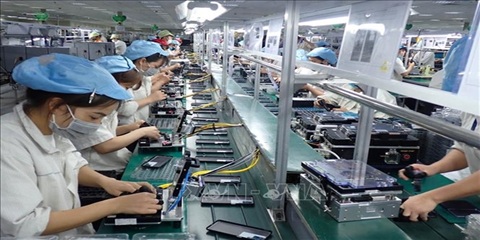
Việt Nam's digital technology industry generated an estimated US$254.6 billion in revenue in the first 10 months of 2026, up 53 per cent from a year earlier, while exports rose 46.2 per cent to $212 billion, the Ministry of Science and Technology said in its latest report. According to the report, hardware and electronics exports reached an estimated $30.681 billion in October, up 108 per cent from the same month last year.
CHARITY / EXHIBITION / OTHER EVENTS
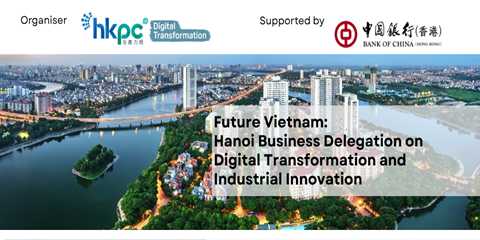
BOCHK ‧ HKPC FUTURE VIETNAM: HANOI BUSINESS DELEGATION ON DIGITAL TRANSFORMATION AND INDUSTRIAL INNOVATION
Interested in exploring Vietnam’s latest developments in digital transformation, technology adoption and industrial innovation? Organised by the Hong Kong Productivity Council (HKPC) and fully supported by Bank of China (Hong Kong) Limited, the "Future Vietnam: Hanoi Business Delegation on Digital Transformation and Industrial Innovation” will feature visits to leading high-tech enterprises across Vietnam and engage with local chambers of commerce, industry organisations and associations. Join us to expand your high-value business network and seize emerging opportunities in the ASEAN market!
GARMENT / TEXTILE
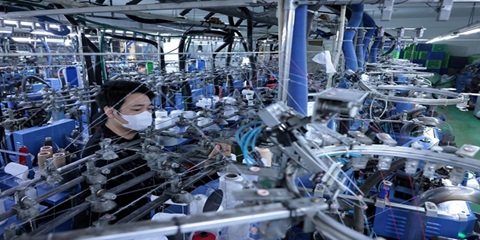
TEXTILE, GARMENT FIRMS REFORM TO MEET CPTPP ORIGIN RULES
Vietnamese textile and garment manufacturers are aggressively restructuring their supply chains and diversifying material sources to unlock untapped tariff benefits. To capitalise on the Comprehensive and Progressive Agreement for Trans-Pacific Partnership (CPTPP), companies are racing to align with the pact's strict "yarn-forward" rules — a task made difficult by a shortage of raw materials within the trade bloc.
TECHNOLOGY
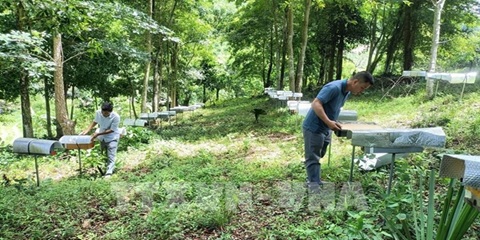
ĐÀ NẴNG SEEKS TO BUILD HIGH-TECH AGRICULTURE, INTEGRATED VALUE CHAINS
Đà Nẵng is seeking to transform its agricultural sector from a supplier of raw materials into a technology-driven, market-oriented economy, with investment opportunities spanning concentrated production areas, deep processing, logistics and agricultural product distribution. The city aims to shift from traditional agricultural production towards agricultural economic development, organising value chains and increasing the technological content and added value of products through closer links between production and processing.
INFRASTRUCTURE / CONSTRUCTION / LOGISTIC / PORT
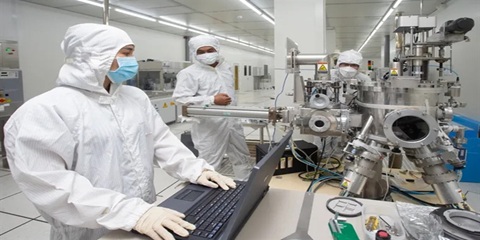
HCM CITY ACCELERATES POWER INFRASTRUCTURE INVESTMENT TO ATTRACT HIGH-TECH CAPITAL
High-tech projects, particularly data centres, are not confined to SHTP but are also expanding into export processing zones and industrial parks across HCM City, driving up electricity demand. Proactively developing power infrastructure, diversifying energy supplies and expanding access to green energy are becoming essential for HCM City to maintain its competitive edge in attracting high-tech foreign direct investment (FDI).
Events Sponsors