Want to be in the loop?
subscribe to
our notification
Business News
NEW TAX CUT PLAN AIMS TO BOOST ENTREPRENEURSHIP
[20-10-2016] Pham Dinh Thi, director of Ministry of Finance's Tax Policy Department, said the tax reduction plan was part of a Government draft resolution on clearing obstacles to boost the development of enterprises, which would be tabled during the NA's second session that starts on October 20.
Under the draft plan, the finance ministry proposes to cut corporate income tax for small- and medium-sized enterprises (SMEs) as well as start-ups from the current 20 per cent to 17 per cent between 2017 and 2020.
Thi estimated that the tax reduction would lead to an insignificant drop in State budget revenues. It would reduce by approximately VND473 billion (US$21.11 million) per year if based on the current Law on Corporate Income Tax, according to which firms with a turnover of less than VND20 billion per year were exempted from the tax. The revenue drop would be as much as VND1.5 trillion per year if the draft Law on Support for Small- and Medium-sized Enterprises was passed as it decrees that firms with turnover of less than VND100 billion were exempted from the tax.
"However, if the tax cut policy is approved, it will ensure that there are thousands of newly established enterprises every year," Thi said. "The contribution of these new firms to the State budget will help offset the revenue drop and over time will increase the State budget revenue."
So far, to meet the target of increasing the number of efficient enterprises in the country to one million, the Government has issued a resolution on supporting and developing firms till 2020 and asked the Ministry of Planning and Investment to create a law that supports the growth of SMEs.
In the draft resolution, the finance ministry also proposes to allow enterprises to use profits from their real estate projects to offset losses in other industries and sectors. Thi said the Government wanted to encourage firms to invest in agriculture, a vulnerable sector because of its dependence on the weather. The proposal to allow the use of profits from real estate projects to offset losses in other sectors would encourage companies to invest in the agriculture.
Dang Duc Thanh, chairman of HCM City Economists Club and member of the Viet Nam Chamber of Commerce and Industry (VCCI)'s Executive Committee, said meeting the one-million target by 2020 would be tough. To do that, he said, the country needed the comprehensive and thorough participation of all ministries, sectors and localities so as to build a conducive business environment that would create a start-up revolution in Viet Nam.
Besides building a favourable business environment, Thanh recommended that the Government should encourage competitiveness by supporting the set-up of co-operation chains. Firms themselves, however, also would have to restructure to become more competitive, he said.
As per statistics from the VCCI's Viet Nam Annual Business Report 2015, there were around 513,000 firms in Viet Nam at the end of 2015, which is very low when compared with the country's population of more than 90 million. To meet the world's average ratio, Viet Nam needs to have two million operational firms, VCCI said.
Besides, the existing companies are also not doing well — of the 513,000 firms, only 42 per cent made profits; the remaining broke even or make losses.
The number of firms that had to shut down in the first nine months of this year was 8,365, up 20.2 per cent year-on-year, shows data from the Ministry of Planning and Investment's Business Registration Management Agency. Most of these firms are small, with a registered capital of less than VND10 billion each.
Source: VNEP
Related News
VIETNAM ECONOMY INVESTMENT
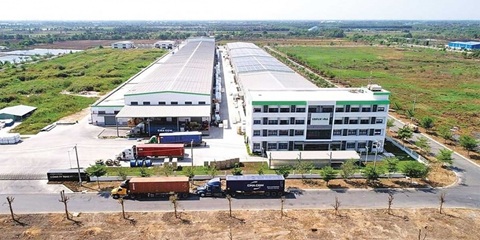
FOREIGN INVESTORS SEEKING A SYNCHRONISED MANUFACTURING ECOSYSTEM
Instead of focusing only on land costs and incentives as usual, foreign investors are seeking a synchronised manufacturing ecosystem, from stable power supply and logistics to shared infrastructure and the convenience of completing residence procedures for experts to serve their long-term investment in the country.
INFRASTRUCTURE / CONSTRUCTION / LOGISTIC / PORT
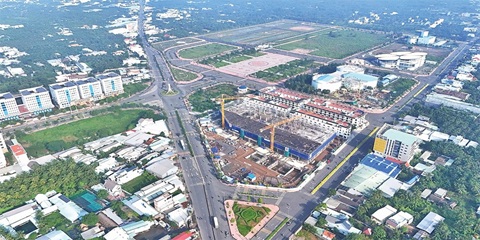
DONG THAP PROVINCE STEPS UP INDUSTRIAL EXPANSION AND INFRASTRUCTURE CONNECTIVITY
Accelerating public investment, strengthening inter-regional connectivity, and expanding industrial land are helping Dong Thap efficiently bolster competitiveness and drive economic growth. Following the 2025 merger of the former Dong Thap and Tien Giang provinces, the expanded Dong Thap province in the Mekong Delta faces mounting pressure to accelerate infrastructure development and strengthen connectivity among local economic zones, urban areas, industrial parks (IPs), and production centres.
PROPERTY / INDUSTRIAL ZONE
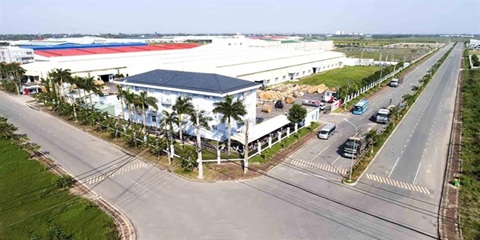
HCM CITY ATTRACTS US$5.7 BILLION INTO EXPORT PROCESSING AND INDUSTRIAL ZONES
HCM City attracted US$5.7 billion in domestic and foreign investment into its export processing and industrial zones during the first nine months of 2026. The figure exceeded the city's full-year target by 31 per cent, highlighting strong momentum in high-quality industrial investment under Resolution No.10-NQ/TW. Total investment reached 131 per cent of the 2026 target of $4.25 billion and represented a 29 per cent increase compared with the same period in 2025, according to the city's Export Processing and Industrial Zones Authority (HEPZA).

BANKING / FINANCE / INSURANCE / TAX
REMITTANCES TO HCM CITY RISE NEARLY 40% IN Q3
Remittances to HCM City reached more than US$2.83 billion in the third quarter of this year, up 39.5 per cent from the previous quarter and 3.6 per cent year-on-year. This was the first quarter showing positive annual growth this year, helping narrow the decline in remittance inflows over the first nine months. According to the State Bank of Vietnam (SBV)’s Regional Branch 2, remittances transferred to HCM City through credit institutions and economic organisations totalled $2.835 billion in Q3, an increase of more than $802 million from the previous quarter.

VIETNAM ECONOMY INVESTMENT
LOCALITIES REPORT BREAKTHROUGH RESULTS IN FDI IN FIRST NINE MONTHS
In Ho Chi Minh City, total registered capital reached $17.2 billion in the first nine months, up 4.2 times from the same period last year. The figure included more than $9.35 billion in newly registered capital and over $4.9 billion in additional capital for existing projects. Foreign investors also registered more than $2.9 billion through capital contributions and share purchases.

TECHNOLOGY
TECH SECTOR GROWTH OPENS UP OPPORTUNITIES FOR VIỆT NAM TO GO GLOBAL
The growth of the electronics, semiconductor and high-tech sectors worldwide is opening up a variety of opportunities for Vietnamese enterprises to integrate more deeply into the global supply chain. However, to become suppliers for these corporations, domestic enterprises must meet rigorous standards regarding quality, technology, productivity and order fulfilment capabilities.
Events Sponsors






















