Want to be in the loop?
subscribe to
our notification
Business News
NFSC PROPOSES LOWERING CORPORATE INCOME TAX ON SMES
Corporate income tax levied on small and medium – sized enterprises (SMEs) should be reduced to promote the business development, a solution together with broadening tax base to increase budget revenue from business and production.
This was a highlighted in the January – September fiscal and budget report by the National Financial Supervisory Committee (NFSC) published last week which said that the tax cut would help restructure budget revenue in a sustainable direction.
The NFSC said that Viet Nam ran the lowest budget deficit in three years as of September 30 at VND26.7 trillion (US$1.16 billion), compared to VND61.5 trillion during the same period in 2017 and VND152.2 billion in 2016.
However, budget collection lacked sustainability, the NFSC said.
The committee pointed out in the report that budget collection was still largely dependent on unsustainable sources such as crude oil. In the short term, budget collection from crude oil was affected by fluctuations of global prices and output while in the long term, budget collection from crude oil also lacked sustainability due to limited reserves.
In addition, increases in domestic budget collection mainly came from taxes on land and houses while collection from businesses was much lower than estimated.
The report cited statistics that said as of the end of September, collection from land and houses had reached 104.4 per cent of estimate but only 65.3 per cent from SOEs, 58.8 per cent from the foreign direct investment (FDI) sector and 68.7 per cent from the private sector.
Budget collection in many provinces and cities remained heavily dependent on sales of public assets, especially land use rights.
The NFSC’s report also pointed out that disbursement of investment in capital construction was lower than estimated at only 50.2 per cent.
Another report by the State Audit of Viet Nam showed that budget collection was estimated to total nearly VND1.36 quadrillion for the full year, 3 per cent higher than expected and 5.5 per cent higher than in 2017.
The State Audit of Viet Nam, however, said in the report that the excess amounts mainly came from land, houses and crude oil. Collection from land and houses increased by 35.9 per cent and from crude oil by 53.2 per cent.
Collection from the SOE, FDI and private sectors all saw declines of 2.9 per cent, 15.1 per cent and 2.2 per cent.
According to the NFSC, it was necessary to strengthen measures to support businesses to boost their development to increase budget revenue from business and production and reduce reliance on unstable sources.
The committee said that lowering corporate income tax for SMEs could be a solution, together with broadening the tax base.
In addition, the NFSC said that the privasitation and capital divestment at SOEs must be accelerated to increase their efficiency.
At the Greater Mekong Subregion Business Summit, Prime Minister Nguyen Xuan Phuc said that the Vietnamese Government intended to cut corporate income tax from the current 20-22 per cent to 15-17 per cent to create an attractive investment environment for Viet Nam.
In August 2017, the Ministry of Finance also proposed a tax rate of 15 per cent on micro-businesses (those with an annual revenue of less than VND3 billion) and 17 per cent for SMEs (those with less than 200 employees and annual revenue from VND3 billion to VND50 billion).
According to To Hoai Nam, deputy chairman of the Viet Nam Association of SMEs, the tax cuts for businesses were good but not enough. In the long term, policies should focus on improving the competitiveness of enterprises and their operational efficiency.
He said that tax policies must be transparent.
According to the General Department of Taxation, it was necessary to review tax policies comprehensively to increase the sustainability of budget revenue in terms of scale and structure.
Policies would be reviewed on the basis that the tax base would be expanded, the tax authority said.
For SMEs, reasonable tax rates would be proposed to increase competitiveness but ensure compliance with the Law on Supporting SMEs.
Source: VIR
Related News

TECHNOLOGY
TECH SECTOR GROWTH OPENS UP OPPORTUNITIES FOR VIỆT NAM TO GO GLOBAL
The growth of the electronics, semiconductor and high-tech sectors worldwide is opening up a variety of opportunities for Vietnamese enterprises to integrate more deeply into the global supply chain. However, to become suppliers for these corporations, domestic enterprises must meet rigorous standards regarding quality, technology, productivity and order fulfilment capabilities.
PROPERTY / INDUSTRIAL ZONE
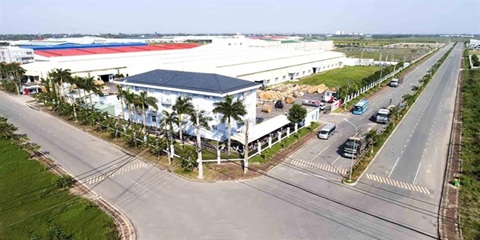
HCM CITY ATTRACTS US$5.7 BILLION INTO EXPORT PROCESSING AND INDUSTRIAL ZONES
HCM City attracted US$5.7 billion in domestic and foreign investment into its export processing and industrial zones during the first nine months of 2026. The figure exceeded the city's full-year target by 31 per cent, highlighting strong momentum in high-quality industrial investment under Resolution No.10-NQ/TW. Total investment reached 131 per cent of the 2026 target of $4.25 billion and represented a 29 per cent increase compared with the same period in 2025, according to the city's Export Processing and Industrial Zones Authority (HEPZA).

BANKING / FINANCE / INSURANCE / TAX
REMITTANCES TO HCM CITY RISE NEARLY 40% IN Q3
Remittances to HCM City reached more than US$2.83 billion in the third quarter of this year, up 39.5 per cent from the previous quarter and 3.6 per cent year-on-year. This was the first quarter showing positive annual growth this year, helping narrow the decline in remittance inflows over the first nine months. According to the State Bank of Vietnam (SBV)’s Regional Branch 2, remittances transferred to HCM City through credit institutions and economic organisations totalled $2.835 billion in Q3, an increase of more than $802 million from the previous quarter.
VIETNAM ECONOMY INVESTMENT
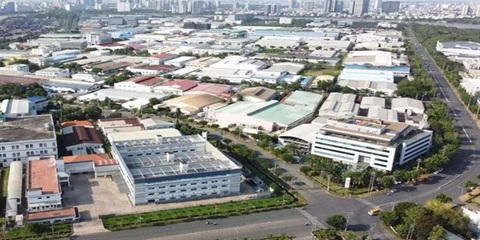
HCM CITY ADDRESSES MANUFACTURING, LAND HURDLES FOR Q4 GROWTH PUSH
HCM City is adjusting growth scenarios for lagging sectors and removing key bottlenecks in manufacturing and industrial land pricing to achieve a 13.23 per cent expansion in the fourth quarter of 2026. This sharp fourth-quarter acceleration is required to secure the city's full-year double-digit targets, following a 9.06 per cent GRDP growth recorded in the first nine months.
VIETNAM ECONOMY INVESTMENT
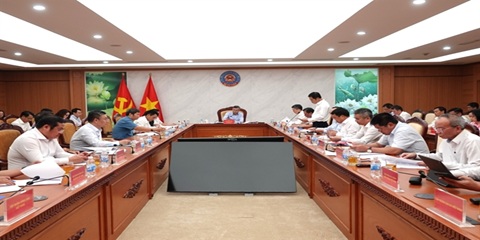
MOF'S FIRMS REPORT STRONG GROWTH IN NINE-MONTH
State-owned groups and corporations represented by the Ministry of Finance (MoF) recorded combined revenue of more than VNĐ2 quadrillion (US$79.5 billion) in the first nine months of 2026, up 28.7 per cent year-on-year, while consolidated profit before tax reached nearly VNĐ160 trillion, equivalent to 140.3 per cent of the full-year target.

VIETNAM ECONOMY INVESTMENT
SME REVENUE THRESHOLD PROPOSED TO BE RAISED TO $15.2 MILLION
The government has proposed raising the annual revenue threshold for classifying small- and medium-sized enterprises (SMEs) to VNĐ400 billion (US$15.2 million), from currently VNĐ300 billion, as part of a draft law on the development of SMEs. Minister of Finance Ngô Văn Tuấn presented the draft law, which is intended to replace the Law on Supporting SMEs 2017, to the National Assembly at a meeting late last week.
Events Sponsors






















